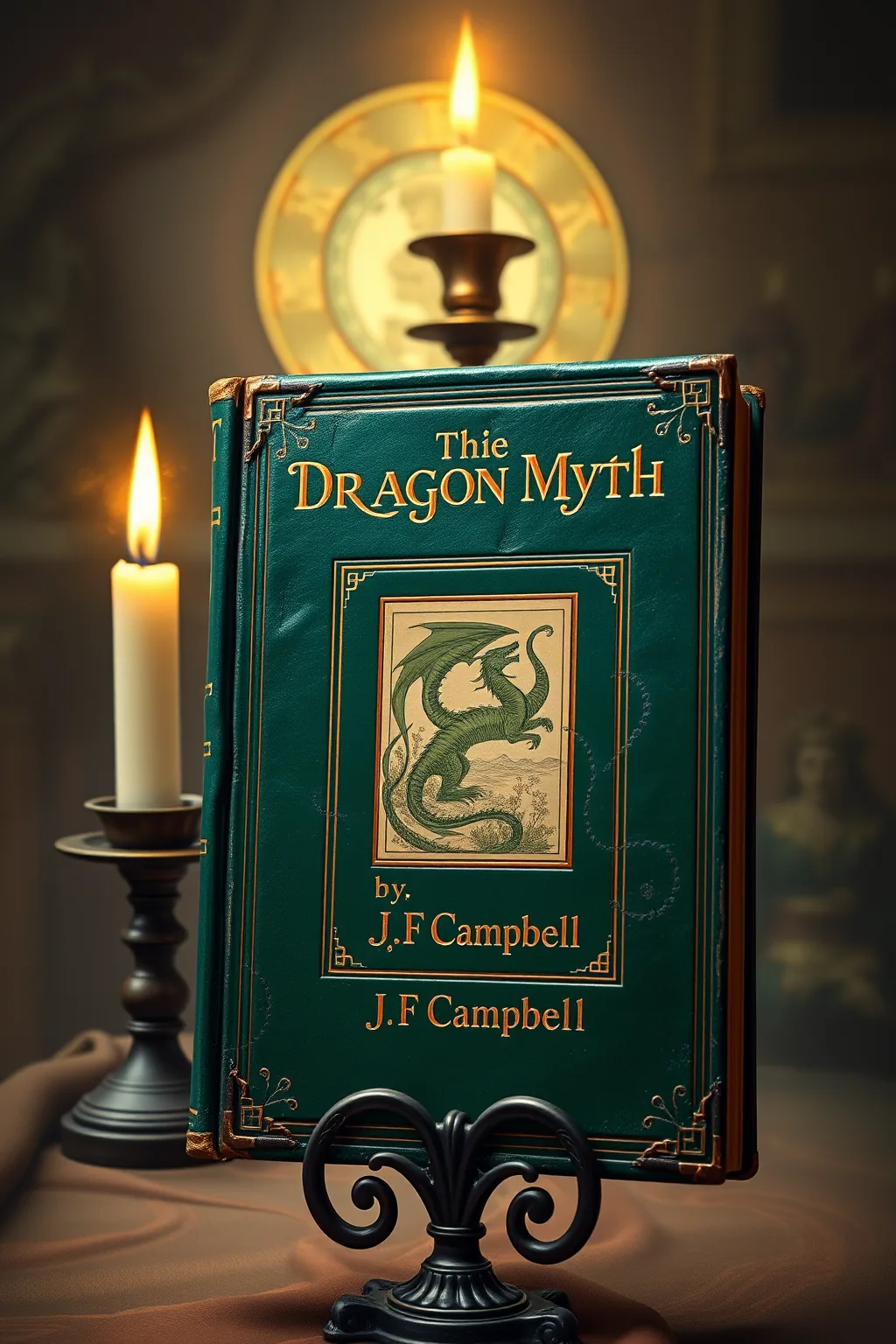
The Celtic Dragon Myth
 72
72

The Celtic Dragon Myth

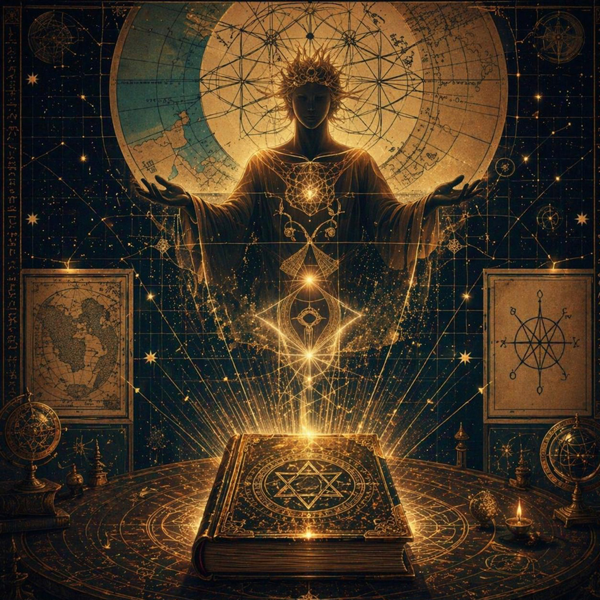

Lorelei Sage (Contemplative Literature Editor) — J. F. Campbell's 'The Celtic Dragon Myth' is a monumental achievement in esoteric scholarship, a luminous portal into the foundational myths of Celtic tradition. Campbell's unique ability to synthesize Gaelic manuscripts with living oral tradition provides an unparalleled reconstruction of the dragon archetype, revealing its profound spiritual and symbolic weight. His meticulous presentation of original Gaelic alongside English translations offers a rare gift to scholars and practitioners alike. This work transcends mere historical retelling; it is a deep dive into the soul of a culture, offering potent insights into the nature of creation, destruction, and the perennial human confrontation with the primal forces of existence. Essential reading for anyone seeking to understand the roots of Western esoteric thought.
📝 Description
72
J. F. Campbell published 'The Celtic Dragon Myth' in 1911, examining Highland lore.
J. F. Campbell's 1911 book, 'The Celtic Dragon Myth,' draws on Gaelic manuscripts and oral tradition to reconstruct the Celtic dragon narrative. Campbell details serpentine power, elemental forces, and the conflict between chaos and order within these myths. The work also discusses related figures like giants, mermaids, and fairies, showing how these mythologies connect.
The book presents original Gaelic passages alongside English translations, acting as both a narrative retelling and a source archive. It appeals to those interested in pre-Christian European spirituality and a worldview that blended the mystical with daily life.
Published in 1911, 'The Celtic Dragon Myth' sits within the tradition of early 20th-century esoteric scholarship that sought to uncover perceived ancient wisdom and hidden spiritual currents. Campbell's work connects with a broader interest in European pagan survivals and the symbolic power of myth, particularly as it relates to primal forces and pre-Christian belief systems. It reflects an effort to interpret folklore not merely as historical record but as a repository of deep psychological and spiritual truths.
✍️ Author
J F Campbell
Judith Exner (January 11, 1934 – September 24, 1999) was an American woman who was a mistress of U. S.
💡 Why Read This Book?
Embark on a profound journey into the heart of ancient Celtic cosmology. 'The Celtic Dragon Myth' offers a rare opportunity to engage with foundational myths, unraveling the potent symbolism of the dragon, giants, and ethereal beings. This book is indispensable for seekers of hidden knowledge, scholars of comparative mythology, and practitioners seeking to connect with ancestral spiritual currents. It provides both compelling narratives and invaluable textual sources, fostering a deeper understanding of esoteric European traditions.
⭐ Reader Reviews
Honest opinions from readers who have explored this book.
❓ Frequently Asked Questions
What is the primary focus of 'The Celtic Dragon Myth'?
The book's primary focus is the reconstruction and analysis of the Celtic dragon myth, drawing from ancient Gaelic manuscripts and Highland oral traditions, presenting it as a continuous narrative with original texts.
Who was J. F. Campbell and what was his expertise?
J. F. Campbell was a dedicated scholar of Gaelic language and Highland traditions, renowned for his extensive research into folklore, mythology, and ancient texts, making him uniquely qualified to undertake this work.
Does the book include original Gaelic texts?
Yes, 'The Celtic Dragon Myth' meticulously presents original Gaelic passages alongside their English translations, offering a direct connection to the source material for dedicated readers and researchers.
What other mythical elements are explored besides the dragon?
Beyond the central dragon myth, the book delves into related episodes featuring giants, mermaids, and fairies, showcasing the interconnectedness of Celtic folklore and its broader mythical landscape.
Who would benefit most from reading this book?
This book is ideal for scholars of mythology, folklore enthusiasts, practitioners of Celtic spirituality, and anyone interested in the esoteric underpinnings of ancient European cultures.
🔮 Key Themes & Symbolism
The Serpent Archetype and Cosmic Creation
Fundamentally, , 'The Celtic Dragon Myth' examines the profound symbolism of the serpent and dragon in Celtic lore, viewing them not merely as monstrous beasts but as potent archetypes representing primordial chaos, cosmic cycles, and the very forces of creation and destruction. Campbell's meticulous reconstruction reveals how these serpentine entities were often central to origin myths, embodying the raw, untamed energies that preceded order and civilization. The dragon, in this context, becomes a powerful symbol of the earth's subterranean power, the cyclical nature of life and death, and the eternal struggle that shapes the manifest world. It invites readers to contemplate the duality of these beings—both fearsome adversaries and potential sources of wisdom and generative power, reflecting a worldview where the sacred and the terrifying are inextricably linked.
The Interconnectedness of Mythic Realms
Campbell's exploration extends beyond the singular dragon myth to encompass a body of interconnected folklore, revealing a Celtic worldview where the boundaries between the earthly, the watery, and the ethereal were fluid and permeable. The inclusion of giants speaks to the elemental, titanic forces that shaped the landscape, while mermaids represent the mysteries of the deep and the liminal spaces between worlds. Fairies, in their myriad forms, embody the spirits of nature and the hidden magical currents that permeated the ancient Celtic imagination. This thematic thread highlights a holistic spiritual understanding, where the dragon's primal power speaks to the might of giants, the allure of mermaids, and the capricious magic of the fairy folk, all woven into a single, vibrant cosmic fabric.
The Power of Oral Tradition and Ancient Wisdom
A significant contribution of 'The Celtic Dragon Myth' lies in its championing of oral tradition as a vital conduit for ancient wisdom. J. F. Campbell's dedication to working with Gaelic manuscripts, often overlooked or dismissed, alongside his deep engagement with the living lore of the Scottish Highlands, underscores the enduring power of transmitted knowledge. The book serves as a evidence of the fact that profound spiritual and philosophical insights were preserved and passed down through generations via storytelling and communal memory. By presenting these narratives, Campbell not only preserves them for posterity but also invites contemporary readers to tap into this ancestral wellspring of wisdom, recognizing the deep, often esoteric, truths embedded within seemingly simple folk tales.
💬 Memorable Quotes
Direct passages from the work, attributed to the author.
“The dragon is the breath of the earth.”
— This concise statement evokes the primal, elemental nature of the dragon, linking it to the very life force and geological power of the land, suggesting it embodies subterranean energies and the planet's vital spirit.
“The mermaid's song lures souls to the deep.”
— This captures the alluring yet dangerous nature of the mermaid, symbolizing the siren call of the unknown, the mysteries of the subconscious, and the potential for enchantment and peril within the watery depths.
“Fairies dance in the twilight between worlds.”
— This evocative phrase positions fairies as inhabitants of liminal spaces, existing in the transitional moments and boundaries between the tangible and the magical, the seen and the unseen.
“The old tales hold the keys to the unseen.”
— This profound statement asserts the hidden, esoteric knowledge contained within ancient narratives, suggesting that by studying these myths, one can unlock deeper truths about reality and the spiritual dimensions.
💡 Key Ideas
Editorial paraphrase of the work's core concepts — not direct quotes.
Giants walked where mountains now stand.
This quote conjures an image of a mythic past populated by colossal beings, suggesting that the very landscape we inhabit is a evidence of ancient, immense forces that have long since receded into legend.
🌙 Esoteric Significance
Tradition
This work is deeply rooted in the esoteric traditions of Celtic paganism and pre-Christian European spirituality, exploring a worldview where the natural world is imbued with spiritual significance and inhabited by powerful, often liminal, entities. It draws from a lineage of shamanic practices, nature worship, and animistic beliefs that predate organized monotheistic religions. Campbell's reconstruction of the dragon myth, in particular, taps into ancient Indo-European root myths concerning primordial serpents and cosmic battles, revealing a universal esoteric understanding of creation and dissolution.
Symbolism
The book is rich with potent symbolism. The dragon represents primal chaos, the underworld, and the cycles of death and rebirth; it is the untamed energy of the earth and the cosmos. Giants embody the elemental forces and the ancient, foundational powers of the land. Mermaids symbolize the mysteries of the subconscious, the allure of the unknown, and the liminal spaces between worlds. Fairies represent the spirits of nature, the hidden magic, and the intermediary beings that bridge the human and the divine. These symbols collectively speak to an intricate system of spiritual understanding focused on elemental forces, cosmic balance, and the unseen forces that govern existence.
Modern Relevance
In an age increasingly disconnected from nature and ancient wisdom, 'The Celtic Dragon Myth' offers profound relevance. It provides a gateway to understanding the archetypal forces that continue to shape human consciousness and the collective unconscious. For modern practitioners of earth-based spiritualities, neo-paganism, and those seeking to reclaim ancestral connections, Campbell's work offers a vital link to a powerful, pre-Christian spiritual heritage. The book's exploration of creation myths, elemental powers, and the symbolism of the dragon provides a framework for personal transformation and a deeper appreciation of the sacredness inherent in the natural world.
👥 Who Should Read This Book
This important work is essential for a diverse audience. For the **esoteric scholar**, it provides invaluable primary source material and rigorous analysis of Celtic myth. **Seekers of ancient wisdom** will find a profound exploration of archetypal forces and a connection to pre-Christian spiritual traditions. **Practitioners of Celtic or earth-based spiritualities** will discover strong symbolism and foundational myths for their practice. Even **beginners** curious about the roots of Western mythology and the power of folklore will be captivated by Campbell's evocative storytelling and the sheer depth of the narratives presented, offering a compelling entry point into the mystical range of Celtic lore.
📜 Historical Context
Published in 1911, 'The Celtic Dragon Myth' emerged during a period of burgeoning interest in folklore, mythology, and comparative religion across Europe. The late Victorian and Edwardian eras saw a significant academic and popular fascination with ancient cultures, pagan traditions, and the perceived 'primitive' roots of modern societies. J. F. Campbell's work contributed to this intellectual milieu by applying rigorous scholarship to the often-neglected oral traditions and manuscript sources of the Celtic world. His meticulous approach, blending linguistic analysis with ethnographic observation, positioned him as a key figure in the study of Celtic lore. The book's emphasis on reconstructing narratives from fragmented sources resonated with the era's archaeological and philological endeavors, seeking to piece together lost histories and spiritual landscapes. It offered a counterpoint to more dominant Greco-Roman classical traditions, highlighting the unique and potent mythologies of the British Isles.
📔 Journal Prompts
Meditate on the imagery of the Celtic dragon: what does its power represent in your own life?
Consider the role of giants in shaping your perception of the world and its origins.
How does the symbolism of mermaids and their allure resonate with your own hidden desires or fears?
Reflect on the presence of fairies in your environment or imagination – where do you sense their magic?
Write a personal myth that incorporates elements of the Celtic dragon, giants, mermaids, or fairies.
🗂️ Glossary
Gaelic manuscripts
Ancient texts written in the Gaelic languages (primarily Irish and Scottish Gaelic), often containing foundational myths, historical accounts, and religious or magical writings of the Celtic peoples.
Highland tradition
The cultural, mythological, and linguistic heritage of the Scottish Highlands, encompassing stories, beliefs, and customs passed down through oral and written means over centuries.
Geste of Fraoch
A significant medieval Scottish Gaelic tale recounting the heroic deeds of the warrior Fraoch, often involving encounters with dragons and other mythical beasts, forming a key part of the Celtic dragon myth cycle.
Archetype
A recurring symbol, character type, or motif that is part of the collective unconscious, representing fundamental human experiences and patterns of behavior, such as the dragon or the hero.
Liminal
Relating to a transitional or initial stage of a process, or occupying a position at, or on both sides of, a boundary or threshold; often associated with magical or spiritual significance.
This book appears in 1 collection
🔮 Readers Also Liked
Browse all →







More by J F Campbell
All books →
From the “Transcendental Meditation” Collection
View all →







More Free Esoteric History & Biography Books
View all →