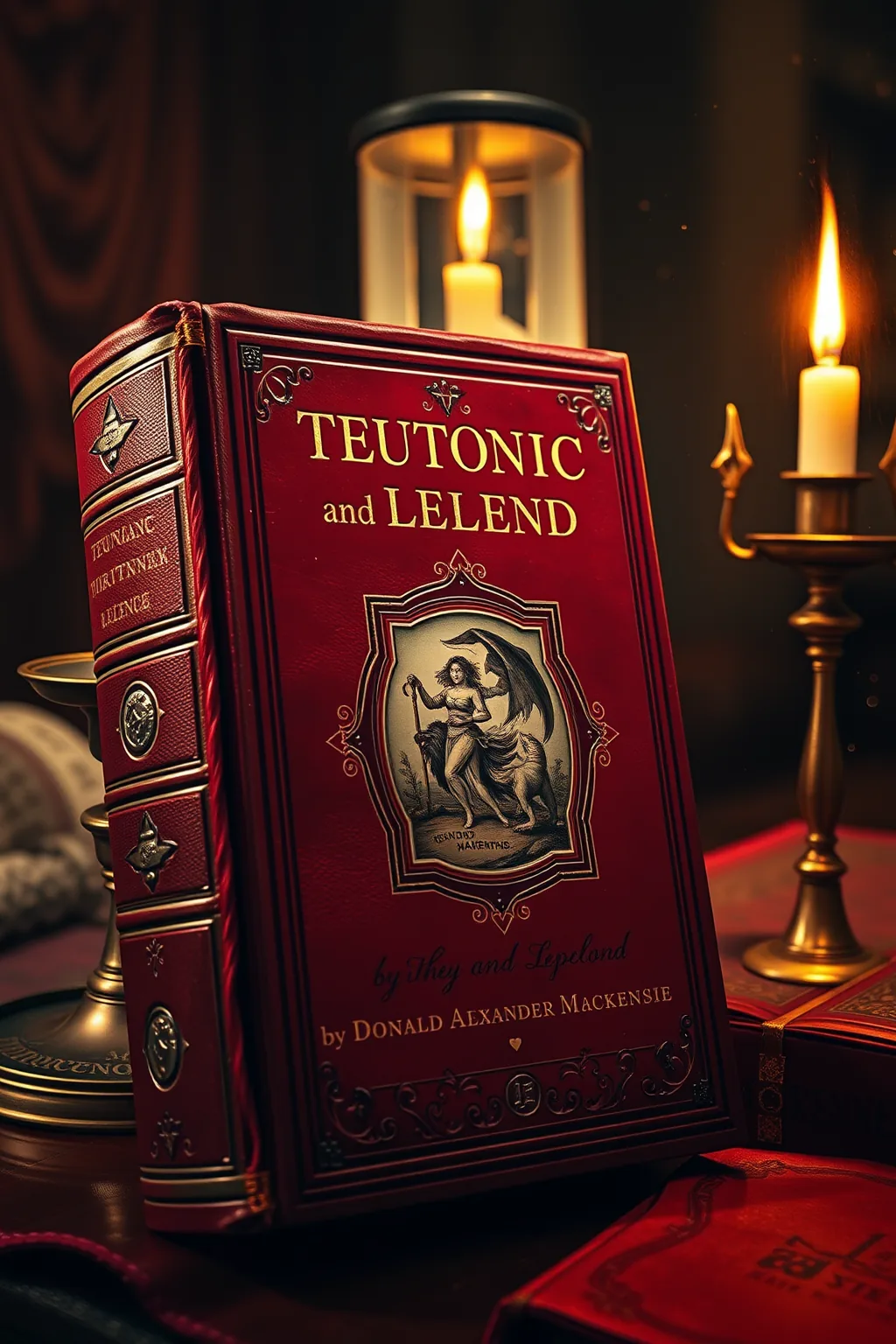
Teutonic Myth and Legend
 80
80

Teutonic Myth and Legend


Aurelia Blackwood (Occult Philosophy Critic) — Donald Alexander Mackenzie's 'Teutonic Myth and Legend' remains a cornerstone for any serious student of Northern esoteric traditions. Published in 1912, its enduring strength lies in Mackenzie's ability to render complex mythological cycles with clarity and narrative grace, drawing from primary sources like the Eddas and sagas. He doesn't shy away from the profound, symbolic underpinnings of these tales, offering a rich exploration of cosmogony, divine archetypes, and the hero's journey. This book is particularly valuable for its accessible yet comprehensive approach, making the profound wisdom of the Norse pantheon available to both neophytes and seasoned practitioners seeking to connect with ancient Germanic spirituality and its inherent metaphysical currents. A truly foundational text.
📝 Description
80
Donald Alexander Mackenzie's 1934 book examines the core myths of Germanic peoples.
Published in 1934, Donald Alexander Mackenzie's 'Teutonic Myth and Legend' assembles the lore of ancient Germanic tribes. Mackenzie draws on sources such as the Poetic Edda, the Prose Edda, and epic poems including Beowulf and the Volsung Saga. The book details the Norse pantheon, with figures like Odin, Thor, and Loki, and describes the cosmology, including the nine worlds. It also interprets the symbolic meanings within these myths, connecting them to broader ideas of human existence and the passage of time.
Mackenzie presents these narratives not just as ancient stories but as reflections of a particular worldview. He highlights the interplay of magic, the divine, and human conflict within this framework. The work aims to illuminate the origins of Western esoteric thought by examining these foundational myths and their archetypal characters.
This book connects Northern European mythology to broader currents of esoteric interest that gained traction in the early 20th century. Mackenzie's approach interprets these ancient stories through a lens that seeks deeper, symbolic meanings relevant to spiritual and psychological understanding. It positions Germanic myth as a source for exploring primal forces and archetypal patterns, aligning with esoteric traditions that look to ancient cosmologies for insights into the human condition and universal principles.
✍️ Author
Donald Alexander Mackenzie
Donald Alexander Mackenzie was a Scottish folklorist and writer, known for his works on mythology and ancient cultures.
Esoteric Writer
💡 Why Read This Book?
Uncover the profound symbolic language and esoteric wisdom embedded within the Northern mythological cycle. 'Teutonic Myth and Legend' offers a narrative gateway to the cosmos of Odin and Thor, ideal for seekers of ancient spiritual traditions, scholars of comparative mythology, and practitioners of Germanic paganism wishing to deepen their understanding of foundational lore.
⭐ Reader Reviews
Honest opinions from readers who have explored this book.
❓ Frequently Asked Questions
What are the primary sources Mackenzie uses?
Mackenzie draws extensively from the Poetic Edda, Prose Edda, and various Norse sagas, alongside medieval German romances and the epic poem Beowulf.
Is this book suitable for beginners?
Yes, Mackenzie presents the material in an accessible, narrative style, making it an excellent introduction to Norse mythology for those new to the subject.
What esoteric themes are explored?
The book delves into themes of creation, divine archetypes, fate (wyrd), the cyclical nature of existence, and the interconnectedness of the cosmos, all rich with symbolic meaning.
Does it cover the gods and heroes?
Absolutely. It provides detailed accounts of major deities like Odin, Thor, and Loki, as well as legendary heroes and tragic cycles.
What is the historical significance of this book?
Published in 1912, it was a significant early attempt to synthesize and present Northern mythology to a wider audience, influencing subsequent scholarship and popular interest.
🔮 Key Themes & Symbolism
Cosmogony and the Nine Worlds
Mackenzie illuminates the intricate structure of the Norse cosmos, detailing the creation myths and the distinct characteristics of the Nine Worlds. This foundational knowledge reveals a worldview deeply intertwined with elemental forces and spiritual planes. The concept of Yggdrasil, the world tree, serves as a potent symbol of interconnectedness, representing the pathways between realms and the eternal cycle of life, death, and rebirth. Understanding this cosmology is crucial for grasping the divine dramas and heroic endeavors that unfold within its sacred bounds, offering a framework for comprehending ancient beliefs about existence and the divine order.
The Pantheon and Archetypal Deities
At the heart of Teutonic myth lies a rich pantheon of powerful deities, each embodying specific cosmic functions and human archetypes. Odin, the All-Father, represents wisdom, magic, and the pursuit of hidden knowledge; Thor, the thunderous warrior, embodies protective strength and the power of the natural world; and Loki, the trickster, highlights the duality of creation and destruction, chaos and order. Mackenzie's portrayal allows readers to connect with these figures not just as characters, but as potent symbols of universal forces and psychological dimensions, offering insights into ancient views of divinity and the human relationship with the sacred.
Heroism, Fate, and the Tragic Cycles
The narratives within 'Teutonic Myth and Legend' are steeped in themes of heroism, the inexorable grip of fate (Wyrd), and the profound beauty of tragic cycles. Stories of figures like Sigurd and the Nibelungs explore the consequences of ambition, loyalty, betrayal, and the ultimate acceptance of destiny. These sagas offer timeless lessons on courage in the face of overwhelming odds, the weight of oaths, and the cyclical nature of conflict and reconciliation. They serve as powerful allegories for the human struggle against adversity, encouraging reflection on personal agency within the grand set of existence and the enduring resonance of heroic sacrifice.
💬 Memorable Quotes
Direct passages from the work, attributed to the author.
“From the void came the beginning.”
— A succinct evocation of creation ex nihilo, pointing to the primordial state from which all existence arises, a common theme in esoteric cosmologies.
“Wyrd is the weaver of all fates.”
— Emphasizes the powerful concept of fate in Norse belief, portraying it as an active, determining force that shapes the lives of gods and mortals alike.
“The rune holds ancient power.”
— Highlights the magical and divinatory significance of runes in Teutonic culture, suggesting their role as conduits for hidden knowledge and cosmic forces.
“Heroes are forged in the fires of trial.”
— Underscores the archetypal journey of the hero, who must undergo hardship and adversity to achieve their destiny and embody their true potential.
💡 Key Ideas
Editorial paraphrase of the work's core concepts — not direct quotes.
The gods are not dead, but sleeping.
This quote suggests that the divine energies and archetypes of the old gods may lie dormant, awaiting reawakening or transformation, hinting at a cyclical nature of spiritual influence.
🌙 Esoteric Significance
Tradition
This work is intrinsically linked to the Northern Esoteric Tradition, often referred to as Germanic Paganism or Norse Asatru. It explores the cosmology, theology, and heroic sagas that form the bedrock of this lineage. The emphasis on the divine pantheon, the concept of fate (Wyrd), the sacredness of nature, and the symbolic power of runes and magic all point to a system of belief and practice deeply rooted in the ancient Germanic world, offering a connection to primal spiritual energies and ancestral wisdom.
Symbolism
Mackenzie's exploration reveals a profound symbolic language woven into the fabric of Teutonic myth. The World Tree (Yggdrasil) symbolizes interconnectedness and the axis of the cosmos; the raven represents wisdom and communication with other realms; the hammer of Thor signifies protection and the power to overcome chaos; and the runes embody cosmic forces and divine knowledge. These symbols are not merely decorative but are potent keys to understanding the underlying metaphysical principles, the cycles of creation and destruction, and the spiritual journey of both gods and mortals within this rich mythological system.
Modern Relevance
The enduring appeal of 'Teutonic Myth and Legend' lies in its relevance to contemporary spiritual seekers and practitioners. The archetypes of the gods and heroes offer models for personal growth, courage, and navigating life's challenges. The emphasis on fate and personal responsibility, the interconnectedness of all things, and the exploration of primal forces resonate with modern pagan revivals and those seeking alternative spiritual frameworks. The book provides a vital link to ancient wisdom, offering insights into the human condition and the eternal quest for meaning that remain profoundly relevant today.
👥 Who Should Read This Book
This comprehensive volume is essential for a diverse audience. **Beginners** will find Mackenzie's narrative style an inviting entry point into the complex world of Norse mythology. **Scholars** of comparative mythology and cultural history will appreciate its synthesis of primary sources and its foundational role in scholarship. **Spiritual seekers** drawn to ancient paganism, Germanic spirituality, or the wisdom of the North will discover a rich source of lore and symbolic meaning. **Practitioners** of modern pagan traditions, particularly those focusing on Asatru or Heathenry, will find invaluable context and inspiration for their spiritual path, deepening their connection to ancestral beliefs and practices.
📜 Historical Context
Donald Alexander Mackenzie's 'Teutonic Myth and Legend,' first published in 1912, emerged during a period of intense scholarly interest in comparative mythology and the revival of interest in ancient European cultures. The late Victorian and Edwardian eras saw a burgeoning fascination with folklore, national epics, and the perceived 'roots' of Western civilization. This era was marked by a desire to connect with primal, authentic spiritual and cultural sources, often seen as a counterpoint to industrialization and burgeoning modernity. Mackenzie's work sought to synthesize disparate sources into a coherent narrative, making the collection of Norse mythology accessible to a wider readership, thereby contributing to the ongoing exploration of esoteric traditions and their foundational myths.
📔 Journal Prompts
Reflect on the creation myth and its connection to the void. How does this concept relate to your own understanding of beginnings?
Consider the archetypes of Odin, Thor, and Loki. Which deity's attributes resonate most with your current life journey, and why?
Explore the concept of Wyrd (fate) as presented in the myths. How do you perceive the balance between destiny and free will in your own life?
Imagine yourself as a hero within these sagas. What trials would you face, and what would be your ultimate goal or quest?
Contemplate the symbolism of Yggdrasil. How can you apply the concept of interconnectedness to your relationships and your understanding of the world?
🗂️ Glossary
Eddas
A collection of Old Norse poems and prose that form the primary source for much of our knowledge of Norse mythology and heroic legends, divided into the Poetic Edda and Prose Edda.
Sagas
Narrative prose works, primarily from medieval Iceland and Norway, recounting historical events, family histories, and legendary tales, often featuring heroic deeds and ancient customs.
Cosmogony
The branch of astronomy or theology concerned with the origin and development of the universe; in mythology, the creation story of a culture.
Wyrd
An Old English and Old Norse concept akin to fate or destiny, often personified as a cosmic force that determines the course of events for both gods and mortals.
Pantheon
All the gods of a particular religion or mythology collectively; in this context, referring to the assembly of Norse deities such as Odin, Thor, and Freyja.
This book appears in 1 collection
🔮 Readers Also Liked
Browse all →









More by Donald Alexander Mackenzie
All books →



From the “Transcendental Meditation” Collection
View all →




More Free Esoteric History & Biography Books
View all →