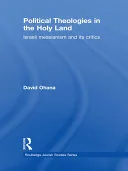
Political Theologies in the Holy Land
 72
72

Political Theologies in the Holy Land
David Ohana's "Political Theologies in the Holy Land" offers a crucial, if at times dense, examination of how messianic impulses have functioned as a driving force in Zionist thought and practice. The author compellingly demonstrates that these are not abstract theological notions but rather active political doctrines that have informed Israeli identity and policy since the movement's inception. A particular strength lies in Ohana's tracing of these ideas from early Zionism through to contemporary debates surrounding settlements in the occupied territories post-1967. While the academic rigor is undeniable, the sheer volume of theological and political history can make the text challenging for casual readers. The exploration of the difference between transcendent and immanent messianism, though vital, requires careful attention. Ultimately, Ohana provides an essential, if demanding, lens through which to understand a fundamental aspect of Israeli political theology.
📝 Description
72
### What It Is Political Theologies in the Holy Land, first published in 2009, dissects the pervasive influence of messianism within Zionist ideology. It argues that messianism transcends mere religious or philosophical discourse, functioning instead as a potent political practice that has indelibly shaped Israeli identity and public life.
### Who It's For This work is intended for scholars of political science, religious studies, and Middle Eastern history, as well as readers interested in the intersection of theology and statecraft. It will particularly appeal to those examining the historical and contemporary manifestations of religious nationalism.
### Historical Context Ohana's study emerges from a period of intense debate regarding the role of religious-nationalist movements in Israel. The book grapples with the aftermath of the 1967 war and the subsequent establishment of Jewish settlements in occupied territories, a period marked by significant theological justifications for territorial claims.
### Key Concepts The book meticulously unpacks concepts such as the politicization of redemption, the evolution of Zionist messianic thought, and the theological underpinnings of Israeli settlement policy. It explores how abstract eschatological beliefs translate into concrete political action and national identity formation.
💡 Why Read This Book?
• Gain a nuanced understanding of how messianic beliefs shaped Zionist ideology, learning about specific historical junctures like the post-1967 territorial debates. • Understand messianism not as a purely religious concept, but as a tangible political theology that has influenced Israeli state identity and public discourse. • Explore the concrete political practices derived from theological frameworks, offering a critical perspective on the role of faith in national movements.
⭐ Reader Reviews
Honest opinions from readers who have explored this book.
❓ Frequently Asked Questions
What is the central argument of "Political Theologies in the Holy Land"?
The book argues that messianism is not just a religious or philosophical concept but a practical political theology that has significantly shaped Israeli identity and policy, particularly in relation to Zionist ideology and territorial claims.
When was "Political Theologies in the Holy Land" first published?
The book was first published on October 16, 2009.
Who is the author of "Political Theologies in the Holy Land"?
The author is David Ohana.
What historical period does the book primarily cover regarding messianism in Zionism?
The book examines the role of messianism from the birth of the Zionist movement through to the present, with specific attention to developments after the 1967 war concerning the occupied territories.
What key issues does Ohana explore in relation to messianism and Israeli identity?
Ohana explores the presence of messianism in the Israeli public sphere, debates with Jewish settlers in occupied territories after 1967, and the distinction between transcendent and immanent messianic concepts.
What is the relationship between messianism and political practice according to the book?
The book asserts that messianism functions as a tangible political practice and theology, actively influencing state identity, public discourse, and policy decisions within the context of Israel.
🔮 Key Themes & Symbolism
Messianism as Political Practice
This theme centers on the argument that messianic concepts, often perceived as abstract religious ideas, are in fact potent political tools. Ohana demonstrates how these theological frameworks have been actively employed to justify national aspirations, territorial expansion, and the very construction of Israeli identity. The work traces the evolution of this practice from early Zionist movements to contemporary debates concerning settlements in the occupied territories after 1967, highlighting its enduring impact on public discourse and policy.
Zionism and Eschatological Ideology
The book critically examines the deep entanglement of Zionist ideology with messianic and eschatological thinking. It explores how beliefs about redemption, divine providence, and a divinely ordained destiny have been integrated into secular and religious strands of Zionism. This theme delves into how these ideas have been mobilized to legitimize political actions and shape the collective consciousness of the nation, particularly in relation to the land and its future.
Theology of Settlements
A significant focus is placed on how messianic theology has informed and justified the establishment of Jewish settlements in the occupied territories after the 1967 war. Ohana analyzes the theological arguments used by settlers and their supporters, framing territorial claims within a redemptive narrative. This theme unpacks the complex interplay between religious conviction, political action, and the ongoing conflict in the Holy Land.
Public Sphere and National Identity
This theme investigates the pervasive presence of messianic discourse within the Israeli public sphere and its consequential impact on national identity. Ohana shows how these theological underpinnings are not confined to religious circles but permeate political debates, media narratives, and the everyday understanding of what it means to be Israeli. The work highlights the ongoing tension between secular and religious-nationalist interpretations.
💬 Memorable Quotes
“Messianism is not just a religious or philosophical term but a very tangible political practice and theology.”
— This statement encapsulates the book's core thesis, asserting that messianic ideas have direct, practical consequences in the political realm, actively shaping national identity and state actions.
“The birth of the Zionist movement through to the present.”
— This phrase indicates the broad historical sweep of the book, promising an analysis of how messianic thought has evolved and influenced Zionism across different eras and contexts.
“Key issues such as: the current presence of messianism in the Israeli public sphere.”
— This highlights the book's focus on contemporary relevance, indicating that it examines how messianic ideas continue to manifest and influence public discourse and political life in Israel today.
“The debates with jewish settlers in the occupied territories after the 1967 war.”
— This points to a specific, critical case study within the book, demonstrating its engagement with the contentious political and theological justifications for settlement expansion.
“The difference between transcendent and immanent messianism.”
— This suggests the author's analytical depth, promising to explore nuanced distinctions within messianic thought and how these variations impact political theology and practice.
🌙 Esoteric Significance
Tradition
While not strictly adhering to a single esoteric lineage, "Political Theologies in the Holy Land" engages with concepts that resonate with Kabbalistic notions of redemption and divine intervention in history. It examines how interpretations of messianic prophecy, a core element in Jewish mysticism, have been translated into a modern political theology. The work departs from purely spiritual interpretations by focusing on the material and political manifestations of these deeply held beliefs within a national movement.
Symbolism
The concept of the 'Holy Land' itself functions as a potent symbol, representing not just a geographical territory but a divinely promised inheritance imbued with messianic significance. The idea of 'redemption' (geulah) is another key motif, symbolizing the ultimate salvation and restoration of the Jewish people and their land, often interpreted through both spiritual and political lenses within the context of Zionism.
Modern Relevance
Contemporary thinkers and movements focused on the intersection of religion and politics, particularly within the Israeli-Palestinian conflict, draw upon the analytical frameworks established in Ohana's work. Scholars examining the rise of religious nationalism globally, or specific theological justifications for political action, find value in its detailed examination of how messianic ideas fuel tangible political agendas and national identities.
👥 Who Should Read This Book
• Scholars of Political Science and Religious Studies seeking to understand the nexus of theology and statecraft in the Middle East. • Students of Jewish History and Zionism looking for critical analyses of the ideological underpinnings of the movement. • Readers interested in the impact of religious belief on contemporary political conflicts and national identity formation.
📜 Historical Context
Published in 2009, David Ohana's "Political Theologies in the Holy Land" emerged during a period of heightened academic and public scrutiny of religious nationalism in Israel. The intellectual climate was marked by ongoing debates surrounding the role of religious parties in government, the impact of the Second Intifada, and the theological justifications for the Israeli settlement project initiated after the 1967 Six-Day War. Ohana's work engaged with scholarship that was increasingly questioning the secular foundations of Zionism, exploring its latent or overt religious dimensions. Contemporaries like Yossi Klein Halevi were also examining the spiritual and ideological underpinnings of Israeli society. The book's focus on the politicization of messianism provided a critical lens, challenging more secular interpretations of Zionist history and contributing to a deeper understanding of the ideological currents shaping the region.
📔 Journal Prompts
The politicization of messianism as a tangible practice.
Zionist ideology's engagement with eschatological thought.
The role of Jewish settlers in the occupied territories after 1967.
The manifestation of messianic ideas in the Israeli public sphere.
Comparing transcendent versus immanent messianic interpretations.
🗂️ Glossary
Messianism
Belief in a messiah, a divinely appointed savior figure who will bring about a period of peace, justice, and redemption. In the context of the book, it extends to the political and nationalistic interpretations within Zionism.
Zionism
A nationalist movement that espoused the establishment and development of a Jewish homeland in historical Palestine. The book examines its messianic dimensions.
Political Theology
The study of the relationship between religion and politics, particularly how theological concepts influence political thought, institutions, and practices.
Occupied Territories
Territories captured by Israel during the Six-Day War in 1967, including the West Bank, Gaza Strip, and East Jerusalem. The book discusses Jewish settlements within these areas.
Transcendent Messianism
An interpretation of messianism focused on a spiritual, otherworldly redemption and transformation, often less directly tied to immediate political action.
Immanent Messianism
An interpretation of messianism emphasizing the realization of redemption within the current world through human action and political processes.
Israeli Identity
The sense of self and belonging associated with being a citizen or inhabitant of Israel, influenced by a complex interplay of religious, national, cultural, and political factors discussed in the book.