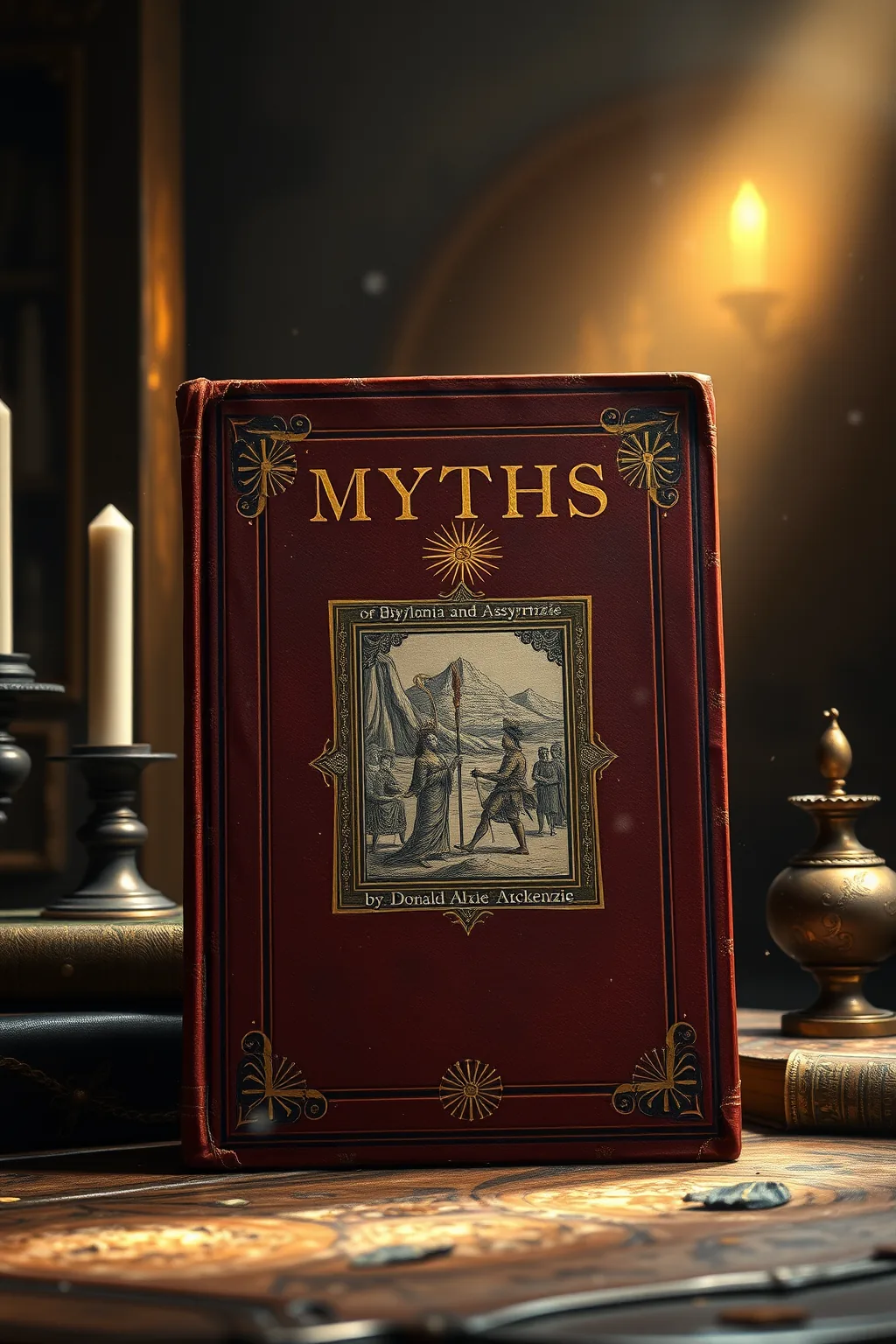
Myths of Babylonia and Assyria
 84
84

Myths of Babylonia and Assyria


Cassian Rothmann (Senior Critic, Ancient Wisdom) — Donald Alexander Mackenzie's 'Myths of Babylonia and Assyria' remains an indispensable cornerstone for any serious student of ancient esoteric traditions. Published in 1915, it predates much of modern academic scholarship, yet offers a remarkably insightful and sympathetic interpretation of Mesopotamian cosmology and religious practices. Mackenzie expertly weaves historical context with a deep appreciation for the symbolic and mystical dimensions of these foundational myths. His work is particularly valuable for its detailed exploration of creation narratives, the potent symbolism of deities like Ishtar, and the enduring resonance of the Gilgamesh epic. This book is a treasure trove for scholars, practitioners, and seekers alike, offering profound insights into the ancient world's understanding of the divine, the cosmos, and the human condition.
📝 Description
84
Donald Alexander Mackenzie published 'Myths of Babylonia and Assyria' in 1917, detailing Mesopotamian cosmology.
Donald Alexander Mackenzie's 1917 work, 'Myths of Babylonia and Assyria,' examines the mythologies of ancient Mesopotamia. The book covers creation myths, the story of the great flood, and the religious practices associated with deities like Ishtar and Tammuz. It also discusses legendary figures such as Gilgamesh and Etana.
Mackenzie frames these narratives not just as ancient stories but as symbolic systems that influenced later mystical traditions. He connects Mesopotamian beliefs to early forms of Gnosticism and Hermeticism, suggesting a continuity in the human search for divine understanding. The text aims to illuminate the symbolic structures and elemental forces that shaped early human thought and consciousness.
Published in 1917, Mackenzie's book emerged during a period of renewed interest in ancient religious and mystical systems. It places Mesopotamian mythology within a lineage that influenced Western esotericism, particularly Gnosticism and Hermeticism. The work interprets these myths as revealing fundamental spiritual concepts and archetypal patterns that continue to inform esoteric thought.
✍️ Author

Donald Alexander Mackenzie
Donald Alexander Mackenzie was a Scottish folklorist and writer, known for his works on mythology and ancient cultures.
Esoteric Writer
💡 Why Read This Book?
Delve into the foundational myths of Western civilization and unlock ancient esoteric wisdom. 'Myths of Babylonia and Assyria' offers a profound exploration of creation, divinity, and the heroic journey, revealing the symbolic language that shaped early mystical thought. Ideal for seekers of hidden knowledge, scholars of ancient religions, and practitioners interested in the archetypal forces that underpin human consciousness.
⭐ Reader Reviews
Honest opinions from readers who have explored this book.
❓ Frequently Asked Questions
What are the primary myths covered in this book?
The book extensively covers creation myths, the epic of Gilgamesh, deluge narratives, and the cults of prominent deities like Ishtar and Tammuz, offering a comprehensive overview of ancient Mesopotamian religious traditions.
Is this book suitable for beginners interested in esoteric topics?
Yes, while rich in detail, Mackenzie's accessible prose and clear narrative structure make it an excellent starting point for those new to esoteric studies and ancient mythologies.
What historical periods are discussed?
The narrative spans from the earliest Sumerian age through the classical Babylonian and Assyrian periods, providing a chronological understanding of the evolution of these myths and their cultural impact.
Does the book explore the religious practices of the time?
Absolutely. Mackenzie delves into the cults, rituals, and religious beliefs associated with the myths, offering insights into how these stories were lived and practiced by the ancient Mesopotamians.
Can this book be considered a primary source?
While Mackenzie compiles and retells existing Mesopotamian texts, his work serves as an authoritative secondary source that synthesizes complex mythological and historical information for a modern audience.
🔮 Key Themes & Symbolism
Primordial Creation and Cosmic Order
Explore the ancient Mesopotamian understanding of the universe's genesis, from the chaotic void to the establishment of divine order. This theme examines the inherent power of creation myths, revealing how early civilizations sought to comprehend their place within the cosmos. It examines the cyclical nature of existence, the emergence of deities from primordial forces, and the symbolic representations of celestial phenomena that informed their worldview, offering a glimpse into the foundational blueprints of reality as perceived by these ancient cultures.
The Heroic Journey and the Quest for Immortality
Central to Mesopotamian lore is the epic of Gilgamesh, embodying the universal human struggle with mortality, fate, and the pursuit of eternal life. This theme scrutinizes the archetypal hero's trials, his encounters with divine and monstrous beings, and his eventual acceptance of human limitations. It highlights the symbolic significance of his journey as a metaphor for personal transformation, spiritual awakening, and the enduring quest for meaning in the face of inevitable death, resonating with timeless philosophical and existential inquiries.
Divine Feminine and Fertility Cults
The powerful influence of goddesses like Ishtar, representing love, fertility, war, and the underworld, is a crucial element. This theme examines the complex roles of the divine feminine in Mesopotamian society and religion. It explores the symbolism of fertility cults, their connection to agricultural cycles, and the potent archetypal energies associated with creation and life. Understanding these cults provides insight into the ancient reverence for generative forces and the wide impact of feminine divine principles on spiritual and material well-being.
💬 Memorable Quotes
Direct passages from the work, attributed to the author.
“The gods were born of the primeval chaos.”
— This highlights the Gnostic concept of creation emerging from a primal, undifferentiated state, a recurring theme in esoteric traditions where the divine manifests from the unformed.
“Gilgamesh sought the secret of immortality.”
— A quintessential expression of the human yearning for transcendence and the existential quest to overcome mortality, a central pursuit in many mystical and philosophical systems.
“Tammuz was the god of the spring and the harvest.”
— This points to the ancient agrarian connection between divinity, life cycles, and the earth's fertility, a symbolic representation of renewal and abundance found across various spiritual paths.
“Ishtar was the goddess of love and war.”
— Illustrates the dualistic nature of divine power, encompassing both creation and destruction, love and conflict, a complex interplay of forces essential to cosmic balance.
💡 Key Ideas
Editorial paraphrase of the work's core concepts — not direct quotes.
The oldest records of the human race are its myths and legends.
This quote underscores the book's premise: that myths are not mere stories but the foundational texts of human consciousness and civilization, holding keys to our collective past and spiritual evolution.
🌙 Esoteric Significance
Tradition
This work directly engages with the foundational myths that underpin many Western esoteric traditions, including Hermeticism, Gnosticism, and Kabbalah. The Mesopotamian cosmogonies, with their emphasis on creation from chaos, the divine hierarchy, and the cyclical nature of existence, provided early archetypes that would be reinterpreted and integrated into later mystical philosophies. The symbolic language of these myths offers a rich source for understanding concepts like the divine spark, the journey of the soul, and the interaction between the material and spiritual realms.
Symbolism
The book is a rich source of ancient symbolism. From the celestial bodies representing deities to the heroic journeys mirroring spiritual quests, every element carries profound meaning. The deluge becomes a symbol of purification and rebirth, Ishtar embodies the potent forces of life and death, and the epic of Gilgamesh speaks to the human condition and the search for eternal wisdom. Understanding these symbols unlocks a deeper appreciation for the universal archetypes that have shaped human consciousness and spiritual exploration across cultures and epochs.
Modern Relevance
The enduring relevance of these ancient myths lies in their exploration of universal human themes: creation, mortality, love, loss, and the search for meaning. In an age often perceived as fragmented and disconnected, these narratives offer a profound connection to our ancestral past and the fundamental questions of existence. They provide archetypal patterns for personal growth, spiritual resilience, and a deeper understanding of the cosmic forces that continue to influence our lives, making them vital for contemporary spiritual seekers and philosophers.
👥 Who Should Read This Book
This meticulously curated volume is essential for scholars of ancient Near Eastern studies, comparative mythology, and religious history. Esoteric practitioners and occultists will find invaluable insights into the symbolic language and foundational archetypes that inform their respective paths. For the dedicated seeker of hidden wisdom and those fascinated by the genesis of human spiritual thought, 'Myths of Babylonia and Assyria' offers a profound and enriching exploration, bridging the gap between ancient civilizations and the eternal quest for understanding.
📜 Historical Context
Published in 1915, 'Myths of Babylonia and Assyria' emerged during a period of intense archaeological discovery and a burgeoning interest in the East's ancient civilizations. The early 20th century saw a fascination with uncovering the origins of religious and philosophical thought, with Mesopotamia viewed as a cradle of human civilization. Scholars and mystics alike were drawn to the cuneiform tablets unearthed, seeking profound truths and hidden wisdom. Mackenzie's work arrived as a synthesis, aiming to make these complex, often fragmented narratives accessible. It resonated with a desire to understand the roots of Western culture and its spiritual underpinnings, providing a bridge between the ancient world and the modern seeker, influencing fields from comparative mythology to early occult studies.
📔 Journal Prompts
Reflect on the concept of creation as presented in Mesopotamian myths. How does it compare to other creation narratives you are familiar with?
Consider the role of the hero in the Epic of Gilgamesh. What lessons can be drawn from his journey about mortality and the human condition?
Analyze the symbolism of Ishtar. What does her dual nature (love/war, life/death) reveal about ancient perceptions of divine power?
How do the deluge myths in this book speak to themes of destruction and renewal in your own life or in the world around you?
Imagine you are an ancient Babylonian priest or priestess. How would you interpret and teach these myths to your community?
🗂️ Glossary
Cuneiform
An ancient writing system used in Mesopotamia, characterized by wedge-shaped marks impressed on clay tablets. It is the primary medium through which these myths have been preserved.
Tiamat
The primordial goddess of the saltwater ocean, representing chaos in Mesopotamian creation myths, often depicted as a monstrous figure from which the world is formed.
Marduk
The chief god of Babylon, who defeated Tiamat and became the creator of the cosmos and the patron deity of the city, central to the Enuma Elish epic.
Gilgamesh
The semi-divine protagonist of the Epic of Gilgamesh, a legendary king of Uruk whose quest for immortality is a central narrative in Mesopotamian literature.
Enkidu
A wild man created by the gods to challenge Gilgamesh, who becomes his loyal companion and fellow adventurer, representing the wild or primal aspect of nature.
This book appears in 1 collection
🔮 Readers Also Liked
Browse all →









More by Donald Alexander Mackenzie
All books →


From the “Transcendental Meditation” Collection
View all →






More Free Esoteric History & Biography Books
View all →