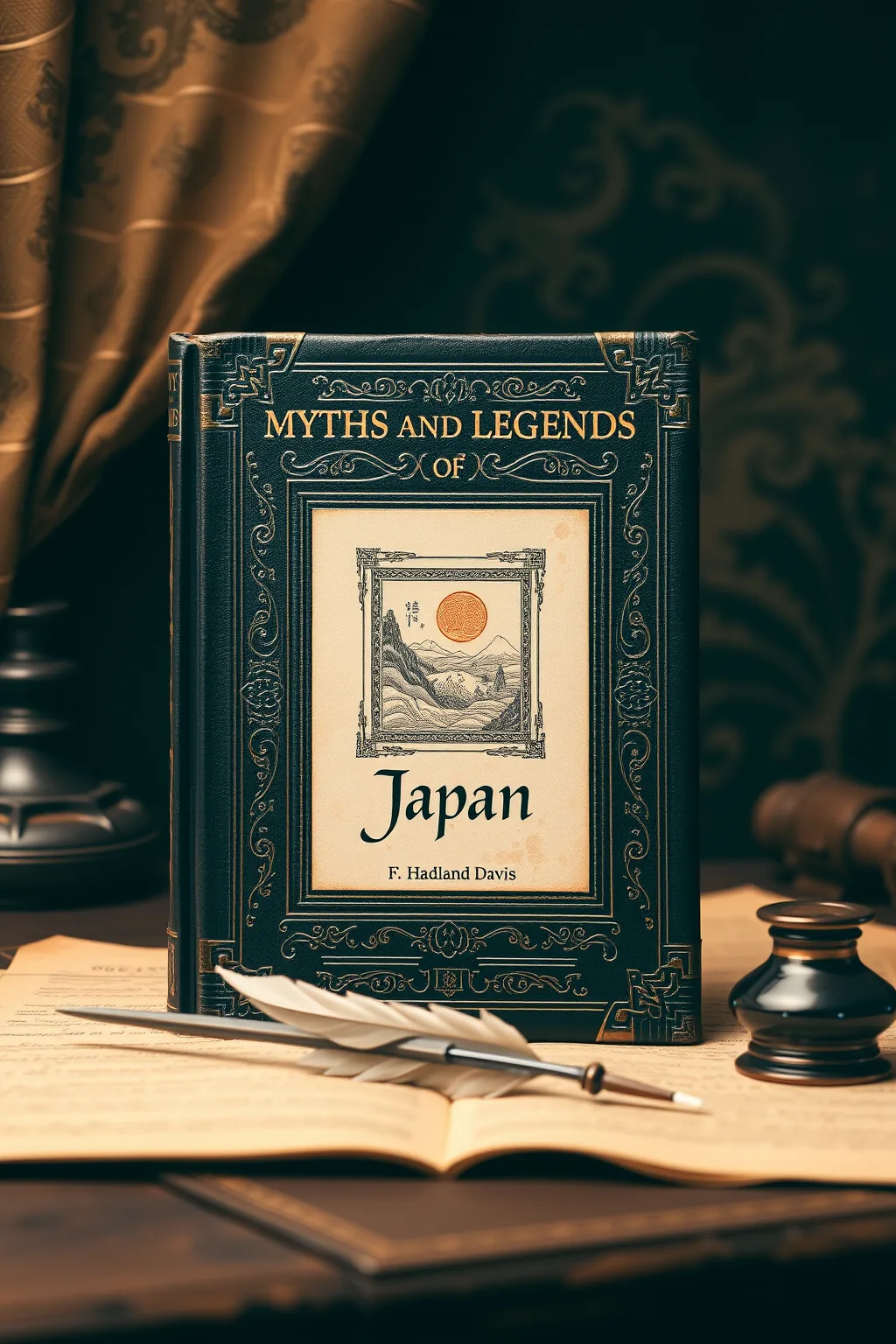
Myths and Legends of Japan
 73
73

Myths and Legends of Japan



Alaric Kestrel, Metaphysical Studies Reviewer: F. Hadland Davis's "Myths and Legends of Japan" remains a cornerstone for anyone seeking to understand the spiritual bedrock of the Land of the Rising Sun. Published in 1912, its enduring strength lies in its scholarly yet accessible exploration of Shinto and Buddhist mythologies, presented not as quaint tales but as repositories of profound cosmic and ethical insights. Davis masterfully deciphers the symbolism embedded within the stories of kami, heroes, and yokai, offering a rare glimpse into a worldview deeply attuned to nature and the spirit realm. This book is essential for scholars of comparative religion, practitioners of Eastern esoteric arts, and any soul yearning to connect with ancient wisdom that continues to resonate today. A truly illuminating work.
📝 Description
73
First published in 1912, F. Hadland Davis's book connects Japanese myths with Shinto and Buddhist thought.
F. Hadland Davis's "Myths and Legends of Japan," released in 1912, examines the roots of Japanese cultural beliefs. The book details Shinto creation stories, the influence of Buddhist philosophy, and accounts of historical figures. Readers will find descriptions of the kami, legendary heroes, and various spirits and mythical beings found in Japanese folklore. Davis presents these narratives not simply as stories, but as expressions of the symbolic language and spiritual frameworks that have shaped Japanese society. The work illustrates how myths illuminate fundamental aspects of human experience and our relationship with the unseen. It offers a window into the beliefs that have long informed the Japanese worldview.
This volume carefully compiles accounts of the divine beings central to Shinto, such as Izanagi and Izanami. It also covers the lives and deeds of prominent historical figures who have become legendary, like the samurai. Furthermore, the book touches upon the Yokai, the diverse array of supernatural entities that populate Japanese tales. Davis structures these elements to show their connection to the spiritual and philosophical traditions of Japan, presenting a comprehensive overview of a rich mythological heritage.
This book fits within a tradition of Westerners documenting and interpreting non-Western spiritual and mythological systems in the early 20th century. It seeks to understand Japanese folklore through the lens of its religious and philosophical underpinnings, particularly Shinto and Buddhism. The work treats these myths as more than simple stories, suggesting they contain deeper symbolic meanings related to the Japanese psyche and worldview. It approaches the subject with an earnest desire to uncover the spiritual architecture behind the cultural narratives.
✍️ Author
F Hadland Davis
This is an incomplete list of botanists by their author abbreviation, which is designed for citation with the botanical names or works that they have published. This list follows that established by Brummitt & Powell (1992).
💡 Why Read This Book?
Delve into the mystical heart of Japan, uncovering the sacred narratives that have shaped its spiritual landscape for centuries. This book is ideal for seekers of ancient wisdom, scholars of comparative mythology, and practitioners interested in the esoteric dimensions of Shinto and Buddhism. Discover hidden symbolism and gain profound insights into a worldview that bridges the earthly and the divine.
⭐ Reader Reviews
Honest opinions from readers who have explored this book.
❓ Frequently Asked Questions
What is the primary focus of "Myths and Legends of Japan"?
The book primarily focuses on the rich tapestry of traditional Japanese folklore, encompassing ancient myths, religious beliefs, and historical legends, with a particular emphasis on Shinto and Buddhist traditions.
Who is F. Hadland Davis?
F. Hadland Davis was an author who, in 1912, compiled and presented a comprehensive collection of Japanese myths and legends, offering an accessible yet insightful exploration of the subject.
Is this book suitable for beginners interested in Japanese mythology?
Yes, the book provides a comprehensive yet engaging overview, making it an excellent starting point for those new to Japanese myths and legends, while still offering depth for more experienced readers.
What are the main religious traditions explored?
The book extensively explores Shinto, Japan's indigenous religion, and also delves into the influence and integration of Buddhist traditions within Japanese folklore and mythology.
Does the book discuss Japanese spirits and supernatural beings?
Absolutely. A significant portion of the book is dedicated to tales of gods, goddesses, heroes, demons, and various spirits and creatures that populate Japanese folklore and have shaped its cultural identity.
🔮 Key Themes & Symbolism
The Cosmic Dance of Kami and Humanity
This theme explores the intricate relationship between the divine spirits (kami) and the human realm in Japanese mythology. It looks at the creation myths, the establishment of cosmic order by the gods, and the ongoing interaction and influence that these deities exert on mortal life. Understanding the pantheon of kami, their domains, and their temperaments offers a clear insights into the Japanese worldview, where the sacred is immanent in nature and everyday existence. The narratives reveal a philosophy of harmony and respect, essential for maintaining balance between the earthly and the spiritual planes.
The Hero's Journey Through Sacred Landscapes
Focusing on the archetypal journeys of heroes and legendary figures, this theme examines how their trials and tribulations unfold within the sacred geography of Japan. These tales often involve quests, battles against malevolent forces, and the pursuit of spiritual enlightenment or societal order. The stories are imbued with symbolic meaning, reflecting the challenges of spiritual growth, the overcoming of ego, and the integration of disparate forces within oneself and the community. The landscapes themselves often become active participants, imbued with spiritual energy and significance.
The Veil Between Worlds: Spirits, Demons, and the Unseen
This theme investigates the pervasive presence of the supernatural in Japanese folklore. It explores the wide range of spirits (yokai), demons, and spectral entities that inhabit the liminal spaces between the living and the dead, or between the mundane and the magical. These beings are not always purely malevolent but often represent primal forces, cautionary tales, or manifestations of the subconscious. Understanding their roles sheds light on ancient Japanese beliefs about karma, the afterlife, and the delicate balance required to navigate a world populated by both visible and invisible beings.
💬 Memorable Quotes
Direct passages from the work, attributed to the author.
“The gods walked among men.”
— This evocative phrase suggests a time of direct divine presence, where the veil between the celestial and terrestrial was thin, highlighting a deeply animistic and spiritual connection.
“The spirits whisper in the rustling leaves.”
— This poetic sentiment underscores the Shinto belief in the immanence of spirits in nature, where the divine is found in the natural world.
“A hero's courage is forged in the heart of chaos.”
— This speaks to the transformative power of adversity, suggesting that true strength and character are developed through facing and overcoming life's most challenging circumstances.
“The demons guard the gates of forgotten knowledge.”
— This implies that confronting and understanding darker or more challenging aspects of existence can unlock hidden wisdom and deeper truths.
“The past is but a dream of the present.”
— This philosophical reflection suggests that historical narratives and myths are not static but continually inform and shape our current reality and understanding.
🌙 Esoteric Significance
Tradition
This work is deeply rooted in the esoteric traditions of Shinto and Japanese Buddhism. Shinto, with its emphasis on kami (spirits or deities) inhabiting all of nature, presents an animistic and polytheistic worldview where the sacred is immanent. Buddhist influences introduce concepts of karma, reincarnation, and the path to enlightenment, often interwoven with existing Shinto beliefs. The collection reveals a syncretic spiritual system where these traditions coalesce to form a unique cultural and metaphysical understanding.
Symbolism
The myths are rich with potent symbolism. The creation stories often depict primordial chaos giving rise to order, reflecting universal alchemical principles. The journeys of heroes symbolize the soul's quest for self-discovery and spiritual transcendence, facing inner and outer demons. Elements of nature—mountains, rivers, trees—are imbued with divine presence, representing the interconnectedness of all things. The recurring motifs of purity, purification rituals, and the balance between light and shadow offer useful insights into ethical and spiritual frameworks.
Modern Relevance
In an increasingly secular and technologically driven world, the myths and legends presented by Davis offer a vital connection to ancient wisdom and a more holistic understanding of existence. They remind us of the spiritual dimensions of life, the importance of nature, and the enduring power of storytelling to convey profound truths. For practitioners of various spiritual paths, the book provides a rich source of archetypal imagery and philosophical concepts that can inform personal growth and spiritual practice, fostering a deeper appreciation for cultural diversity and universal human experiences.
👥 Who Should Read This Book
This volume is a treasure for the dedicated seeker of ancient wisdom, offering a gateway into the spiritual heart of Japan. Scholars of comparative mythology and religious studies will find its comprehensive scope and insightful analysis important for understanding Eastern esoteric traditions. Practitioners of Eastern spiritual arts, such as Zen Buddhism or Shinto-inspired practices, will discover a wealth of archetypal symbols and narratives that can deepen their understanding and practice. Even those new to the subject will find the accessible prose and captivating stories an engaging introduction to a rich and profound cultural heritage.
📜 Historical Context
Published in 1912, "Myths and Legends of Japan" emerged during a period of significant transition for Japan. The Meiji Restoration (1868) had ushered in an era of rapid modernization and Westernization, leading to a complex interplay between tradition and progress. As Japan asserted itself on the global stage, there was also a renewed interest in preserving and understanding its unique cultural heritage. Davis's work reflects this dual focus: it presents the ancient folklore with scholarly rigor, making it accessible to a Western audience, while simultaneously contributing to a broader conversation about national identity and the enduring power of Japan's spiritual roots in the face of profound societal change.
📔 Journal Prompts
Reflect on a time you felt a strong connection to nature, mirroring the Shinto reverence for kami. What did this experience reveal to you?
Consider a personal challenge or 'hero's journey.' How did overcoming it transform you, and what symbolic lessons did you learn?
Imagine encountering a 'yokai' from Japanese folklore. What qualities would it embody, and what message might it impart?
How does the concept of balance, as depicted in Japanese myths, apply to your own life? Where do you seek harmony?
If the gods walked among us today, what aspects of modern society would they find most surprising or concerning?
🗂️ Glossary
Kami
In Shinto, kami are spirits, deities, or essences that inhabit the natural world, objects, or even abstract concepts. They are venerated and often embody forces of nature or ancestral spirits.
Shinto
Japan's indigenous religion, characterized by the worship of kami, ancestor veneration, and a deep reverence for nature. It emphasizes purity, harmony, and the interconnectedness of the spiritual and material worlds.
Yokai
A broad category of supernatural beings, spirits, monsters, and demons in Japanese folklore. They can be benevolent, malevolent, or mischievous, often representing primal forces or cautionary tales.
Amaterasu
The sun goddess in Shinto mythology, considered the most important deity and the ancestress of the Japanese imperial family. She represents light, warmth, and cosmic order.
Susanoo
The impetuous god of storms and the sea in Shinto mythology. Often portrayed as a trickster and warrior, he represents powerful, untamed natural forces.
This book appears in 1 collection
🔮 Readers Also Liked
Browse all →









From the “Transcendental Meditation” Collection
View all →







More Free Esoteric History & Biography Books
View all →