Atlantis, the Antediluvian World

 80
80

Atlantis, the Antediluvian World

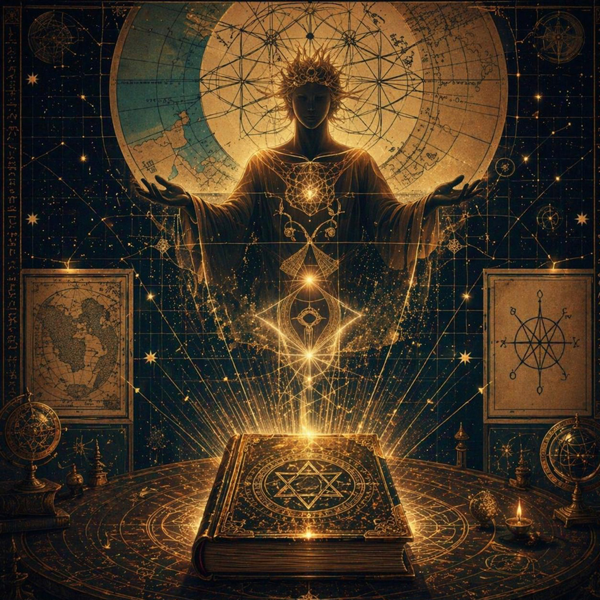

Silas Hawthorne, Hermetic Studies Editor: Ignatius Donnelly's "Atlantis, the Antediluvian World" remains a cornerstone of esoteric scholarship, presenting a meticulously researched, albeit speculative, case for a highly advanced Atlantean civilization. Eschewing the nebulous realms of spiritualism, Donnelly grounds his arguments in comparative mythology, linguistics, and early archaeological findings, lending his theory an unusual gravitas. This work is a testament to intellectual curiosity and the persistent human fascination with our ancient past. It serves as a vital precursor to much modern Atlantis lore, offering a compelling framework for understanding the echoes of a lost, antediluvian world that continue to resonate within our collective consciousness.
📝 Description
80
Ignatius Donnelly published "Atlantis, the Antediluvian World" in 1882, proposing a lost continent influenced global civilization.
Ignatius Donnelly's 1882 book, "Atlantis, the Antediluvian World," argues that Plato's Atlantis was a real continent that existed before the biblical flood. Donnelly compiles evidence from mythology, linguistics, archaeology, and geology to support his thesis. He suggests that this Atlantean civilization was highly advanced and was the source of many ancient cultures and technologies worldwide. The book presents similarities between flood myths from various cultures, the spread of megalithic architecture, and commonalities in languages and religious symbols as proof of a single, ancient origin. Donnelly posits that after Atlantis sank, its survivors scattered, seeding the populations of ancient Egypt, Greece, the Americas, and other regions.
He details specific connections, such as the Egyptian god Osiris being a representation of an Atlantean king and the pyramids being modeled after Atlantean structures. Donnelly also links Atlantean influence to Mesoamerican civilizations, noting parallels in their calendars, pyramids, and religious beliefs. The work is a comprehensive attempt to link disparate global traditions to a single, forgotten source, challenging conventional historical timelines and suggesting a pre-diluvian golden age. It remains a significant text in the study of Atlantis lore.
Donnelly's work is a cornerstone of modern Atlantis literature, popularizing the idea of a lost, advanced civilization as the source of ancient wonders and myths. While not strictly occult, it taps into a fascination with hidden histories and forgotten knowledge common in esoteric traditions. It provides a framework for understanding ancient mysteries not as isolated phenomena but as remnants of a grand, unified, antediluvian past. This perspective aligns with esoteric interests in ancient wisdom, spiritual origins, and cyclical views of history, positioning Atlantis as a key to unlocking humanity's earliest spiritual and technological achievements.
💡 Why Read This Book?
Discover the foundational arguments for Atlantis, a theory presented without reliance on occult claims. "Atlantis, the Antediluvian World" offers a compelling historical and linguistic exploration for seekers of lost knowledge, scholars of ancient civilizations, and practitioners interested in the origins of human culture and mythology.
⭐ Reader Reviews
Honest opinions from readers who have explored this book.
❓ Frequently Asked Questions
What is the central thesis of "Atlantis, the Antediluvian World"?
The book posits that Atlantis was a real, highly advanced civilization that existed before the biblical flood, serving as the origin point for many ancient cultures, mythologies, and technologies across the globe.
Does Donnelly claim psychic or occult knowledge?
No, Donnelly explicitly states his work is based on empirical evidence, comparative mythology, linguistics, and archaeological interpretations available in his time, aiming for a rational reconstruction.
What evidence does Donnelly use to support his claims?
He draws upon parallels in flood myths, similarities in ancient languages, astronomical observations, architectural styles, and the distribution of ancient artifacts and civilizations.
Who was Ignatius Donnelly?
Ignatius Donnelly (1831-1901) was an American lawyer, politician, land promoter, and prolific author known for his wide-ranging interests, with Atlantis being his most enduring legacy.
Is the book still relevant today?
Yes, it remains a foundational text for Atlantis studies, offering a detailed historical and comparative analysis that continues to inspire debate and research into lost civilizations and ancient wisdom.
🔮 Key Themes & Symbolism
The Universal Origin Myth
Donnelly argues that the widespread myths of a great flood and a lost, advanced civilization are not mere coincidences but elements of a single, antediluvian source: Atlantis. He meticulously compiles flood narratives from diverse cultures, highlighting their striking similarities, suggesting a shared ancestral memory of a cataclysmic event that destroyed this primordial world and scattered its survivors, thereby seeding global civilizations with its legacy of knowledge and culture. This theme underscores the interconnectedness of human history and the deep, archetypal roots of our collective consciousness.
Linguistic and Cultural Parallels
A central pillar of Donnelly's thesis is the examination of linguistic and cultural similarities across seemingly disparate ancient civilizations. He posits that these resemblances, from alphabets and religious symbols to architectural styles and agricultural practices, are evidence of a common origin. By drawing extensive parallels between ancient American civilizations and those of the Old World, Donnelly builds a compelling, albeit controversial, case for Atlantean influence as the unifying factor that shaped the early development of human societies across the globe, acting as a conduit for shared wisdom and innovation.
The Rediscovery of Lost Wisdom
"Atlantis, the Antediluvian World" is an invitation to rediscover forgotten wisdom and challenge the accepted timeline of human progress. Donnelly presents Atlantis not just as a geographical location but as a repository of advanced knowledge, science, and societal structure that predates known history. His work inspires a re-evaluation of ancient texts and artifacts, urging readers to look beyond the surface and seek the hidden truths that lie dormant within the grand narratives of the past, suggesting that understanding Atlantis is key to understanding the true potential of humanity.
💬 Memorable Quotes
Direct passages from the work, attributed to the author.
““The story of Atlantis is not a myth, but a history.””
— Donnelly’s firm conviction that his findings represent factual historical accounts rather than fanciful tales, urging readers to approach his work with a serious historical lens.
““The traditions of all nations point to a great catastrophe…””
— This highlights Donnelly's reliance on comparative mythology, particularly flood narratives, as evidence for the cataclysmic destruction of Atlantis and its profound global impact.
““The discovery of Atlantis would revolutionize our ideas of the past.””
— A proof of the wide implications Donnelly believed his research held, suggesting that the existence of Atlantis would fundamentally alter our understanding of human history and progress.
““We are but children of a greater antiquity than we suppose.””
— This evocative phrase suggests a deeper, more ancient lineage for humanity than conventionally understood, hinting at the vast, forgotten epochs preceding our current civilization.
💡 Key Ideas
Editorial paraphrase of the work's core concepts — not direct quotes.
“Atlantis was the cradle of the human race…”
This quote expresses Donnelly's core assertion: that Atlantis was not merely a civilization, but the very genesis point for humanity's development and cultural dispersal.
🌙 Esoteric Significance
Tradition
While "Atlantis, the Antediluvian World" consciously avoids occult or 'channeled' information, its significance within esoteric traditions is profound. It functions as a secularized mythology, providing a rationalistic framework for concepts prevalent in Hermeticism, Theosophy, and various mystery schools concerning lost golden ages, pre-diluvian wisdom, and the cyclical nature of civilizations. Donnelly's work serves as a bridge, making the idea of ancient, advanced societies accessible to a wider audience, thus indirectly seeding esoteric concepts into mainstream consciousness and inspiring later esoteric thinkers.
Symbolism
The primary symbol is Atlantis itself: a lost continent representing a golden age of advanced knowledge, spiritual enlightenment, and sophisticated technology, ultimately succumbing to hubris or cataclysm. The flood myth symbolizes purification and rebirth, the destruction of an old order to pave the way for a new one. Donnelly's comparative analysis of symbols – the cross, the serpent, the sun disk – across cultures points to a universal spiritual language and a shared origin, suggesting that these symbols are not mere decorative elements but keys to unlocking profound, forgotten truths about humanity's divine potential and cosmic connection.
Modern Relevance
Donnelly's work remains remarkably relevant for its exploration of themes that continue to captivate the modern imagination: the search for origins, the possibility of forgotten advanced civilizations, and the cyclical nature of history. In an era grappling with ecological challenges and rapid technological change, the cautionary tale of Atlantis—a civilization that may have fallen due to its own advancements or societal failings—offers timeless lessons. It encourages critical thinking about progress, the potential pitfalls of unchecked ambition, and the enduring human quest to understand our place in the grand cosmic narrative, serving as a foundational text for contemporary discussions on ancient mysteries and human potential.
👥 Who Should Read This Book
This foundational text is essential for anyone drawn to the enigma of Atlantis. Beginners will find it an accessible and compelling introduction to the core arguments for a lost continent. Scholars of ancient history and mythology will appreciate Donnelly's rigorous, albeit dated, methodology and his extensive comparative research. Seekers of hidden knowledge and esoteric truths will discover a rationalistic precursor to many spiritual concepts of lost civilizations. Practitioners of ancient wisdom traditions may find validation and historical context for their studies, making it a vital read for a broad spectrum of curious minds.
📜 Historical Context
Published in 1882, "Atlantis, the Antediluvian World" emerged during a period of intense interest in ancient civilizations, archaeology, and esoteric philosophies. The late 19th century saw a surge in archaeological discoveries that challenged established historical narratives, fueling speculation about lost continents and advanced prehistoric societies. Donnelly's work tapped into this zeitgeist, offering a comprehensive, rationalistic (for its time) argument for Atlantis that resonated with a public eager to explore the mysteries of the past. It arrived at a time when scientific and historical inquiry was expanding, yet still open to grand theories that connected disparate fields of knowledge. The book became a sensation, influencing not only Atlantis lore but also the broader range of speculative history and early New Age thought, providing a potent intellectual framework for exploring the hidden origins of humanity.
📔 Journal Prompts
How does Donnelly's interpretation of flood myths challenge conventional historical accounts?
In what ways do the linguistic and cultural parallels he draws resonate with your own understanding of global connections?
If Atlantis were real, what ethical or societal lessons might its downfall offer contemporary society?
Consider a modern-day 'Atlantis' – a civilization or technology that could potentially be lost. What might it be and why?
How does the idea of a lost, advanced civilization impact your personal sense of history and human potential?
🗂️ Glossary
Antediluvian
Referring to the period before the biblical Great Flood. Donnelly uses this term to denote the era in which Atlantis is believed to have existed.
Mythology
A collection of myths, especially one belonging to a particular religious or cultural tradition. Donnelly analyzes myths as historical records of lost events.
Comparative Mythology
The study of myths from different cultures to find common themes, origins, and meanings. Donnelly heavily relies on this method to link global traditions to Atlantis.
Linguistic Parallels
Similarities found in the vocabulary, grammar, or structure of different languages. Donnelly uses these to argue for a common ancestral language originating from Atlantis.
Archaeology
The study of human history and prehistory through the excavation of sites and the analysis of artifacts and other physical remains. Donnelly uses existing archaeological findings of his time to support his theories.
This book appears in 4 collections
🔮 Readers Also Liked
Browse all →









From the “Transcendental Meditation” Collection
View all →
![An answer of a letter from a gentleman in Fife, to a nobleman, containing a brief acccount [sic] of the barbarous and illegal treatment, these poor women accused of witchcraft, met with from the baillies of Pittenweem and others, ... To which is adde](/img/thumb/an-answer-of-a-letter-from-a-gentleman-in-fife-to-a-nobleman-containing-a-brief-acccount-sic-of-the-barbarous-and-illegal-treatment-these-poor-women-accused-of-witchcraft-met-with-from-the-baillies-of.webp)







More Free Esoteric History & Biography Books
View all →