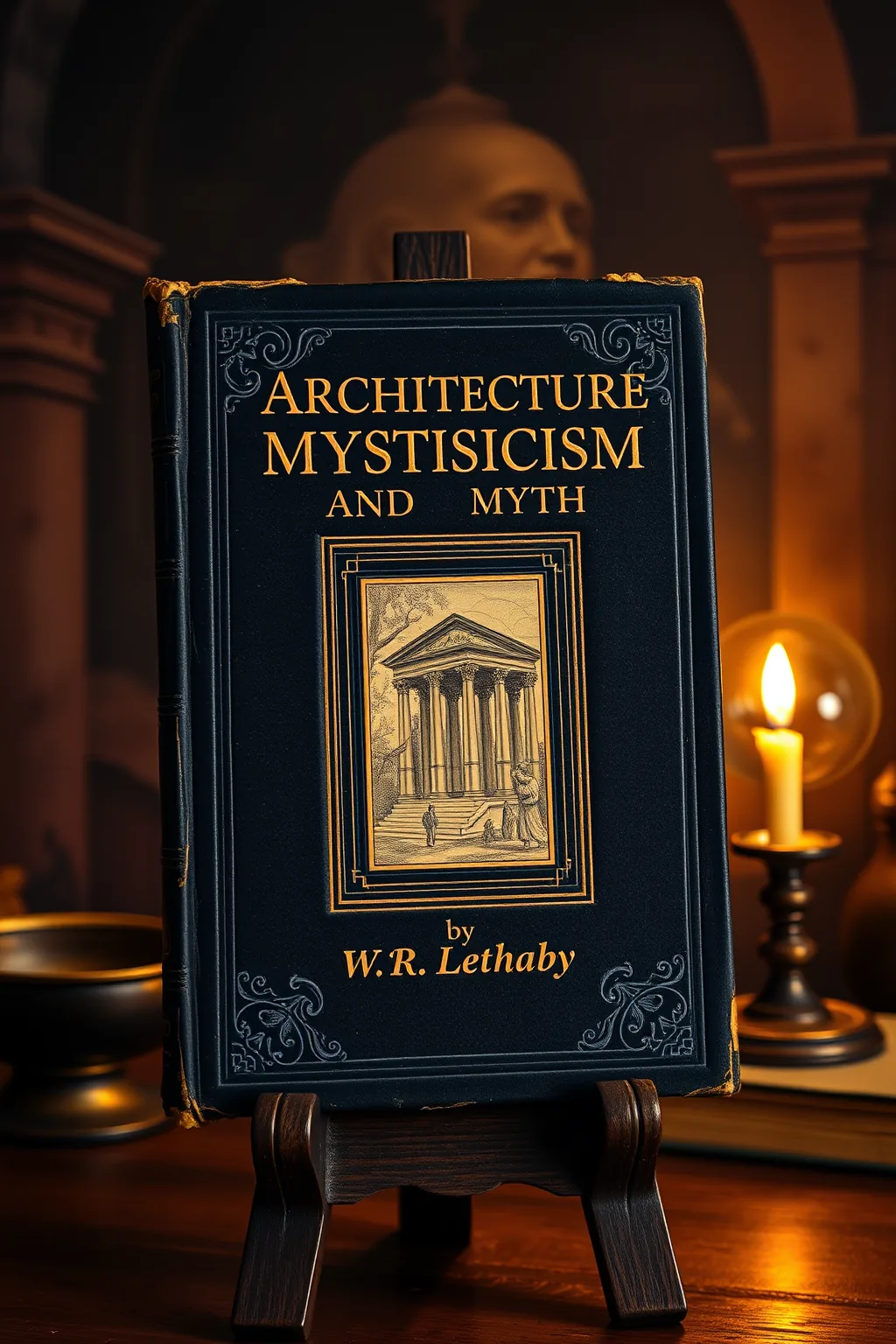
Architecture, Mysticism and Myth
 74
74

Architecture, Mysticism and Myth


Silas Hawthorne (Hermetic Studies Editor) — W.R. Lethaby's 'Architecture, Mysticism and Myth' is an indispensable key for unlocking the esoteric dimensions of our built world. Lethaby's genius lies in his ability to connect the mundane with the divine, revealing how architectural forms are not arbitrary but deeply rooted in ancient cosmologies and symbolic language. He offers a compelling argument for the macrocosmic reflection within our structures, a concept central to many mystical traditions. This work is essential for anyone seeking to understand the deeper currents of architectural history and its spiritual underpinnings. It’s a foundational text for students of symbolism, sacred architecture, and those who believe our physical environment holds profound, often overlooked, mystical truths.
📝 Description
74
W.R. Lethaby argued in 1909 that buildings embody mythic and cosmic ideas.
In 'Architecture, Mysticism and Myth,' W.R. Lethaby examines the symbolic meaning behind built environments. He suggests that the design of structures, from ancient temples to more recent buildings, reflects broader cosmic principles and mythic narratives. Lethaby deciphers the ornamental details of classical architecture, showing how they connect to celestial patterns, earthly geography, and fundamental natural forces.
The book invites readers to view the world through a mythic perspective. It draws parallels between architectural forms and ancient beliefs, proposing that human dwellings and sacred sites are shaped by underlying sacred geometry and age-old traditions. Lethaby's work presents a view where the universe's story is inscribed in the very fabric of buildings.
This book sits within a turn-of-the-century tradition of seeking deeper meaning in material forms, influenced by anthropological studies of myth and ritual. Lethaby connects architectural elements to ancient cosmologies and the symbolic language found in myth, aligning with a broader esoteric interest in the hidden order of the universe. It reflects a desire to understand how human creations are imbued with spiritual or mythic significance, drawing from classical learning and contemporary explorations of symbolism.
💡 Why Read This Book?
Discover the hidden spiritual blueprint within architecture. 'Architecture, Mysticism and Myth' reveals how buildings embody cosmic principles and ancient myths. Ideal for seekers of esoteric knowledge, scholars of symbolism, and practitioners of sacred arts who wish to understand the profound connection between humanity, nature, and the divine through the lens of built form. Unlock a new way of seeing the world around you.
⭐ Reader Reviews
Honest opinions from readers who have explored this book.
❓ Frequently Asked Questions
What is the central thesis of 'Architecture, Mysticism and Myth'?
The book's central thesis is that architecture embodies and reflects cosmic order and ancient myths. Lethaby argues that seemingly decorative elements in buildings are symbolic representations of natural phenomena and universal principles.
Who was W.R. Lethaby?
William Richard Lethaby was a highly influential English architect and designer, known for his Arts and Crafts principles and his deep interest in the historical and symbolic aspects of architecture and art.
Is this book suitable for beginners in esoteric studies?
Yes, while profound, Lethaby's writing style is more accessible than some comparable esoteric texts, making it a good entry point for those new to the subject of architectural symbolism and myth.
What kind of symbolism does Lethaby explore?
Lethaby explores symbolism related to celestial bodies, natural elements (earth, water, sky), mythological creatures, and ancient cosmologies, linking them to architectural features and ornamentation.
Can this book help me understand modern architecture?
While focused on classical and historical architecture, the principles of symbolic meaning and cosmic connection Lethaby explores can offer a new framework for analyzing and appreciating modern designs and their underlying intentions.
🔮 Key Themes & Symbolism
The Macrocosm in the Microcosm
Lethaby posits that human creations, particularly architecture, serve as microcosmic reflections of the grander, cosmic order. He meticulously illustrates how the arrangement of spaces, the proportions of structures, and even seemingly ornamental details are not arbitrary but deliberate manifestations of universal laws and celestial patterns. This theme invites readers to perceive buildings not merely as functional shelters but as sacred texts, encoded with the wisdom of the universe, waiting to be deciphered by those with open eyes and minds.
Mythopoetic Foundations of Design
This theme examines the profound influence of myth, folklore, and ancient cosmologies on architectural expression. Lethaby argues that the stories and beliefs of our ancestors are deeply embedded in the very fabric of our built environment. He reveals how myths of creation, divine beings, and the natural world are translated into architectural forms, creating spaces that resonate with ancestral memory and spiritual significance. Understanding this connection allows us to see architecture as a living narrative, a continuous dialogue with the archetypal forces that shape human consciousness.
Sacred Geometry and Natural Harmony
Central to Lethaby's work is the exploration of sacred geometry and its intrinsic relationship with the natural world. He demonstrates how principles of proportion, harmony, and symmetry, derived from observing natural phenomena and cosmic cycles, are fundamental to creating aesthetically pleasing and spiritually resonant architecture. This theme highlights the belief that aligning human constructs with the inherent order of nature fosters a sense of balance, well-being, and connection to the divine, suggesting that true beauty in architecture stems from its harmonious integration with universal principles.
💬 Memorable Quotes
Direct passages from the work, attributed to the author.
“Every detail has its reason.”
— This emphasizes Lethaby's belief that nothing in architecture is accidental; even ornamentation carries symbolic weight and reflects deeper cosmological or mythological connections.
“The earth speaks in stone.”
— A poetic assertion that geological formations and the materials of the earth are imbued with ancient stories and energies, which architecture can channel and express.
“We build in response to unseen forces.”
— This highlights the esoteric aspect of creation, suggesting that architects and builders are influenced by spiritual or cosmic energies, not just practical considerations.
“Myth is the soul of form.”
— This profound statement posits that the deepest essence and meaning of any architectural form are derived from the collective myths and stories that underpin human understanding and experience.
💡 Key Ideas
Editorial paraphrase of the work's core concepts — not direct quotes.
Architecture is a language.
This quote suggests that buildings communicate profound ideas and meaning beyond their physical function, acting as a symbolic dialogue between builder, inhabitant, and the universe.
🌙 Esoteric Significance
Tradition
This work draws heavily from Neoplatonic and Hermetic traditions, which emphasize the concept of the Macrocosm and Microcosm—the idea that the universe's structure is mirrored in smaller systems, including human creations. It aligns with Gnostic and alchemical thought by viewing material forms as potential vessels for spiritual truths and cosmic energies, proposing that understanding architectural symbolism is a path to unveiling hidden universal laws.
Symbolism
Lethaby deciphers a wide range of symbolism, linking architectural elements to celestial bodies, elements of nature (earth, air, fire, water), and mythological narratives. Key symbols include the vault representing the heavens, columns as trees of life or pillars of the cosmos, and decorative motifs derived from animal or plant life that hold ancient totemic or generative meanings. The overall layout and proportions of buildings are seen as embodying divine geometry and cosmic harmony.
Modern Relevance
In an era often characterized by functionalism and the disconnection from nature, Lethaby's insights offer a vital re-enchantment of our built environment. His work encourages a conscious engagement with the symbolic language of architecture, promoting designs that foster spiritual well-being and a deeper connection to the cosmos. It provides a framework for critically assessing how modern structures either reinforce or alienate us from these fundamental principles, urging a return to meaningful, spiritually resonant design.
👥 Who Should Read This Book
This book is a treasure for the curious soul. **Beginners** in esoteric studies will find it an accessible gateway into understanding the spiritual dimensions of the built world. **Scholars** of architectural history, art history, and comparative mythology will discover a rich source for interdisciplinary analysis. **Seekers** of hidden knowledge will be illuminated by Lethaby's useful insights into cosmic symbolism and universal order. **Practitioners** of sacred arts, geomancy, and conscious design will find inspiration for creating spaces that resonate with deeper meaning and energetic significance.
📜 Historical Context
Published in the late 19th century, 'Architecture, Mysticism and Myth' emerged during a period of intense intellectual and spiritual reawakening. The Arts and Crafts movement, of which Lethaby was a prominent figure, sought to reconnect art and design with traditional craftsmanship and spiritual values, rebelling against the perceived soullessness of industrialization. Simultaneously, burgeoning fields like anthropology and comparative mythology, exemplified by works like Frazer's 'The Golden Bough,' were exploring the universal patterns of human belief and ritual. Lethaby's work synthesized these currents, proposing a holistic view of architecture as a manifestation of humanity's deepest spiritual yearnings and its connection to the cosmos, bridging the gap between material creation and metaphysical understanding.
📔 Journal Prompts
Observe a building you frequent. What symbolic meanings might its form, materials, or ornamentation convey?
How does the concept of the Macrocosm influencing the Microcosm relate to your own personal space or home?
Reflect on a myth or folktale. How could its narrative be translated into architectural elements or spaces?
Consider the natural elements (earth, water, air, fire) and their symbolic representation in the architecture around you.
In what ways can architecture serve as a 'language' to communicate spiritual or philosophical ideas today?
🗂️ Glossary
Macrocosm
The universe or the totality of existence, often viewed as a grand, ordered system containing all things, including celestial bodies and fundamental principles.
Microcosm
A smaller, self-contained system that reflects the structure or principles of the larger Macrocosm, such as a human being, a city, or in this context, a building.
Mythopoetic
Relating to or characteristic of the creation or interpretation of myths; having a sense of mythic or symbolic quality.
Sacred Geometry
The study of geometric forms and proportions considered fundamental to the structure of the universe and believed to hold spiritual or divine significance.
Cosmology
The branch of astronomy and philosophy concerned with the origin, evolution, and structure of the universe as a whole; a theory of the universe.
This book appears in 3 collections
🔮 Readers Also Liked
Browse all →









From the “Transcendental Meditation” Collection
View all →





More Free Esoteric History & Biography Books
View all →