The I Ching

 61
61

The I Ching



Sophia Crane (Associate Editor) — Wu Wei's 'The I Ching' stands as a luminous beacon in the realm of esoteric literature. This edition masterfully deciphers the profound symbolism and philosophical underpinnings of this ancient Chinese oracle. Wu Wei illuminates the intricate connections between the hexagrams, offering readers not just foresight, but a deeper comprehension of cosmic cycles and personal destiny. The prose is both scholarly and accessible, making complex metaphysical concepts understandable without sacrificing their depth. It is an indispensable resource for serious practitioners of divination, scholars of ancient wisdom traditions, and anyone seeking profound self-awareness and guidance in navigating life's myriad transformations.
📝 Description
61
Embark on a profound journey into the heart of ancient wisdom with 'The I Ching,' meticulously translated and interpreted by Wu Wei. This seminal work, often referred to as the Book of Changes, is far more than a mere divination tool; it is a mystical atlas charting the ever-shifting currents of the cosmos and the human psyche. Within its pages lie the secrets of hexagrams, each a potent symbol representing universal archetypes and the dynamic interplay of yin and yang. Wu Wei's rendition breathes life into these ancient symbols, revealing a sophisticated philosophical system that has guided emperors, sages, and seekers for millennia. The atmosphere is one of deep contemplation, inviting readers to connect with the subtle energies that govern destiny and transformation. This is essential reading for anyone drawn to the profound mysteries of existence, seeking to understand the ebb and flow of life, and striving for inner harmony through alignment with cosmic principles. Its philosophical depth offers timeless insights into personal growth, decision-making, and the nature of reality itself, making it a cornerstone of esoteric study.
✍️ Author
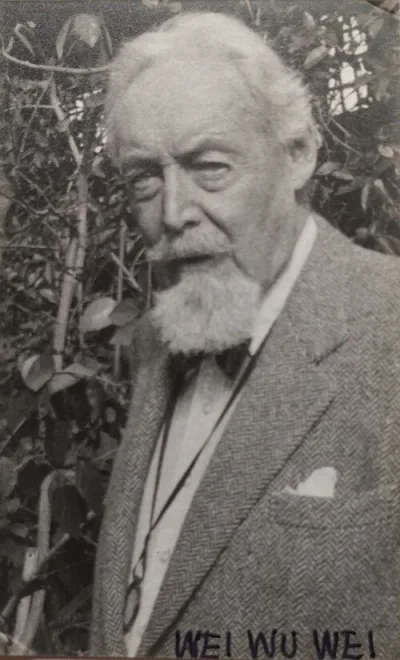
Wu Wei
Terence James Stannus Gray (14 September 1895 – 5 January 1986) was a theatre producer who created the Cambridge Festival Theatre as an experimental theatre in Cambridge. He produced over 100 plays there between 1926 and 1933.
💡 Why Read This Book?
Unlock the profound wisdom of the universe and gain unparalleled clarity for decision-making. 'The I Ching' by Wu Wei offers a direct conduit to ancient cosmic principles, revealing the patterns of change and transformation. Ideal for seekers of truth, scholars of esoteric philosophy, and practitioners aiming to harmonize their lives with the natural order. It provides a framework for understanding destiny and cultivating inner wisdom.
⭐ Reader Reviews
Honest opinions from readers who have explored this book.
❓ Frequently Asked Questions
What is the primary purpose of the I Ching?
The I Ching serves as both a philosophical text and a divination tool, offering insights into the nature of change, universal patterns, and guidance for decision-making by interpreting the symbolic language of hexagrams.
Who is Wu Wei and what is their contribution?
Wu Wei is the esteemed translator and interpreter whose rendition of the I Ching brings clarity and esoteric depth to the ancient text, making its profound wisdom accessible to modern readers.
How does one use the I Ching for divination?
Divination typically involves casting coins or yarrow stalks to generate hexagrams, which are then interpreted using the text to gain insight into a specific question or situation.
What are the core philosophical concepts within the I Ching?
The core concepts revolve around the dynamic interplay of yin and yang, the constant nature of change, and the importance of aligning one's actions with the natural flow of the cosmos for harmony and wisdom.
Is the I Ching only for divination?
No, while renowned for its divinatory applications, the I Ching is a profound philosophical and ethical treatise that explores universal principles, personal growth, and the art of living in accordance with the Tao.
🔮 Key Themes & Symbolism
The Dance of Yin and Yang
This fundamental principle describes the primordial forces of duality that permeate all existence. Yin, representing the passive, receptive, and feminine, and Yang, embodying the active, creative, and masculine, are not opposing but complementary. Their ceaseless interaction and transformation are the engine of all change, shaping the universe and influencing every aspect of life. Understanding their dynamic interplay is key to comprehending the I Ching's cosmology and navigating the currents of destiny with wisdom and balance.
The Ever-Present Nature of Change
The I Ching fundamentally teaches that change is the only constant in the universe. Nothing remains static; everything is in a perpetual state of flux, moving through cycles of growth, decay, and rebirth. The hexagrams serve as archetypal representations of these shifting states, offering guidance on how to adapt, respond, and even influence these transformations. Embracing this principle allows one to release attachment to the impermanent and find profound peace and efficacy in navigating life's inevitable transitions.
Cosmic Harmony and Human Action
The book posits a profound interconnectedness between the celestial order and human affairs. By understanding the patterns of the cosmos as revealed through the hexagrams, individuals can align their thoughts, intentions, and actions with the natural flow of the Tao. This alignment leads to greater efficacy, wisdom, and a sense of harmony with the universe. The I Ching provides a map for navigating personal challenges and making choices that resonate with the underlying order of reality, fostering a life of purpose and balance.
💬 Memorable Quotes
“The superior man acts before he speaks, and afterwards speaks according to his action.”
— This quote emphasizes the importance of action and integrity, suggesting that true wisdom lies in demonstrating principles through deeds rather than mere words.
“To know the changes is to know the Tao.”
— This highlights the central tenet that understanding the I Ching's depiction of universal patterns of change is synonymous with comprehending the fundamental nature of reality and the divine path.
“When the wise man is alone, he is with himself.”
— This speaks to the profound self-sufficiency and inner richness of the wise, suggesting that solitude can be a space for deep introspection and communion with one's true self.
“The superior man understands what is difficult. The inferior man understands what is easy.”
— This contrasts the insightful perspective of the enlightened with the superficial understanding of the uninitiated, underscoring the value of facing and comprehending challenges.
“Ignorance is the source of all sorrow.”
— This classic statement points to the root of suffering being a lack of understanding, urging the pursuit of knowledge and wisdom as the path to liberation from distress.
🌙 Esoteric Significance
Tradition
The I Ching is a cornerstone of Taoist and Confucian philosophical traditions, deeply interwoven with ancient Chinese cosmology. Esoterically, it is considered a form of 'cosmic grammar,' a symbolic language that maps the fundamental forces and patterns of universal manifestation. It is a profound tool for understanding the Tao, the ultimate principle of the universe, and for aligning oneself with its natural flow, making it a vital text in various forms of Chinese mysticism and divination.
Symbolism
The core symbolism lies in the 64 hexagrams, each composed of six lines representing either yin (broken) or yang (solid). These hexagrams are archetypal representations of all possible states of change and circumstance in the universe. The trigrams (three-line combinations) that form the hexagrams also carry profound symbolic meanings, often associated with natural elements (heaven, earth, water, fire, etc.) and fundamental human relationships. The changing lines within a hexagram offer specific insights into the unfolding dynamics of a situation, acting as keys to unlock deeper understanding.
Modern Relevance
In the modern era, the I Ching remains remarkably relevant as a guide for navigating complex personal and global challenges. Its principles of adaptation, balance, and understanding the cyclical nature of change offer timeless wisdom for decision-making, personal growth, and cultivating resilience. For those seeking spiritual depth or a framework for understanding synchronicity and interconnectedness, the I Ching provides a sophisticated and profound system that resonates deeply with contemporary quests for meaning and inner peace.
👥 Who Should Read This Book
This profound work is essential for anyone seeking to deepen their understanding of ancient wisdom and the mechanics of change. **Beginners** will find Wu Wei's interpretation a clear and accessible entry point into the symbolic language of the I Ching. **Scholars of philosophy and comparative religion** will appreciate its rigorous examination of a foundational text in Eastern thought. **Spiritual seekers and practitioners of divination** will discover a powerful oracle for self-reflection, guidance, and aligning with universal energies. Ultimately, anyone yearning to navigate life's complexities with greater wisdom, insight, and a profound sense of connection to the cosmic order will find immense value within its pages.
📜 Historical Context
The I Ching, or Book of Changes, emerged from the crucible of ancient Chinese civilization, likely evolving over millennia. Its earliest roots are traced to the Shang Dynasty (c. 1600–1046 BCE) with divination practices using oracle bones and tortoise shells. By the Zhou Dynasty (c. 1046–256 BCE), the text began to take shape, incorporating the development of hexagrams and their associated commentaries, attributed in part to King Wen and the Duke of Zhou. During the Spring and Autumn period (771–476 BCE) and the subsequent Warring States period (475–221 BCE), Confucian scholars, most notably Confucius himself, engaged deeply with the text, adding layers of ethical and philosophical interpretation, solidifying its status as a foundational classic of Chinese thought. Its influence extended far beyond China, shaping the intellectual and spiritual landscape of East Asia and eventually captivating thinkers and mystics worldwide.
📔 Journal Prompts
Reflect on a recent change in your life. How might the principles of yin and yang be at play?
Consider a decision you are currently facing. How would the I Ching guide your approach based on its themes of adaptability and flow?
What does 'understanding what is difficult' mean to you in your personal or professional life?
Explore the concept of 'action before speech' in your own interactions. Where can you embody this principle more fully?
How can you cultivate greater inner harmony by aligning your actions with what you perceive as the natural order of things?
🗂️ Glossary
Hexagram
A fundamental symbol in the I Ching, composed of six stacked lines, each representing either yin (broken) or yang (solid). It symbolizes a specific state or situation in the universe and is the primary unit of divination.
Trigram
A basic building block of a hexagram, consisting of three stacked lines (yin or yang). There are eight fundamental trigrams, each associated with natural elements and specific concepts.
Yin
The passive, receptive, dark, feminine, and yielding principle in the I Ching's cosmology. It is represented by a broken line (--) and is seen as complementary to Yang.
Yang
The active, creative, light, masculine, and assertive principle in the I Ching's cosmology. It is represented by a solid line (—) and is seen as complementary to Yin.
Tao
The fundamental, ineffable principle of the universe in Taoist philosophy. It represents the natural order, the way of things, and the ultimate reality from which all existence arises.