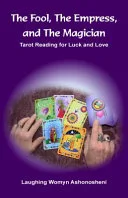
The Fool, the Empress, and the Magician
 71
71

The Fool, the Empress, and the Magician
Ashonosheni's "The Fool, the Empress, and the Magician" tackles the ambitious task of demystifying Tarot reading for a contemporary audience. The book’s primary strength lies in its systematic approach; it doesn't shy away from the detailed work of explaining card symbolism and offering diverse layouts, such as the 19 unique spreads presented. This is a welcome departure from more abstract or intuitive-only guides. However, the work occasionally leans towards a clinical tone, which, while precise, might not fully capture the intuitive flow many seek in Tarot. A particularly effective section details how the 'Magician' card's representation of active manifestation shifts depending on its placement within a reading, offering a concrete example of nuanced interpretation. While thorough, some readers may find the sheer volume of information presented requires dedicated study rather than casual browsing. Overall, it serves as a robust, if somewhat didactic, manual for serious Tarot students.
📝 Description
71
### What It Is This volume offers a structured approach to Tarot reading, aiming to elevate a novice's understanding from fundamental concepts to nuanced interpretation. It meticulously dissects the symbolism inherent in each of the 78 cards, providing a foundational knowledge base for aspiring practitioners. The work emphasizes the practical application of this knowledge, guiding readers through various interpretive frameworks.
### Who It's For Individuals eager to learn Tarot reading, from absolute beginners seeking a clear starting point to those with some experience looking to refine their accuracy and depth. It is particularly suited for those who appreciate a systematic, step-by-step methodology in their esoteric studies and desire to move beyond superficial card meanings.
### Historical Context Published in 2020, Ashonosheni's work emerges in a contemporary milieu where Tarot continues to be a popular tool for self-exploration and divination. Its release coincides with a resurgence of interest in occult practices, often facilitated by digital platforms, yet the book grounds itself in established Tarot methodologies. It exists alongside a vast library of Tarot literature, from the foundational works of A.E. Waite and Pamela Colman Smith in the early 20th century to modern interpretations.
### Key Concepts The core of the book lies in its methodical breakdown of the Tarot deck, focusing on the symbolism of Major Arcana cards like the Fool, the Empress, and the Magician. It stresses the importance of layout structure in shaping interpretations and advocates for a thorough understanding of each card's multifaceted meaning as it relates to specific queries and spread positions.
💡 Why Read This Book?
• Gain a foundational understanding of the 78-card Tarot deck, including detailed explanations of the symbolism of key cards like the Fool and the Empress, as presented in the book's initial sections. • Master the art of interpretation through 19 unique Tarot layouts, learning how to apply specific card meanings contextually to diverse questions, a method detailed throughout the practical exercises. • Develop interpretive accuracy by understanding how each card’s true meaning shifts in relation to its position within a layout, a skill elaborated upon with examples like the Magician card.
⭐ Reader Reviews
Honest opinions from readers who have explored this book.
❓ Frequently Asked Questions
What is the primary focus of "The Fool, the Empress, and the Magician"?
The book's primary focus is teaching individuals how to perform accurate Tarot readings. It guides readers through understanding card symbolism, interpreting meanings within specific layouts, and building overall skill from beginner to advanced levels.
How does the book explain Tarot card symbolism?
It provides explanations for the symbolism of each card in the Tarot deck, aiming to give readers a deep understanding of their meanings beyond superficial interpretations.
What kind of Tarot spreads are included in the book?
The book includes 19 unique Tarot layouts, offering a variety of structures for different types of readings and questions. This provides readers with diverse tools for interpretation.
Is this book suitable for experienced Tarot readers?
Yes, while it caters to beginners, experienced readers can benefit from refining their accuracy and exploring the in-depth interpretations and unique layouts presented, enhancing their existing practice.
What is the publication year of "The Fool, the Empress, and the Magician"?
The book was first published on May 15, 2020, making it a contemporary guide to Tarot interpretation.
What is the author's approach to teaching Tarot readings?
The author, Laughing Womyn Ashonosheni, uses a step-by-step instructional method, focusing on building skill and accuracy through understanding symbolism and applying it to various reading scenarios.
🔮 Key Themes & Symbolism
Card Symbolism Mastery
The work meticulously dissects the symbolic language of each Tarot card, moving beyond surface-level meanings. It emphasizes understanding the archetypal energies and historical associations embedded within each card, from the numbered pips to the regal figures of the court cards. This deep dive into symbolism, exemplified by the extensive treatment of cards like the Fool and the Empress, equips readers with a robust interpretive toolkit, allowing for more accurate and insightful readings.
Strategic Layout Interpretation
Beyond individual card meanings, the book stresses the crucial role of card placement within a spread. It presents 19 distinct layouts, each designed to illuminate different facets of a question or situation. The reader is guided on how to synthesize the meanings of multiple cards as they interact within the structure of a specific layout, turning a collection of symbols into a coherent narrative. The Magician card's interpretation, for instance, is shown to vary significantly based on its position.
Developing Reading Accuracy
The core objective is to foster a high degree of accuracy in Tarot readings. This is achieved through a progressive learning structure that builds from basic understanding to complex interpretations. The book encourages a disciplined approach, urging readers to practice consistently and to refine their ability to connect card meanings directly to the querent's question and the specific context of the reading, thereby enhancing predictive and advisory capabilities.
The Archetypal Journey
Central to the book's narrative is the exploration of archetypal figures and journeys represented in the Tarot, particularly the Major Arcana. Cards like the Fool represent beginnings and innocence, the Empress embodies creation and nurturing, and the Magician signifies skill and manifestation. Understanding these archetypes provides a framework for interpreting personal growth, challenges, and potential outcomes, offering a lens through which to view the human experience.
💬 Memorable Quotes
“The journey through the steps in this book will help you build your Tarot Reading skill and accuracy.”
— This statement highlights the book's pedagogical approach, framing the learning process as a guided progression designed to enhance practical ability and precision in Tarot interpretation.
“Included are explanations of the symbolism of each card, 19 unique layouts, and step by step instructions.”
— This concisely outlines the book's core components: foundational knowledge of individual cards, practical application through diverse spreads, and a clear, sequential learning method for readers.
“Interpret the true meaning of each card as it relates to the layout and the question being explored.”
— This emphasizes context-dependent interpretation, stressing that a card's meaning is not fixed but dynamic, influenced by its position in a spread and the specific query posed by the reader.
“Build your Tarot Reading skill and accuracy from basic understanding to in-depth readings.”
— This paraphrases the book's objective: to provide a comprehensive learning path that takes a student from foundational knowledge to advanced, detailed readings.
“Learn how to do Tarot Readings.”
— This is a direct, action-oriented statement that encapsulates the book's primary promise and purpose for its intended audience.
🌙 Esoteric Significance
Tradition
This work operates primarily within the Western esoteric tradition, specifically drawing from the interpretive frameworks established for the Rider-Waite-Smith Tarot deck, a cornerstone of modern divinatory practice. While not explicitly tied to a singular lineage like Hermeticism or Kabbalah, it utilizes the archetypal symbolism common across these traditions as represented in Tarot, aiming to make these energies accessible through practical application rather than solely theoretical study.
Symbolism
Key symbols like the Fool represent the uninitiated journey and infinite potential, embodying a spirit of embarking on new paths. The Empress signifies abundance, fertility, and the creative principle, often linked to the divine feminine. The Magician embodies focused will, resourcefulness, and the manifestation of intention through conscious action, representing the adept's mastery over the elements and their own power.
Modern Relevance
In contemporary practice, "The Fool, the Empress, and the Magician" speaks to a generation seeking practical tools for self-understanding and empowerment. Its structured approach resonates with individuals engaged in personal development, mindfulness, and therapeutic applications of Tarot. The book's emphasis on building concrete skills makes it relevant to modern online Tarot communities and those who prefer systematic learning over purely intuitive methods.
👥 Who Should Read This Book
• Aspiring Tarot readers who require a clear, step-by-step guide to understanding card meanings and performing readings. • Individuals seeking to deepen their existing Tarot practice by learning new interpretive techniques and exploring 19 distinct layouts for more nuanced readings. • Those interested in the symbolic language of the Tarot, particularly as it relates to archetypal figures like the Fool, the Empress, and the Magician, for personal growth and insight.
📜 Historical Context
Published in 2020, "The Fool, the Empress, and the Magician" arrives during a period of renewed global interest in esoteric practices, amplified by online communities and digital accessibility. Its methodical approach to Tarot, emphasizing structured learning and detailed symbolism, positions it within a lineage of practical Tarot guides that gained prominence in the late 20th century, diverging slightly from the more purely intuitive or psychological interpretations favored by some contemporary schools. The work acknowledges the foundational symbolism established by figures like A.E. Waite in the early 1900s, particularly through his Rider-Waite-Smith deck, which remains a benchmark for many practitioners. Ashonosheni's contribution lies in its modern synthesis and pedagogical clarity, aiming to equip a new generation of readers with precise interpretive skills, amidst a landscape populated by diverse divinatory methods and spiritual philosophies.
📔 Journal Prompts
The Fool's journey: Chart your own path forward after a recent transition.
Reflect on the Empress's symbolism of abundance in your current life circumstances.
How can the Magician's tools be consciously applied to manifest a specific goal?
Analyze the interplay of three specific cards within one of the 19 unique layouts.
Consider the core meaning of a chosen Major Arcana card across different spreads.
🗂️ Glossary
Tarot Reading
The practice of interpreting the symbolic imagery of Tarot cards to gain insight into past, present, or future situations, or to understand oneself better.
Symbolism
The use of symbols to represent ideas and qualities. In Tarot, each card's imagery carries layers of meaning derived from mythology, astrology, and esoteric traditions.
Layout
A specific arrangement or spread of Tarot cards used in a reading. Different layouts are designed to address particular types of questions or explore specific aspects of a situation.
Major Arcana
The 22 trump cards of the Tarot deck, representing significant life lessons, archetypal figures, and major spiritual or karmic influences.
Minor Arcana
The 56 cards of the Tarot deck divided into four suits (Wands, Cups, Swords, Pentacles), representing everyday events, challenges, and experiences.
Querent
The person for whom a Tarot reading is being performed; the individual seeking guidance or insight.
Interpretation
The process of assigning meaning to the cards drawn in a reading, considering their individual symbolism, their relationship to each other, and the context of the question.