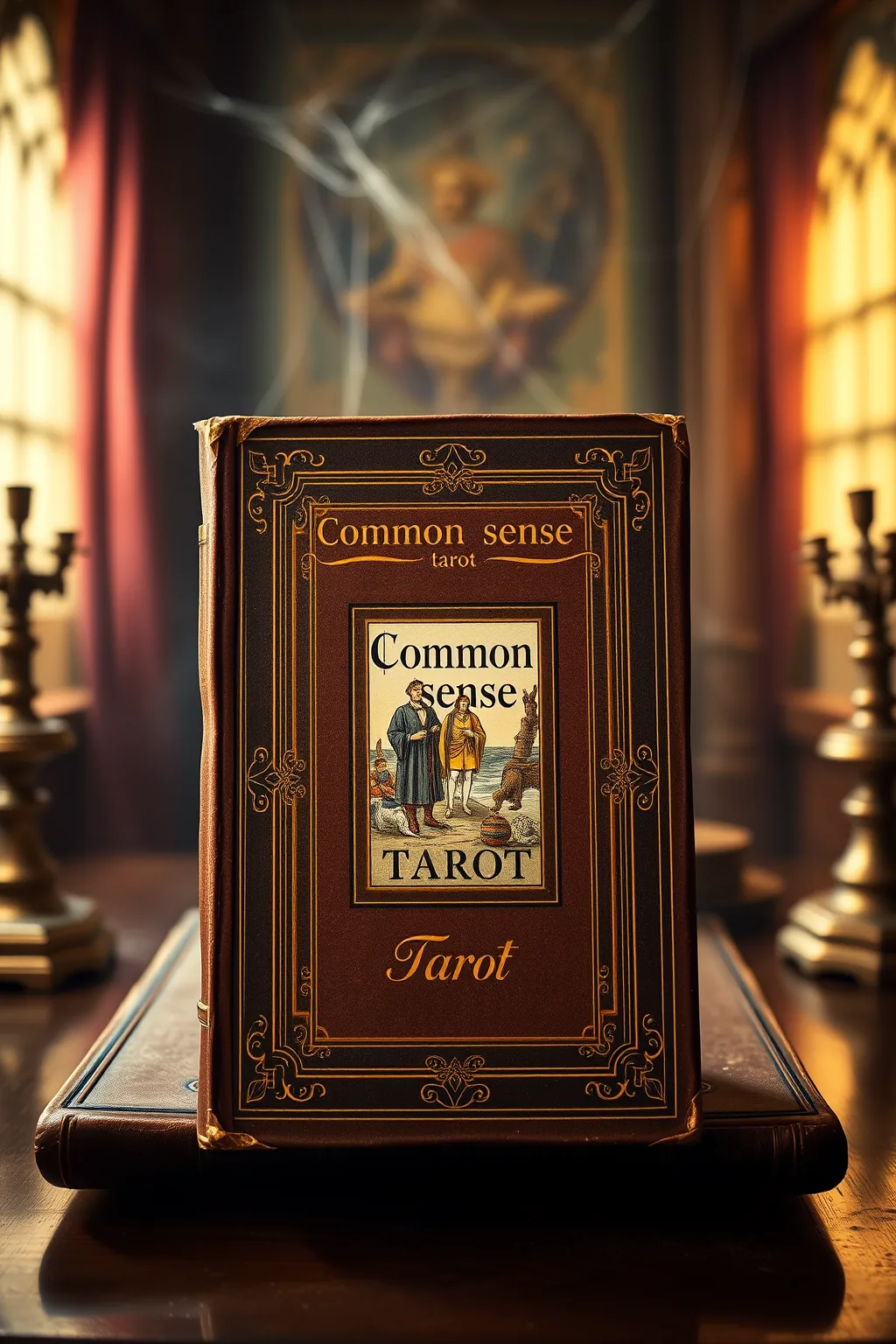
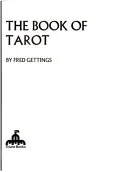
The Book of Tarot
 78
78

The Book of Tarot
Fred Gettings's "The Book of Tarot" remains a significant contribution to Tarot literature, particularly for its detailed historical account. The book excels in tracing the lineage of the Tarot from its 15th-century Italian origins through its appropriation by 18th and 19th-century occultists. Gettings's strength lies in his scholarly approach, presenting the cards as a complex symbolic system rather than a simple divination tool. The section detailing the development of the Major Arcana, linking them to Kabbalistic correspondences, is particularly illuminating. However, the prose can occasionally feel dense, and the focus on historical minutiae might prove challenging for readers seeking immediate practical application. A more accessible introduction to reading spreads is less emphasized compared to the deep dive into symbolism. Despite this, Gettings provides an essential framework for understanding the Tarot's intellectual and historical underpinnings.
📝 Description
78
### What It Is Fred Gettings's "The Book of Tarot," first published in 1973, offers a comprehensive exploration of the Tarot's history, symbolism, and practical application. It moves beyond mere fortune-telling, presenting the cards as a symbolic language and a tool for self-understanding. The work meticulously details the origins of the Tarot, tracing its development through various historical periods and cultural influences, particularly its roots in 15th-century Italy and its later adoption by occult societies.
### Who It's For This volume is designed for serious students of esoteric traditions and divination. It appeals to those who wish to understand the Tarot not just as a predictive tool, but as a profound system of knowledge connected to Western mysticism. Readers interested in the historical evolution of Tarot imagery and its relationship to archetypal psychology will find substantial material. It is also beneficial for practitioners seeking to deepen their interpretive skills with a solid historical and symbolic foundation.
### Historical Context "The Book of Tarot" emerged during a resurgence of interest in occultism and esoteric studies in the early 1970s, a period influenced by figures like Aleister Crowley and the rise of the Theosophical Society's interpretations. Gettings's work directly engaged with earlier scholarship by authors such as Eliphas Lévi and A.E. Waite, seeking to synthesize and clarify the complex symbolism of the Tarot. Published in 1973, it arrived as Tarot studies were moving from niche circles into broader public awareness, offering a more scholarly approach than many contemporary guides.
### Key Concepts The book emphasizes the Tarot as a "mirror of the soul," reflecting inner states and external circumstances through its rich iconography. Gettings breaks down the Major Arcana as stages of an individual's spiritual journey, often linking them to Kabbalistic concepts. The Minor Arcana are presented not just as suits, but as expressions of elemental forces and psychological archetypes. The work also discusses the historical development of specific cards, such as the evolution of The Fool and the imagery of the Court Cards.
💡 Why Read This Book?
• Gain a structured understanding of the Tarot's historical trajectory from its 15th-century Italian roots to its occult interpretations, as detailed in the "Historical Context" section. • Decipher the symbolic language of the Major Arcana, understanding their connection to Kabbalistic principles and archetypal stages of the soul's journey. • Learn to interpret the Minor Arcana not just as random cards, but as expressions of elemental forces and psychological archetypes, as explored in Gettings's analysis.
⭐ Reader Reviews
Honest opinions from readers who have explored this book.
❓ Frequently Asked Questions
When was Fred Gettings's "The Book of Tarot" first published?
Fred Gettings's "The Book of Tarot" was first published in 1973, a period marked by growing interest in esoteric studies and occult symbolism.
What is the historical origin of the Tarot cards discussed in the book?
The book traces the origins of the Tarot to 15th-century Italy, where early decks like the Visconti-Sforza tarot emerged, predating their later use in divination.
How does Gettings connect the Tarot to Kabbalah?
Gettings explores the correspondences between the 22 Major Arcana cards and the Hebrew alphabet and the Tree of Life, a common practice in esoteric traditions.
Does the book provide practical reading techniques?
While the book focuses heavily on historical and symbolic interpretation, it does offer guidance on practical application, viewing the cards as a symbolic language for self-understanding.
What is the significance of the Fool card according to Gettings?
Gettings discusses The Fool as representing the beginning of a spiritual journey or the archetypal wanderer, often linked to the concept of the 'primo mobile' or the unmanifested potential.
Is this book suitable for beginners or advanced Tarot students?
This book is best suited for intermediate to advanced students seeking a deep historical and symbolic understanding, though beginners interested in the occult origins will also find value.
🔮 Key Themes & Symbolism
Tarot as Symbolic Language
Gettings presents the Tarot not merely as a tool for prediction, but as a profound symbolic language deeply embedded in Western esoteric traditions. He argues that each card, from the Major Arcana's archetypal figures to the Minor Arcana's elemental representations, conveys complex ideas and psychological states. This perspective invites readers to engage with the cards as a mirror to the soul, reflecting inner landscapes and spiritual development, rather than just external events. The book encourages a scholarly approach to understanding these symbols.
Historical Evolution of Tarot
A central theme is the meticulous tracing of the Tarot's historical development. Gettings details its emergence in 15th-century Italy, moving through its adoption and reinterpretation by various occult orders in the 18th and 19th centuries, such as the Hermetic Order of the Golden Dawn. He examines how specific cards and their imagery evolved, influenced by cultural shifts and esoteric philosophies, particularly Kabbalah and Hermeticism. This historical grounding is crucial for understanding the symbolic weight of the cards today.
Kabbalistic Correspondences
The book significantly explores the intricate connections between the Tarot's Major Arcana and the principles of Kabbalah. Gettings details how the 22 Trump cards are often mapped onto the 22 letters of the Hebrew alphabet and the paths of the Tree of Life. This esoteric framework provides a structure for understanding the archetypal progression and interconnectedness of the Major Arcana, offering a deeper interpretive layer beyond simple divinatory meanings.
Archetypal Psychology and the Cards
Gettings views the Tarot as a repository of universal human archetypes. The Major Arcana, in particular, are presented as stages in a spiritual journey or representations of fundamental psychological forces. He links these archetypes to concepts found in Jungian psychology, although predating Jung's direct engagement with Tarot. The book suggests that by understanding these archetypes, individuals can gain insight into their own psychological makeup and life path.
💬 Memorable Quotes
“The Tarot is a symbolic language that mirrors the soul.”
— This core idea suggests the cards are not external predictions but internal reflections. Gettings emphasizes their use as a tool for introspection and understanding one's psychological and spiritual state.
“The Fool represents the beginning of a journey, a primal spark of potential.”
— This interpretation highlights the archetypal significance of The Fool card, often seen as the uninitiated traveler embarking on the path of the Major Arcana, symbolizing new beginnings and the unknown.
“The Major Arcana map the stages of spiritual development.”
— This concept frames the sequence of the Major Arcana as a progressive path, akin to a spiritual quest or the unfolding of consciousness, often linked to Kabbalistic principles.
“Early Tarot decks emerged from Italian Renaissance courts.”
— This factual statement grounds the Tarot's origins in a specific historical period and geographical location, moving away from later, more mystical attributions.
“The suits of the Minor Arcana correspond to elemental forces.”
— This interpretation connects the Wands, Cups, Swords, and Pentacles to the classical elements of Fire, Water, Air, and Earth, providing a framework for understanding their associated energies and themes.
🌙 Esoteric Significance
Tradition
Gettings's work firmly sits within the Western Esoteric tradition, particularly drawing from Hermeticism and Kabbalah. It builds upon the foundations laid by 19th-century occultists who synthesized Tarot symbolism with these ancient systems. The book's significance lies in its attempt to systematize these connections, presenting the Tarot not as a divinatory tool alone, but as a visual representation of a cosmic order and a map of human consciousness, aligning with the Hermetic principle of "As Above, So Below."
Symbolism
Key symbols explored include the archetypal figures of the Major Arcana, such as The Fool representing primal potential or The Magician embodying focused will, and their corresponding Kabbalistic paths. The four suits of the Minor Arcana (Wands, Cups, Swords, Pentacles) are analyzed for their elemental associations (Fire, Water, Air, Earth) and their representation of different spheres of human experience and action within the esoteric framework.
Modern Relevance
Gettings's rigorous approach to symbolism and history continues to influence contemporary Tarot scholarship and practice. Modern practitioners often refer to his work for a deeper understanding of the cards' historical context and their esoteric underpinnings. His methods of linking Tarot imagery to psychological archetypes and Kabbalistic structures are echoed in many contemporary Tarot courses and books that aim for a more profound, less superficial engagement with the cards.
👥 Who Should Read This Book
• Students of Western Esotericism: Those seeking to understand the historical development and symbolic connections of the Tarot within Hermetic, Kabbalistic, and occult traditions. • Tarot Enthusiasts Seeking Depth: Readers who wish to move beyond basic divination and explore the rich layers of meaning, archetypes, and historical context embedded in the Tarot. • Comparative Religion and Mythology Scholars: Individuals interested in how symbolic systems evolve and are integrated across different cultural and philosophical movements, particularly from the Renaissance onwards.
📜 Historical Context
Published in 1973, Fred Gettings's "The Book of Tarot" arrived during a period of intense interest in occultism and esoteric philosophy, fueled by the counterculture movement and a renewed academic curiosity in Western esotericism. Gettings’s work positioned itself against more popularized, less scholarly interpretations of the Tarot prevalent at the time. He engaged directly with the foundational texts of Tarot scholarship, referencing figures like Eliphas Lévi and A.E. Waite, whose interpretations had largely shaped the occult understanding of the cards since the late 19th century. Gettings sought to provide a more historically grounded and symbolic analysis, tracing the Tarot's lineage from 15th-century Italy. His detailed examination of the Major Arcana's connection to Kabbalistic concepts offered a sophisticated alternative to simpler fortune-telling manuals, contributing to the serious study of Tarot within esoteric circles.
📔 Journal Prompts
The Fool's journey as a metaphor for personal initiation.
Mapping the Major Arcana onto a personal timeline.
Elemental correspondences of the Minor Arcana suits in daily life.
The Magician's tools as symbols of conscious creation.
The Tower's disruption as a catalyst for spiritual growth.
🗂️ Glossary
Major Arcana
The 22 trump cards of the Tarot deck, typically depicting archetypal figures and significant life events or spiritual stages, considered a symbolic representation of the soul's journey.
Minor Arcana
The 56 cards divided into four suits (Wands, Cups, Swords, Pentacles), analogous to playing card suits, representing the mundane events, challenges, and aspects of daily life.
Kabbalah
A complex system of Jewish mysticism that explores the nature of God and the universe, often represented visually by the Tree of Life, with which Tarot symbolism is frequently associated.
Hermeticism
An esoteric tradition based on the writings attributed to Hermes Trismegistus, emphasizing divine wisdom, magic, and the interconnectedness of the cosmos, a significant influence on Western occultism.
Archetype
A universal, archaic pattern and image derived from the collective unconscious, manifesting in myths, dreams, and symbolic systems like the Tarot.
Tree of Life
A central diagram in Kabbalah, depicting ten interconnected spheres (Sephiroth) and 22 paths, used as a framework for understanding creation, divine emanations, and spiritual ascent.
Trump Cards
An alternative term for the Major Arcana, referring to the special set of cards that are not part of the four suits and carry significant symbolic weight.