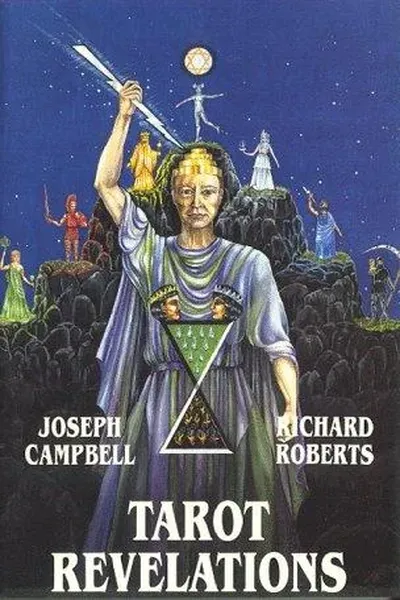
Tarot revelations

 78
78

Tarot revelations
Joseph Campbell's approach to the Tarot in Tarot Revelations offers a welcome antidote to the often simplistic divinatory readings saturating the market. By framing the cards through the lens of comparative mythology and psychological archetypes, Campbell elevates the deck to a sophisticated tool for understanding the human condition. His analysis of the Major Arcana, particularly the Fool's journey, provides a compelling narrative of self-discovery, deeply rooted in his hero's journey framework. However, the book's strength in broad archetypal interpretation can sometimes feel like a limitation for those seeking specific, nuanced meanings for the Minor Arcana or court cards, which receive less detailed attention. A passage where Campbell links the Hanged Man to moments of necessary surrender and altered perspective is particularly potent, demonstrating his ability to extract profound meaning from simple imagery. While not a practical guide to reading cards for others, it is an essential text for understanding the Tarot's symbolic depth.
📝 Description
78
### What It Is
Tarot Revelations is Joseph Campbell's examination of the Tarot deck, not as a mere fortune-telling device, but as a profound symbolic language encoding universal human experiences and mythological patterns. Published initially in 1987, the work moves beyond superficial interpretations to explore the archetypal significance of each card. Campbell positions the Tarot as a mirror to the soul's journey, reflecting the individual's passage through life's trials and triumphs.
### Who It's For
This book is intended for individuals seeking a deeper understanding of symbolic systems and their connection to mythology and psychology. It appeals to those interested in Jungian psychology, comparative mythology, and the philosophical underpinnings of esoteric traditions. Readers who appreciate detailed analysis of symbolism and its application to personal growth will find value here. It is not for those seeking quick divinatory answers, but for those willing to engage with complex ideas.
### Historical Context
Joseph Campbell, renowned for his work on comparative mythology and the hero's journey, brought his scholarly lens to the Tarot. His initial engagement with these cards occurred during a period when Jungian psychology was gaining significant traction, particularly its concepts of archetypes and the collective unconscious. Campbell's approach, published in 1987, situated the Tarot within a broader framework of human narrative and spiritual exploration, distinguishing it from purely occult or divinatory texts that dominated some circles at the time.
### Key Concepts
The work explores the Tarot as a 'monomyth' of the psyche, where the Major Arcana represent stages of initiation and self-discovery. Campbell connects individual cards to mythological figures, cosmic principles, and psychological states. He emphasizes the Tarot's structure as a map of consciousness, charting the descent into the unconscious and the subsequent ascent toward integration. The interplay between the Major and Minor Arcana is presented as a dynamic representation of the world's unfolding and the individual's role within it.
💡 Why Read This Book?
• Gain insight into the Tarot's archetypal structure, understanding the Major Arcana as a map of psychological and spiritual development, as detailed in the book's initial sections. • Connect the symbolism of specific cards, such as The World or The Chariot, to universal mythological patterns identified by Joseph Campbell in his comparative studies. • Explore the 1987 publication context, appreciating how Campbell positioned the Tarot within emerging Jungian psychological thought, offering a unique perspective distinct from contemporary occult literature.
⭐ Reader Reviews
Honest opinions from readers who have explored this book.
❓ Frequently Asked Questions
When was Joseph Campbell's Tarot Revelations first published?
Tarot Revelations by Joseph Campbell was first published in 1987. This edition marked his exploration of the Tarot as a symbolic system.
Does Tarot Revelations teach how to read Tarot cards for divination?
No, the book focuses on the archetypal and mythological significance of the Tarot rather than providing a guide for practical divination. Campbell uses the cards as a symbolic language.
What is the 'hero's journey' concept mentioned in relation to Tarot Revelations?
The hero's journey, a concept central to Joseph Campbell's work, is applied to the Tarot's Major Arcana. It frames the Fool's progression as a symbolic passage through life's stages and challenges.
Is Tarot Revelations based on Jungian psychology?
Yes, the work draws heavily on Jungian concepts, particularly archetypes and the collective unconscious, to interpret the symbolic imagery of the Tarot cards.
What is the significance of the Fool in Campbell's interpretation?
Campbell views the Fool as the starting point of the archetypal journey, representing innocence, potential, and the leap into the unknown, setting the stage for the unfolding of the Major Arcana.
Where does Joseph Campbell discuss the Tarot in his broader work?
While Tarot Revelations is dedicated to the subject, Campbell also referenced Tarot symbolism and its connection to mythological patterns in his more general works on mythology, such as 'The Hero with a Thousand Faces'.
🔮 Key Themes & Symbolism
The Tarot as a Mythological Map
Campbell interprets the Tarot, particularly the Major Arcana, as a symbolic representation of the universal mythological journey. He aligns the progression of the cards with the stages of the hero's journey, outlining a path of initiation, challenge, and integration. The Fool's progress through the 22 Major Arcana is seen not as a linear narrative, but as a cyclical exploration of archetypal encounters and psychological states, reflecting the structure of myths found across cultures and time. The deck becomes a mirror to the human psyche's inherent patterns.
Archetypes and the Collective Unconscious
Drawing from Carl Jung, Campbell posits that the Tarot cards embody primordial images and patterns residing in the collective unconscious. Each card, from The Magician to The World, represents a fundamental human experience or archetype – the wise elder, the shadow, the divine child. This perspective elevates the Tarot beyond mere fortune-telling, presenting it as a tool for self-understanding and for recognizing these universal forces at play in individual lives and in the grand narratives of humanity. The 1987 publication reflects the growing interest in Jungian thought.
The Fool's Journey as Monomyth
The concept of the 'monomyth,' or the hero's journey, is central to Campbell's analysis. He frames the Fool's traverse through the Major Arcana as the archetypal journey of every individual. This journey involves departure, initiation into profound mysteries, and eventual return with newfound wisdom. Campbell demonstrates how the sequence of cards traces this transformative process, illustrating moments of crisis, revelation, and integration that are common to spiritual and psychological quests across diverse mythologies. The initial publication in 1987 highlighted this connection.
Symbolic Language of the Psyche
Tarot Revelations emphasizes the Tarot's function as a symbolic language that speaks directly to the subconscious. Campbell explores how the visual and numerical components of each card translate abstract psychological and spiritual concepts into tangible imagery. This symbolic vocabulary allows individuals to access deeper layers of their own minds, confronting internal conflicts and recognizing potentials. The book encourages a contemplative engagement with the cards, seeing them as prompts for introspection rather than predictive tools, aligning with esoteric traditions that value inner work.
💬 Memorable Quotes
“The Tarot is a symbolic representation of the stages of life's journey.”
— This statement encapsulates Campbell's core thesis: the Tarot deck, particularly the Major Arcana, is not just a collection of images but a structured narrative mirroring the universal patterns of human experience and spiritual development.
“The Fool's journey is the journey of every human soul.”
— This highlights Campbell's application of the hero's journey concept to the Tarot. It suggests that the progression through the Major Arcana represents the archetypal path of self-discovery, challenge, and transformation common to all individuals.
“Each card is an archetype, a face of the divine or the shadow within us.”
— This interpretation directly links Tarot imagery to Jungian psychology, positing that the cards embody fundamental psychological forces and spiritual principles that operate within the collective unconscious and the individual psyche.
“The structure of the Tarot reflects the structure of the cosmos and the human mind.”
— This emphasizes the holistic view Campbell takes, seeing the Tarot as a microcosm that mirrors the macrocosm. It suggests an inherent order and interconnectedness between the universe, consciousness, and the symbolic system of the cards.
“Understanding the Tarot is understanding the myths of humanity.”
— This connects the personal journey of Tarot interpretation to Campbell's lifelong work in comparative mythology. It asserts that the symbols on the cards are expressions of the same fundamental stories and truths found in global myths.
🌙 Esoteric Significance
Tradition
Campbell's work on the Tarot aligns primarily with the Jungian psychological interpretation of esoteric symbolism, rather than a specific historical esoteric tradition like Hermeticism or Kabbalah. He views the Tarot as a universal symbolic language that speaks to the human psyche, resonating with archetypal patterns identified by Carl Jung. While not a practitioner of a specific occult lineage, his analysis draws parallels and finds echoes of mythological and psychological truths that are often explored within various esoteric frameworks, particularly those focused on inner transformation and symbolic understanding.
Symbolism
Campbell frequently highlights the archetypal significance of figures like The Fool, representing innocence and the beginning of the journey, and The World, symbolizing completion and integration. He also explores the numerical and elemental associations within the Minor Arcana as reflections of cosmic order and psychological states. The symbolic interplay between the Major Arcana's archetypal encounters and the Minor Arcana's depiction of worldly affairs forms a core part of his interpretation, presenting the deck as a cohesive map of consciousness.
Modern Relevance
Contemporary thinkers and practitioners in fields ranging from psychology to creative arts continue to draw inspiration from Campbell's archetypal approach to the Tarot. His emphasis on the cards as a tool for self-understanding and mythopoetic exploration resonates with modern depth psychology and narrative therapy. Artists, writers, and seekers exploring personal mythology often reference Campbell's framework for deciphering symbolic meaning, finding his 1987 work a foundational text for understanding the Tarot's profound psychological and spiritual dimensions beyond simple prognostication.
👥 Who Should Read This Book
• Students of comparative mythology and psychology: Individuals seeking to understand how universal myths and archetypes are encoded in symbolic systems like the Tarot. • Seekers of personal growth: Those interested in using symbolic tools for introspection, self-discovery, and understanding their own life's journey through an archetypal lens. • Tarot enthusiasts seeking depth: Readers who appreciate a scholarly, mythological, and psychological perspective on the Tarot, moving beyond basic divinatory interpretations.
📜 Historical Context
Joseph Campbell's Tarot Revelations, published in 1987, emerged during a period of significant intellectual cross-pollination. Carl Jung's concepts of archetypes and the collective unconscious, explored in his later writings and widely popularized, provided fertile ground for interpreting symbolic systems like the Tarot. Campbell, already a celebrated mythologist for works like 'The Hero with a Thousand Faces' (1949), brought his rigorous academic approach to a subject often relegated to occult circles. This era also saw a burgeoning interest in esoteric philosophies among the general public, often influenced by figures like Madame Blavatsky and the Theosophical Society earlier in the century, though Campbell's analysis was distinctively psychological and mythological rather than strictly occult. While not directly engaging with a specific contemporary author on the Tarot in this particular work, Campbell's approach implicitly responded to and elevated the discourse surrounding the cards, positioning them as a serious subject for philosophical and psychological inquiry, moving away from purely divinatory practices.
📔 Journal Prompts
The Fool's initial leap: Reflect on a moment of embracing the unknown.
Archetypal encounters: Identify a card that represents a significant personal challenge or mentor.
The World card's integration: Consider what 'completion' means in your current life path.
Symbolic language: How does the imagery of The Magician speak to your own creative power?
The journey's stages: Map your personal 'hero's journey' against the sequence of the Major Arcana.
🗂️ Glossary
Archetype
A universal, archaic pattern or image derived from the collective unconscious, which influences human behavior and perception. In Tarot, archetypes are embodied by the figures and situations depicted on the cards.
Collective Unconscious
A concept introduced by Carl Jung, referring to a deeper layer of the unconscious mind shared by all humanity, containing inherited psychic material and archetypes.
Hero's Journey (Monomyth)
A narrative pattern identified by Joseph Campbell, common to myths worldwide, detailing a hero's adventure involving departure, initiation, and return.
Major Arcana
The trump cards of the Tarot deck, typically numbering 22, representing significant life lessons, archetypal figures, and spiritual stages.
Minor Arcana
The four suits of the Tarot deck (Wands, Cups, Swords, Pentacles/Disks), comprising numbered cards and court cards, which typically represent more mundane events and personal circumstances.
Symbolic Language
A system of communication that uses symbols to represent ideas, concepts, or emotions, often conveying deeper meanings beyond their literal interpretation, as seen in the Tarot.
The Fool
The first card of the Major Arcana, often numbered 0, symbolizing new beginnings, innocence, spontaneity, and the leap into the unknown.