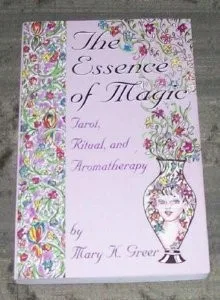
Tarot constellations

 83
83

Tarot constellations
Mary K. Greer’s "Tarot Constellations" approaches the deck with an intellectual rigor that sets it apart. Rather than rehashing standard interpretations, Greer constructs a meta-framework for understanding the cards' interrelationships. Her delineation of "Tarot constellations"—groupings and linkages beyond the usual sequences—is particularly insightful, offering a fresh lens for experienced readers. The book’s strength lies in its systematic, almost cartographical, method of mapping the Tarot’s internal landscape. However, for absolute beginners, the sheer breadth of conceptualization might present a steeper initial learning curve than more straightforward introductory texts. The exploration of the Minor Arcana’s narrative arcs, for example, is detailed but assumes a familiarity with basic card symbolism. Ultimately, "Tarot Constellations" is a valuable resource for those wishing to deepen their systemic understanding of the Tarot’s symbolic universe.
📝 Description
83
### What It Is Tarot Constellations, first published in 1987 by Mary K. Greer, offers an expansive approach to understanding the Tarot beyond simple divinatory readings. It frames the 78 cards not as isolated symbols but as interconnected points within a larger cosmic map. Greer explores the archetypal relationships and narrative threads that bind the Major and Minor Arcana, presenting a system for deeper, more integrated interpretation.
### Who It's For This work is designed for Tarot enthusiasts seeking to move past rote memorization of card meanings. It appeals to those who want to explore the Tarot's symbolic architecture and its potential for psychological and spiritual exploration. Readers interested in comparative mythology, archetypal psychology, and the history of divination will find substantial material here.
### Historical Context Published during a period of renewed interest in esoteric studies and the Tarot's psychological applications, following the foundational work of figures like A.E. Waite and Carl Jung, Greer's book emerged as a significant contribution. It arrived at a time when the Tarot was being re-evaluated, moving from fortune-telling to a tool for self-understanding. The book engaged with Jungian concepts and systemic approaches to symbolic language prevalent in the late 20th century.
### Key Concepts Greer introduces the idea of "Tarot constellations," viewing the cards as nodes in a network of meaning rather than a linear progression. This perspective encourages seeing patterns and connections across suits, numbers, and archetypes. She emphasizes the inherent narrative potential within the deck, exploring how different combinations can tell complex stories about human experience and the cosmos.
💡 Why Read This Book?
• Gain a systemic perspective on the Tarot's 78 cards, viewing them as interconnected nodes rather than isolated symbols, a method distinct from linear interpretations. • Understand the concept of "Tarot constellations" as introduced by Greer, enabling you to identify archetypal relationships and narrative threads across the deck. • Explore the Tarot's potential for psychological and spiritual depth by examining its symbolic architecture, a focus that distinguishes it from purely divinatory approaches.
⭐ Reader Reviews
Honest opinions from readers who have explored this book.
❓ Frequently Asked Questions
What is the central concept of "Tarot Constellations"?
The central concept is viewing the 78 Tarot cards as interconnected points within a larger symbolic map, forming "constellations" of meaning rather than isolated symbols.
Who is Mary K. Greer, the author of Tarot Constellations?
Mary K. Greer is a respected author and researcher in Tarot and divination, known for her scholarly and in-depth approach to esoteric subjects since the late 20th century.
When was "Tarot Constellations" first published?
The book "Tarot Constellations" was first published in 1987, reflecting a period of significant academic and popular interest in esoteric studies.
How does "Tarot Constellations" differ from standard Tarot books?
It moves beyond simple card-by-card meanings to explore the archetypal relationships and narrative structures that link the entire deck, offering a systemic interpretation.
Is "Tarot Constellations" suitable for beginners?
While comprehensive, its systemic approach might be best appreciated after a foundational understanding of basic Tarot card meanings is established.
What kind of esoteric tradition does this book engage with?
The book engages with Western esoteric traditions, particularly drawing on archetypal psychology and comparative mythology to interpret the Tarot.
🔮 Key Themes & Symbolism
Archetypal Linkages
Greer posits that the Tarot cards are not isolated entities but are bound by archetypal connections. She maps these linkages, showing how figures like The Fool and The World, or the court cards across different suits, inform each other's meanings. This perspective moves beyond individual card interpretations to reveal the dynamic interplay within the entire deck, suggesting a unified symbolic language that speaks to universal human experiences.
Symbolic Cartography
The work treats the Tarot as a symbolic map or a cosmic chart. By identifying "constellations"—patterns and groupings of cards—Greer offers a method for navigating this map. This approach encourages readers to see the deck as a structured system, revealing pathways and relationships that can illuminate complex psychological and spiritual landscapes. It's an invitation to chart one's own journey through the symbolic terrain.
Narrative Structures
Beyond static symbols, "Tarot Constellations" emphasizes the narrative potential inherent in the deck. Greer explores how sequences of cards, both within suits and across the Major Arcana, can unfold stories. This focus on narrative allows for a more dynamic understanding of the Tarot, treating it as a living text that can reveal unfolding processes and personal sagas, connecting archetypal themes to lived experience.
Systemic Interpretation
This book advocates for a systemic rather than an atomistic approach to the Tarot. Instead of learning 78 discrete meanings, readers are encouraged to understand the underlying principles and relationships that govern the entire system. This fosters a more intuitive and integrated reading style, where the whole deck informs the interpretation of any single card, creating a richer, more coherent understanding.
💬 Memorable Quotes
“The cards form constellations, not just a linear sequence.”
— This highlights Greer's core thesis: the Tarot's power lies in the interconnectedness and patterns between cards, not merely their individual meanings or a simple progression.
“Viewing the deck as a map of archetypal relationships.”
— This paraphrased concept emphasizes the book's approach of using the Tarot as a symbolic landscape to understand universal psychological and spiritual patterns.
“Minor Arcana narratives reveal unfolding life processes.”
— This interpretation points to Greer's focus on the dynamic, story-telling capacity of the numbered and court cards, linking them to personal development and experience.
“The system of the Tarot is greater than the sum of its parts.”
— This reflects the book's emphasis on systemic interpretation, suggesting that the true meaning emerges from the interaction and relationships within the entire deck.
“Identifying recurring motifs across suits and numbers.”
— This describes Greer's method of finding underlying patterns and themes that connect different sections of the Tarot, revealing deeper layers of meaning.
🌙 Esoteric Significance
Tradition
Greer's work is situated within the broad context of Western Esotericism, particularly engaging with Hermetic and Neoplatonic ideas about correspondence and interconnectedness. It draws heavily on archetypal psychology, a modern esoteric development influenced by Jungian thought. The book departs from strictly Kabbalistic or Theosophical interpretations by focusing on the Tarot as a self-contained symbolic universe, mapping its internal relationships rather than solely aligning it with external systems.
Symbolism
Key symbols explored include the archetypal figures of the Major Arcana, viewed not in isolation but as nodes in a network. The court cards (King, Queen, Knight, Page) are examined for their systemic relationships across the four suits, revealing patterns of personality and action. Greer also emphasizes the numerological and elemental correspondences that link the Minor Arcana, treating them as components of larger symbolic constellations that mirror cosmic and psychological principles.
Modern Relevance
Contemporary Tarot practitioners and scholars continue to reference "Tarot Constellations" for its systematic approach. Its emphasis on archetypal patterns and the interconnectedness of the deck informs modern psychological Tarot work and comparative studies of symbolic systems. Thinkers in fields like depth psychology and mythology who utilize symbolic tools often find Greer's cartographical method of understanding the Tarot highly relevant for mapping internal landscapes.
👥 Who Should Read This Book
['• Advanced Tarot students seeking to deepen their understanding beyond individual card meanings and explore systemic connections within the deck.', '• Practitioners of archetypal psychology or comparative mythology interested in how symbolic systems like the Tarot can model universal human experiences.', '• Esoteric researchers looking for a structured, analytical approach to the Tarot that bridges psychological interpretation with symbolic mapping.']
📜 Historical Context
When Mary K. Greer's "Tarot Constellations" was first published in 1987, the field of Tarot study was undergoing a significant evolution. Building upon the psychological interpretations popularized by Carl Jung and his followers, and the foundational structuring provided by A. E. Waite's Rider-Waite deck (published in 1909), authors began to explore more complex systemic and theoretical frameworks. Greer’s work emerged in this milieu, offering a departure from purely divinatory or simplistic psychological readings. It engaged with the emerging academic interest in Western Esotericism and comparative mythology. While figures like Joseph Campbell were exploring universal mythic structures, Greer applied a similar systemic lens to the Tarot. The book’s emphasis on interconnectedness and archetypal patterns resonated with a generation seeking deeper meaning in symbolic systems, moving beyond the more fragmented approaches prevalent in earlier decades.
📔 Journal Prompts
Reflect on the "Tarot constellations" formed by your three favorite cards.
Map the narrative arc between The Fool and The World in your personal journey.
Analyze the archetypal relationships between the court cards in a specific suit.
Consider the elemental and numerological connections linking the Minor Arcana.
How do the symbolic cartographies in this book relate to your understanding of self?
🗂️ Glossary
Tarot Constellations
A concept introduced by Greer, viewing the Tarot cards as interconnected points forming patterns and relationships, rather than isolated symbols.
Archetypal Relationships
The fundamental, universal patterns of behavior and personality that the Tarot cards represent and symbolize, as explored in their connections.
Symbolic Cartography
The practice of mapping and navigating the symbolic landscape of the Tarot deck, treating it as a structured system of meaning.
Narrative Arc
The unfolding story or progression of events and themes that can be traced through a sequence of Tarot cards.
Systemic Interpretation
An approach to reading the Tarot that emphasizes the interconnections and relationships within the entire deck, rather than focusing on individual card meanings.
Major Arcana
The 22 trump cards of the Tarot deck, representing significant life lessons, archetypal figures, and spiritual milestones.
Minor Arcana
The 56 cards of the Tarot deck, divided into four suits, typically representing daily events, challenges, and practical matters.