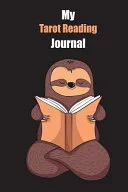
My Tarot Reading Journal
 77
77

My Tarot Reading Journal
The 'My Tarot Reading Journal' by Slowum Publishing functions precisely as advertised: a blank canvas for recording Tarot readings. Its straightforward layout, featuring lined pages and a convenient 6x9 inch size, makes it an accessible tool for anyone beginning to chart their divinatory path. The absence of pre-written prompts or interpretations is both a strength and a limitation. For the novice, it offers complete freedom but may lack the guidance found in more curated journals. A particularly useful aspect is its capacity for extensive note-taking; one can easily document a full Celtic Cross spread with ample space for introspective commentary on each card's position and meaning. However, the journal itself offers no unique interpretive framework, relying entirely on the user's existing knowledge or supplementary resources. It is a functional notebook, nothing more, nothing less.
📝 Description
77
### What It Is
This publication is a practical notebook designed for individuals engaged in the study and practice of Tarot reading. It provides a structured format for recording daily spreads, personal interpretations, and observations related to the cards. The interior consists of 110 pages of classic white lined paper, suitable for both written entries and sketches. Its dimensions, 6 x 9 inches, make it portable for use during divination sessions or personal reflection.
### Who It's For
The journal is intended for Tarot enthusiasts, from beginners seeking to document their early understandings to experienced practitioners wishing to maintain a comprehensive record of their readings. It serves as a tool for anyone looking to deepen their connection with the Tarot, track recurring themes, or analyze the evolution of their intuitive responses to the cards. Its simple, functional design appeals to those who prioritize utility in their spiritual or divinatory tools.
### Historical Context
Published in May 2019, this journal emerges in an era marked by a resurgence of interest in esotericism and self-divination practices, amplified by digital platforms and a growing desire for personal meaning-making. While not a historical text itself, its utility as a record-keeping device aligns with the long-standing tradition of occultists and mystics documenting their experiences, a practice seen from the alchemists of the Renaissance to the Theosophists of the late 19th century. The 2019 publication date places it within contemporary neo-occult movements.
### Key Concepts
The core concept is structured self-reflection applied to Tarot divination. It facilitates the tracking of individual card meanings, the interplay between cards in a spread, and the correlation between readings and waking life events. The journal encourages methodical engagement, treating each reading as an opportunity for learning and personal growth. It supports the development of a personalized Tarot lexicon and an understanding of how archetypal imagery manifests in practical, everyday contexts.
💡 Why Read This Book?
• Gain a dedicated space for meticulous Tarot study, allowing you to document readings from the 2019 publication date onward and track your interpretive evolution. • Develop a personal lexicon of card meanings by consistently recording your insights, mirroring the archival practices of occultists. • Enhance your divinatory practice through structured reflection, using the 110 pages to analyze patterns and personal connections to Tarot archetypes.
⭐ Reader Reviews
Honest opinions from readers who have explored this book.
❓ Frequently Asked Questions
What is the exact size and page count of the My Tarot Reading Journal?
The journal measures 6 x 9 inches and contains 110 pages of classic white lined paper, providing ample space for writing and sketching.
Is this journal suitable for beginners in Tarot?
Yes, its blank format makes it ideal for beginners to document their initial interpretations and learning process without pre-conceived notions.
Can this journal be used for purposes other than Tarot readings?
Absolutely. The lined pages are versatile and can be used for general journaling, sketching, note-taking, or as a planner, accommodating various personal organization needs.
When was the My Tarot Reading Journal first published?
This particular edition was first published on May 7, 2019, reflecting contemporary interest in self-guided esoteric practices.
Does the journal include any specific Tarot spreads or guidance?
No, the journal is designed as a blank notebook. It does not include pre-defined spreads or interpretive guidance, offering a customizable experience.
What type of paper is used in the journal?
The journal features classic white lined paper, chosen for its suitability for writing and general note-taking purposes.
🔮 Key Themes & Symbolism
Divinatory Record-Keeping
This journal facilitates the systematic documentation of Tarot readings, a practice essential for developing intuitive skills and tracking spiritual progress. It allows users to archive sessions, noting card placements, interpretations, and subsequent life events. This methodical approach transforms casual readings into a learning experience, building a personal history of divination that can reveal recurring patterns and symbolic language specific to the individual user. The 110 pages provide substantial room for detailed entries, supporting consistent use over time.
Personalized Esoteric Practice
The journal champions a personalized approach to esoteric study, moving beyond generic interpretations. By providing a blank slate, it encourages users to develop their own unique understanding of Tarot archetypes and their application. This aligns with the modern trend of adapting ancient systems to contemporary life. The act of writing and sketching within its pages fosters a deeper, more intimate connection with the symbolic language of the cards, making the practice an active dialogue rather than passive reception.
Self-Reflection and Intuition
Central to the journal's purpose is the cultivation of self-reflection and intuition. Each entry becomes an opportunity to examine one's inner landscape as mirrored by the Tarot. Users are prompted to consider not only the symbolic meanings of the cards but also their personal emotional and psychological responses to them. This process aids in clarifying personal challenges, understanding motivations, and enhancing intuitive perception, treating the Tarot as a tool for psychological insight and spiritual growth.
The Sloth Motif
The distinctive inclusion of a sloth motif, as suggested by the blurb and likely cover art, introduces an element of intentional slowness and deliberate observation. In esoteric traditions, patience and careful contemplation are often emphasized. The sloth can symbolize the need to approach spiritual work with unhurried deliberation, to observe without haste, and to find wisdom in stillness. This contrasts with the often frenetic pace of modern life, suggesting a path to deeper understanding through mindful pause.
💬 Memorable Quotes
“Lined - Size: 6 x 9'' - Notebook - Journal - Planner - Dairy - 110 Pages - Classic White Lined Paper”
— This phrase, more descriptive than declarative, highlights the functional versatility of the journal. It itemizes the core physical attributes and potential uses, emphasizing its role as a practical tool for organization and recording.
“For Writing, Sketching, Journals and Hand Lettering”
— This statement underscores the journal's adaptability beyond simple note-taking. It invites creative expression and diverse applications, suggesting the book can serve as a canvas for various forms of personal documentation and artistic exploration.
“Makes an excellent gift for any occasion”
— This promotional line positions the journal as a thoughtful present. It implies the book's broad appeal and utility, suggesting it is suitable for anyone interested in personal reflection, organization, or the practice of Tarot.
“This Sloth & Tarot Reading notebook / Journal”
— This concise description immediately identifies the primary subject matter and the unique thematic element (the sloth). It establishes the book's niche, appealing to those interested in Tarot with a potential nod towards themes of patience and observation.
“first published 2019-05-07”
— This factual data point grounds the publication in a specific historical moment, indicating its place within contemporary esoteric literature and practice trends.
🌙 Esoteric Significance
Tradition
While not tied to a specific historical esoteric lineage like Hermeticism or Kabbalah, this journal serves modern, eclectic spiritual practices. It aligns with contemporary neo-paganism, witchcraft, and New Age spirituality, which often synthesize diverse traditions. Its value lies in supporting personal gnosis—direct, individual knowledge—through the practice of divination, a method employed across many esoteric paths throughout history.
Symbolism
The primary symbolic element is the Tarot deck itself, a complex system rich with archetypes (The Fool, The Magician, The High Priestess) and numerological/elemental correspondences. The journal's blank pages act as a symbolic void, ready to be filled with the user's interpretations and experiences, transforming abstract symbols into personalized meaning. The sloth motif, if present, symbolizes patience, deliberate action, and finding wisdom in stillness—qualities often encouraged in deep spiritual work.
Modern Relevance
This journal is relevant to modern practitioners seeking to integrate Tarot into daily life for self-understanding and guidance. It appeals to those involved in therapeutic divination, witchcraft, and personal development communities who value practical tools for introspection. Thinkers and practitioners focusing on intuitive development and the psychology of symbolism, such as those influenced by Jungian archetypes or modern tarot authors like Rachel Pollack, find such journals essential for tracking insights.
👥 Who Should Read This Book
• Beginning Tarot students: Those new to the cards can use this journal to meticulously record their first interpretations and track their learning curve from the 2019 publication date. • Experienced readers: Practitioners seeking to deepen their intuitive connection can use the journal to analyze recurring patterns, refine their reading style, and maintain a comprehensive archive of past sessions. • Journaling enthusiasts: Individuals who appreciate structured self-reflection and creative expression will find the blank pages a versatile space for documenting personal insights, whether solely Tarot-related or broader life observations.
📜 Historical Context
The 'My Tarot Reading Journal,' published in May 2019, emerged during a period of significant popular resurgence for Tarot and esoteric practices, largely fueled by online communities and social media platforms. This era saw a democratization of occult knowledge, moving it from niche academic circles or secretive societies into mainstream accessibility. Unlike the more rigid, systematized approaches often found in earlier 20th-century occultism, such as the Golden Dawn's structured curriculum or Aleister Crowley's meticulously defined philosophies, contemporary practice often favors personalized interpretation and self-directed learning. This journal reflects that shift, offering a blank slate rather than a codified system. Its appearance in 2019 places it alongside a wave of similar tools and resources catering to individuals seeking personal meaning and divination outside traditional religious or psychological frameworks.
📔 Journal Prompts
The meaning of The Hermit card in relation to your current goals.
Card positions in the Celtic Cross spread and your personal interpretations.
Recurring symbols or numbers observed across multiple readings.
The emotional impact of The Tower card on your recent reflections.
Connections between a specific reading and events occurring since May 2019.
🗂️ Glossary
Tarot Spread
A specific arrangement of Tarot cards laid out to address a particular question or situation. Different spreads, like the Celtic Cross or a simple three-card draw, are used for various types of inquiries.
Interpretation
The process of assigning meaning to a Tarot card based on its traditional symbolism, numerology, elemental associations, and its position within a spread, as well as the reader's intuition.
Archetype
In the context of Tarot, archetypes are universal symbols and patterns of human experience (e.g., The Magician, The Lovers) represented by the Major Arcana cards.
Divination
The practice of seeking knowledge of the future or the unknown by supernatural means. Tarot reading is a form of divination.
Major Arcana
The set of 22 cards in a Tarot deck (numbered 0-21) that represent significant life lessons, spiritual journeys, and major events.
Minor Arcana
The 56 cards in a Tarot deck divided into four suits (Wands, Cups, Swords, Pentacles), representing everyday events, challenges, and experiences.
Intuition
The ability to understand something immediately, without the need for conscious reasoning. In Tarot, intuition guides the reader's interpretation beyond rote meanings.