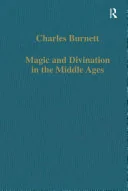
Magic and Divination in the Middle Ages
 80
80

Magic and Divination in the Middle Ages



Charles Burnett's "Magic and Divination in the Middle Ages" offers a scholarly examination of how figures like Hermes and Aristotle became touchstones for medieval occultists. The book excels in detailing the transmission of magical texts from the classical period through Arabic scholarship to Latin Europe, particularly highlighting the pivotal role of 12th-century Spanish translation efforts. Burnett clearly demonstrates the search for 'secret knowledge' as a driving force behind this intellectual exchange. A minor limitation might be the dense academic prose, which could pose a challenge for readers less accustomed to medieval manuscript studies. However, the meticulous tracing of talismanic texts, from their Hellenistic origins to their medieval reception, provides an invaluable resource for understanding the intellectual currents of the era. The work's strength lies in its detailed archival research and its clear articulation of the scholarly context for these magical traditions. Burnett's study reveals the sophisticated engagement medieval scholars had with ancient authorities, moving beyond simple superstition to intellectual inquiry.
📝 Description
80
### What It Is Magic and Divination in the Middle Ages by Charles Burnett meticulously reconstructs the intellectual lineage of talismanic magic, tracing its journey from classical antiquity through the vibrant scholarly milieu of the Arabic world and into the Latinate West. The work examines how concepts attributed to figures like Hermes and Aristotle fueled a persistent quest for hidden wisdom, profoundly influencing translation efforts, particularly in 12th-century Spain.
### Who It's For This volume is essential for scholars of medieval intellectual history, students of the history of science, and practitioners of Western esotericism interested in the theoretical underpinnings of magical practices. It offers a deep dive into the transmission of knowledge across cultures and centuries, appealing to those who appreciate rigorous textual analysis and historical context.
### Historical Context Burnett situates talismanic magic within the medieval scientific framework, exploring its classification and the theoretical discussions surrounding it. The book highlights the crucial role of translations from Arabic into Latin, a process significantly advanced by the intellectual ferment in places like 12th-century Spain, which served as a conduit for classical and Arabic learning into European universities and scholarly circles, challenging established Aristotelian doctrines with imported magical philosophies.
### Key Concepts The core of the book revolves around the concept of 'secret knowledge' sought from ancient authorities like Hermes and Aristotle. It details the historical development and textual transmission of talismanic magic, demonstrating how these esoteric arts were integrated into, and sometimes challenged, the prevailing scientific and philosophical paradigms of the Middle Ages, particularly through the study of astrological influences and celestial bodies.
💡 Why Read This Book?
• Gain insight into the medieval classification of sciences, understanding how talismanic magic (or necromancy) was categorized alongside other disciplines, a perspective crucial for grasping the era's intellectual landscape. • Trace the specific textual lineage of talismanic magic from Classical Greek sources through Arabic translations to its eventual integration into Latin medieval scholarship, a journey vital for understanding knowledge transmission. • Comprehend the catalyst role of the search for 'secret knowledge' from figures like Hermes and Aristotle in driving the intense translation activity in 12th-century Spain, revealing a key motivation for scholarly pursuit.
⭐ Reader Reviews
Honest opinions from readers who have explored this book.
❓ Frequently Asked Questions
What is the primary focus of Magic and Divination in the Middle Ages?
The book focuses on the history and intellectual context of talismanic magic, tracing its transmission from classical antiquity through Arabic scholarship to the Latin Middle Ages, and its position within medieval science.
Which ancient authorities are central to the book's argument?
The principal ancient authorities discussed are Hermes Trismegistus and Aristotle, whose works and attributed 'secret knowledge' were significant drivers for translation and magical theory in the Middle Ages.
What role did 12th-century Spain play in the transmission of magical texts?
12th-century Spain was a crucial hub for translating texts from Arabic into Latin. The book highlights this activity as a catalyst for the spread of knowledge, particularly concerning talismanic magic and the wisdom of ancient sages.
What is meant by 'talismanic magic' in the context of this book?
Talismanic magic refers to a branch of magic that involved the creation and use of talismans, often linked to astrological principles and the belief in sympathetic influences between celestial bodies and earthly objects.
Is this book suitable for beginners in esoteric studies?
While providing foundational historical context, the book is written for a scholarly audience. Beginners might find it dense but rewarding for understanding the academic study of medieval magic.
What is the significance of necromancy as discussed in the book?
The book examines 'necromancy' primarily as a term used in the Middle Ages for talismanic magic, exploring its place within the divisions of science and its association with sought-after, hidden knowledge.
🔮 Key Themes & Symbolism
Transmission of Esoteric Knowledge
The work meticulously charts the path of magical and divinatory texts, emphasizing how ideas attributed to Hermes and Aristotle were preserved, translated, and integrated into medieval European thought. This highlights the critical role of centers like 12th-century Spain in facilitating cross-cultural intellectual exchange, preserving ancient wisdom for later generations of occultists and scholars.
Talismanic Magic in Medieval Science
Burnett analyzes the academic positioning of talismanic magic, or necromancy, within the medieval divisions of science. It explores how practitioners and scholars reconciled these practices with established Aristotelian frameworks, demonstrating a sophisticated engagement with celestial influences and the creation of magical objects as tools of knowledge.
The Quest for 'Secret Knowledge'
A central theme is the medieval intellectual's pursuit of 'secret knowledge' believed to be held by classical sages. This desire acted as a powerful engine for translation and scholarly inquiry, driving the recovery and study of ancient magical and philosophical texts, particularly those emerging from the Arabic world.
Hermes and Aristotle as Authorities
The book underscores the profound influence of Hermes Trismegistus and Aristotle on medieval magical thought. Their attributed wisdom, even when filtered through centuries of interpretation and translation, served as foundational texts for understanding the cosmos and humanity's place within it, guiding magical practices and philosophical debate.
💬 Memorable Quotes
“The search for the 'secret knowledge' of these ancient sages was a catalyst for translating activity from Arabic into Latin in 12th-century Spain.”
— This highlights how a desire for hidden wisdom, attributed to classical figures, directly spurred the crucial process of translating Arabic texts into Latin, thereby enriching medieval European intellectual life.
“The book traces the history of talismanic texts from the Classical period through the Arabic world to the Latin Middle Ages.”
— This statement encapsulates the book's chronological and geographical scope, emphasizing the continuous evolution and transmission of magical traditions across distinct cultural and historical phases.
“Discussing the terminology of talismanic magic (or necromancy) and its position in divisions of science in the Middle Ages.”
— This points to the book's analytical approach, examining how magical practices were defined and classified within the structured intellectual systems of the medieval period, rather than being solely relegated to superstition.
“The principal authorities are Hermes and Aristotle.”
— This identifies the core classical figures whose ideas and attributed teachings formed the bedrock of much medieval magical and philosophical inquiry, signaling their foundational importance in the text.
“The work traces the history of talismanic texts.”
— This concise summary emphasizes the book's focus on the development and propagation of specific textual traditions related to talismans, underscoring the importance of the written word in esoteric history.
🌙 Esoteric Significance
Tradition
This work fits squarely within the Hermetic and Neoplatonic traditions, tracing the lineage of ideas that underpin much of Western esotericism. It examines how these ancient philosophical and magical currents were preserved and reinterpreted through Arabic intermediaries before re-emerging in the Latin West, forming a crucial bridge for later magical and alchemical practitioners.
Symbolism
Key symbols include talismans themselves, understood as objects imbued with celestial power, and the figures of Hermes and Aristotle, who represent ancient wisdom and philosophical authority. The act of translation itself symbolizes the bridging of cultures and the revival of lost knowledge, a potent motif in esoteric lore.
Modern Relevance
Contemporary practitioners of ceremonial magic, Hermeticists, and scholars of esoteric history continue to draw on the detailed textual analysis provided by Burnett. The book informs modern understandings of how magical theory developed and was integrated into intellectual frameworks, offering historical depth to current esoteric practices and research.
👥 Who Should Read This Book
• Scholars of medieval history and intellectual currents seeking to understand the integration of esoteric arts into academic frameworks. • Students of Western Esotericism interested in the historical development of talismanic magic and its classical and Arabic antecedents. • Researchers in comparative religion and the history of science looking for detailed accounts of knowledge transmission across cultures and eras.
📜 Historical Context
During the High Middle Ages, particularly the 12th century, Europe experienced a significant intellectual revival fueled by increased contact with the Islamic world. This period saw a surge in translation activity, with centers like Toledo in Spain becoming crucial conduits for transmitting Greek, Arabic, and Persian knowledge into Latin. Competing schools of thought included the burgeoning scholasticism, which sought to reconcile Aristotelian philosophy with Christian doctrine, and various heterodox mystical traditions. Charles Burnett's work emerges within this context, illuminating how esoteric practices like talismanic magic, often drawing on figures like Hermes Trismegistus and apocryphal Aristotelian texts, were not merely fringe beliefs but subjects of serious scholarly debate and integration into the broader scientific and philosophical landscape, albeit sometimes outside the mainstream universities. The reception of these texts often involved careful negotiation with established authorities.
📔 Journal Prompts
The concept of 'secret knowledge' attributed to Hermes and Aristotle.
The role of 12th-century Spain as a translation hub.
The medieval classification of talismanic magic (or necromancy).
The historical trajectory of talismanic texts.
The significance of textual authority in medieval magical discourse.
🗂️ Glossary
Talismanic Magic
A branch of magic focused on the creation and use of talismans, objects believed to possess supernatural powers derived from celestial influences or divine inscriptions.
Necromancy
In the medieval context discussed, this term often referred to talismanic magic or divination practices associated with summoning spirits or drawing power from celestial bodies, rather than solely communicating with the dead.
Divisions of Science
The systematic classification and categorization of knowledge and disciplines prevalent in medieval academic thought, within which magic and divination were sometimes placed.
Hermes Trismegistus
A legendary Hellenistic figure, identified with the Egyptian god Thoth, credited with a corpus of esoteric texts (the Hermetica) that profoundly influenced Neoplatonism, alchemy, and Western esotericism.
Aristotle
The ancient Greek philosopher whose works, rediscovered and translated extensively in the Middle Ages, formed a cornerstone of scholastic philosophy and scientific inquiry, influencing even magical and cosmological theories.
Arabic World
Refers to the regions and cultures that flourished under Islamic rule from the 8th century onwards, characterized by significant advancements in science, philosophy, and the preservation and translation of classical texts.
Latin Middle Ages
The period in European history from roughly the 5th to the 15th century, characterized by the dominance of Latin as the language of scholarship, religion, and administration.