I Ching of Management
 61
61

I Ching of Management



Sophia Crane (Associate Editor): William Sadler's 'I Ching of Management' is a remarkable synthesis, offering a deeply esoteric perspective on organizational leadership. Sadler doesn't just present the I Ching as a predictive tool; he reveals it as a philosophical framework for navigating the complexities of the modern workplace. His ability to translate the ancient symbolism into actionable management insights is truly exceptional. This book is invaluable for leaders and thinkers who seek to infuse their professional lives with wisdom, intuition, and a profound understanding of cyclical change. A must-read for anyone yearning for a more meaningful and harmonized approach to management.
📝 Description
61
Unveil the ancient wisdom of the I Ching, transmuted into the modern crucible of industrial management. William Sadler masterfully deciphers the hexagrams, revealing their profound, often overlooked, esoteric underpinnings. This isn't merely a guide to organizational strategy; it's an invitation to a deeper understanding of universal principles that govern both human endeavor and the cosmos. Explore the subtle currents of change, the dance of yin and yang in decision-making, and the harmonious flow of Tao within the corporate landscape. Sadler bridges the chasm between Eastern mysticism and Western pragmatism, offering a unique lens through which to perceive challenges and opportunities. For the discerning reader seeking not just efficiency, but enlightenment in their professional life, this work illuminates the hidden pathways to balanced leadership and enduring success. It's a journey into the soul of management, where ancient symbols speak directly to contemporary dilemmas, promising profound insight for those who dare to listen.
✍️ Author
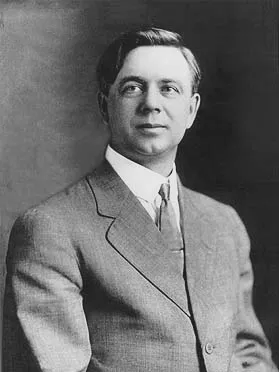
William Sadler
William Samuel Sadler (June 24, 1875 – April 26, 1969) was an American surgeon, self-trained psychiatrist, and author who helped publish The Urantia Book. The book is said to have resulted from Sadler's relationship with a man through whom he believed celestial beings spoke at night.
💡 Why Read This Book?
This book offers a profound reinterpretation of management principles through the lens of ancient Taoist philosophy and the I Ching. Ideal for seekers of holistic leadership, scholars of comparative philosophy, and practitioners who wish to integrate spiritual wisdom into their professional lives. Discover how timeless archetypes can guide strategic decisions and foster organizational harmony.
⭐ Reader Reviews
Honest opinions from readers who have explored this book.
❓ Frequently Asked Questions
Can the I Ching truly be applied to modern business?
Absolutely. Sadler demonstrates how the I Ching's principles of change, balance, and responsiveness are universally applicable, offering timeless insights into leadership, strategy, and human dynamics within any organizational structure.
Is prior knowledge of the I Ching required?
No. Sadler's work is accessible to those unfamiliar with the I Ching, providing clear explanations and contextualizing its wisdom for a management audience.
What are the core esoteric themes explored?
The book delves into the Taoist concept of 'Wu Wei' (non-action), the interplay of yin and yang, the cyclical nature of fortune, and the importance of intuitive decision-making guided by universal principles.
Who is the ideal reader for this book?
This book is ideal for leaders, managers, consultants, and anyone interested in applying philosophical and spiritual wisdom to professional challenges, seeking a deeper, more integrated approach to management.
How does this book differ from standard management texts?
Unlike conventional texts, it moves beyond purely empirical methods, integrating ancient esoteric wisdom and symbolic interpretation to offer a richer, more intuitive, and spiritually resonant approach to leadership and organizational development.
🔮 Key Themes & Symbolism
The Tao of Leadership
This theme explores the alignment of managerial actions with the natural flow of the Tao, emphasizing effortless action ('Wu Wei'), adaptability, and the cultivation of inner harmony as foundational to effective leadership. It positions the leader not as a controller, but as a conductor of inherent energies, guiding the organization towards balance and sustainable growth by understanding and working with, rather than against, the underlying currents of change and human nature.
Hexagrammatic Strategy
Here, the focus is on how the 64 hexagrams of the I Ching serve as archetypal patterns of situations and transformations relevant to business. Sadler illustrates how interpreting these symbolic configurations can provide profound insights into strategic planning, crisis management, and opportune moments for action. It's about discerning the 'moment' for intervention, understanding the forces at play, and aligning one's strategy with the cosmic unfolding of events to achieve optimal outcomes.
Symbolism and Intuitive Decision-Making
This theme delves into the rich symbolic language of the I Ching and its application to developing intuitive faculties in decision-making. Sadler suggests that the hexagrams, through their imagery and associated texts, offer a sophisticated system for tapping into subconscious wisdom and understanding complex situations beyond logical analysis. It encourages a holistic approach where intuition, informed by ancient symbolic knowledge, complements rational thought, leading to more profound and effective choices.
💬 Memorable Quotes
“The greatest strength lies in yielding.”
— This quote encapsulates the Taoist principle of 'Wu Wei,' suggesting that true power in management is found not in forceful imposition, but in flexible adaptation and allowing situations to unfold naturally, guiding rather than dictating.
“Harmony within precedes order without.”
— This highlights the esoteric understanding that internal organizational culture and individual well-being are the bedrock of external success and stability, mirroring the cosmic principle of balance.
“Each hexagram is a mirror to the soul of the enterprise.”
— This suggests that the symbolic representations within the I Ching offer profound insights into the underlying dynamics, challenges, and potential transformations of any business or project.
“The wise leader discerns the season of change.”
— This emphasizes the importance of timing and attunement to the cyclical nature of events, a core tenet of the I Ching, for effective strategic intervention and decision-making.
“Where logic falters, intuition may guide.”
— This points to the esoteric value of the I Ching in augmenting rational thought, encouraging the development of inner wisdom for navigating complex and uncertain professional landscapes.
🌙 Esoteric Significance
Tradition
This work is deeply rooted in Taoism, specifically drawing from the philosophical and divinatory traditions of the I Ching (Book of Changes). It interprets the I Ching not merely as a fortune-telling device, but as a profound repository of cosmological principles, psychological archetypes, and strategic wisdom that reflects the fundamental patterns of existence and change, emphasizing balance, interconnectedness, and the natural order.
Symbolism
The core symbolism revolves around the 64 hexagrams, each composed of six lines (yin or yang) representing dynamic states of being and transformation. These symbols are interpreted as archetypal forces and situations encountered in life and business. The trigrams (three-line combinations) and the interplay between yin (passive, receptive) and yang (active, creative) are central to understanding the forces at play in any given management scenario.
Modern Relevance
In an age of rapid technological change, global uncertainty, and increasing emphasis on holistic well-being, the I Ching of Management offers a timeless framework for navigating complexity with wisdom and intuition. Its principles of adaptability, balance, and understanding cyclical patterns are more relevant than ever for leaders seeking sustainable growth, ethical decision-making, and genuine organizational harmony in a volatile world.
👥 Who Should Read This Book
This book is a treasure for the thoughtful leader and the contemplative manager. Beginners to the I Ching will find Sadler's translation insightful and accessible, while seasoned practitioners will appreciate the novel application of ancient wisdom to modern challenges. Scholars of comparative philosophy and Eastern thought will find a unique synthesis. Seekers of deeper meaning in their professional lives, and practitioners aiming to cultivate intuitive, balanced, and resilient leadership, will find this a transformative guide.
📜 Historical Context
Published in an era (mid-20th century) when Western business practices were rapidly evolving and seeking new paradigms, William Sadler's 'I Ching of Management' emerged as a unique bridge between ancient Eastern philosophy and contemporary organizational theory. The post-war period saw a surge of interest in cross-cultural ideas, particularly those offering spiritual or holistic perspectives that seemed to elude purely mechanistic approaches. Sadler’s work tapped into this zeitgeist, offering a sophisticated, yet accessible, integration of the I Ching – a text with millennia of history and profound philosophical depth – into the pragmatic world of industrial management. It represented an esoteric counterpoint to the prevailing scientific management trends, suggesting that true efficiency and success could be found in understanding deeper, universal patterns of change and harmony.
📔 Journal Prompts
Reflect on a recent business challenge. Which I Ching hexagram might symbolically represent this situation, and what insights does it offer for your approach?
How can the principle of 'Wu Wei' (effortless action) be applied to a current managerial task, reducing resistance and fostering natural progress?
Consider the balance of 'yin' and 'yang' energies within your team or organization. Where are imbalances occurring, and how can they be harmonized?
Identify a recurring pattern of organizational behavior. How does the cyclical nature described in the I Ching inform your understanding and potential interventions?
What 'season' of change is your organization currently in, according to the principles of the I Ching, and what strategic adjustments does this suggest?
🗂️ Glossary
I Ching
An ancient Chinese divination text and philosophical classic, also known as the Book of Changes, renowned for its system of 64 hexagrams representing universal principles and patterns of change.
Hexagram
A symbol composed of six stacked horizontal lines, each either solid (yang) or broken (yin), used in the I Ching to represent a specific situation, state, or transformation.
Taoism
An indigenous philosophical and religious tradition of China, emphasizing living in harmony with the Tao, the fundamental, ineffable principle of the universe.
Wu Wei
A central concept in Taoism, often translated as 'non-action' or 'effortless action,' signifying action that is in accordance with the natural flow of the Tao, without striving or force.
Yang
In Taoist philosophy, one of the two complementary forces of the universe, representing the active, masculine, light, and creative principle, often depicted by a solid line in the I Ching.