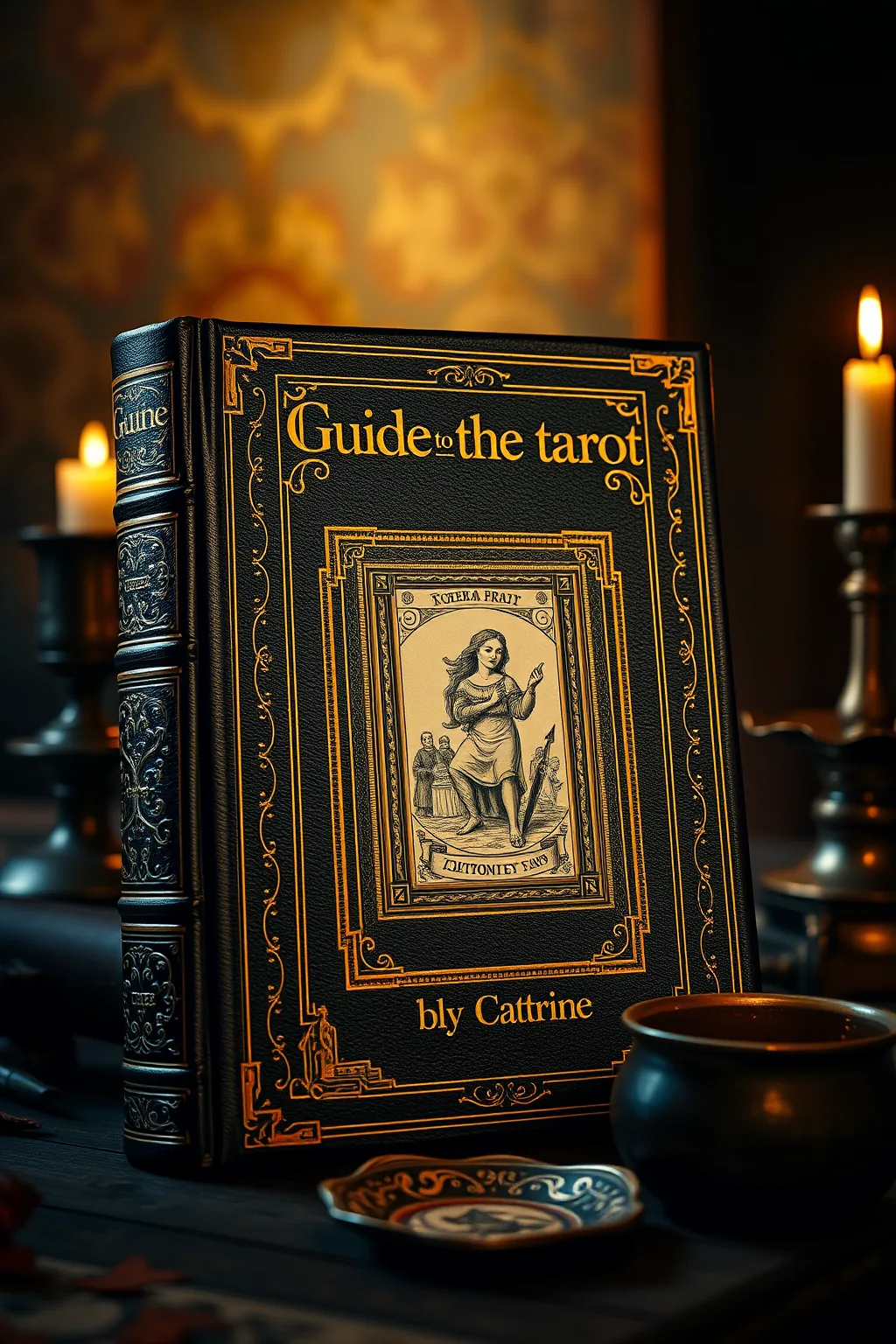
Guide to the tarot
 82
82

Guide to the tarot



Catriona Kirkpatrick and Nalda Gosling's Guide to the Tarot, originally released in 1996, presents a refreshingly direct approach to a subject often shrouded in mystique. Unlike many contemporary guides that lean heavily on poetic metaphor, this work offers a clear, almost academic breakdown of each card's meaning and its potential divinatory significance. The authors' strength lies in their methodical exposition, particularly in detailing the correspondences between suits, numbers, and the astrological or elemental associations that inform the Minor Arcana. A passage detailing the progression of the Pentacles suit, for instance, effectively illustrates how material concerns evolve through the numbered cards. However, the book occasionally suffers from a lack of depth in exploring the more nuanced psychological or spiritual implications that have become central to modern tarot practice. It excels as a primer but might leave advanced practitioners seeking more intricate interpretive frameworks. For its clarity and foundational instruction, it remains a solid, if somewhat understated, resource.
📝 Description
82
### What It Is
Guide to the Tarot is a foundational text for understanding the divinatory and symbolic language of tarot cards. First published in 1996, it offers a comprehensive exploration of the 78-card deck, detailing the meanings of both the Major and Minor Arcana. The book presents a structured approach to learning tarot, suitable for individuals beginning their practice.
### Who It's For
This guide is intended for novice tarot enthusiasts, occult students, and those interested in cartomancy. It assumes no prior knowledge, breaking down complex symbolism into accessible explanations. Readers seeking a clear, methodical introduction to tarot reading and interpretation will find this book particularly beneficial for establishing a solid understanding of the cards and their interactions.
### Historical Context
The publication of Guide to the Tarot in 1996 emerged during a period of renewed interest in esoteric practices and divination. Following the occult revivals of the 20th century, and amidst a growing popular fascination with tarot often fueled by New Age movements, this work provided a grounded, educational resource. It addressed the need for clear instruction as tarot moved from niche occult circles into broader cultural awareness.
### Key Concepts
The book systematically covers the archetypal imagery of the Major Arcana, such as The Fool and The High Priestess, and the pips and court cards of the Minor Arcana. It explains the significance of suits (Wands, Cups, Swords, Pentacles) and numbers within the tarot system. Emphasis is placed on developing intuition alongside structured interpretation, facilitating a holistic approach to reading the cards.
💡 Why Read This Book?
• Understand the foundational meanings of the 78-card tarot deck, including the distinct roles of the Major Arcana and the four suits (Wands, Cups, Swords, Pentacles), as presented in the book's structured approach. • Grasp the significance of numerical progression within the Minor Arcana, learning how each number from Ace to Ten builds upon its predecessor, a concept detailed in the book's systematic card analysis. • Develop a balanced approach to tarot reading that combines structured interpretation with intuitive awareness, a methodology emphasized by Kirkpatrick and Gosling to foster authentic divination.
why_read
⭐ Reader Reviews
Honest opinions from readers who have explored this book.
❓ Frequently Asked Questions
When was Guide to the Tarot first published?
Guide to the Tarot was first published in 1996, marking its entry into the esoteric literature landscape during a period of resurgent interest in divination and occult studies.
What is the difference between Major and Minor Arcana as explained in the book?
The book explains the Major Arcana as representing significant life events and spiritual lessons, while the Minor Arcana depict daily occurrences and more personal challenges, divided into four suits.
Does the book cover different tarot spreads?
While the primary focus is on individual card meanings, Guide to the Tarot likely introduces basic spreads to demonstrate how card combinations are interpreted in practice, a standard element in introductory tarot texts.
Is this book suitable for someone with no prior tarot knowledge?
Yes, the book is specifically designed as an introductory guide, breaking down complex symbolism into accessible language for beginners interested in learning tarot.
Who are the authors of Guide to the Tarot?
The authors are Catriona Kirkpatrick and Nalda Gosling. Their collaboration produced this comprehensive guide to tarot interpretation.
What esoteric traditions does the book draw from?
The book primarily draws from the Western esoteric tradition of tarot, which includes influences from Hermeticism and Kabbalah, focusing on symbolic interpretation and divination.
🔮 Key Themes & Symbolism
Card Symbolism
The work meticulously deciphers the symbolic language embedded within each of the 78 tarot cards. It explores the archetypal imagery of the Major Arcana, such as the visually striking representation of Justice or The Hermit, and details the elemental and numerical significance of the Minor Arcana's suits: Wands for action and creativity, Cups for emotions and relationships, Swords for intellect and conflict, and Pentacles for material reality and security. The book aims to build a robust understanding of these visual cues and their inherent meanings.
Divinatory Interpretation
Central to the Guide to the Tarot is its focus on cartomancy, the practice of divination using cards. The authors present methodologies for interpreting card meanings both individually and in relation to each other within a spread. They explain how the sequence of cards, their positions, and their inherent symbolism combine to offer insights into past, present, and future possibilities. This practical application transforms the tarot deck into a tool for self-reflection and guidance.
Structure and System
The book emphasizes a structured approach to learning tarot, moving beyond intuitive guesswork. It outlines a systematic framework for understanding the tarot deck, detailing the hierarchy of the cards and the interconnectedness of their meanings. This methodical presentation is designed to equip readers with a reliable system for interpretation, ensuring that even complex readings can be approached with a degree of logical understanding, fostering confidence in their practice.
Archetypal Journeys
Beyond simple fortune-telling, the Guide to the Tarot touches upon the deeper, archetypal narratives represented by the cards. The Major Arcana, in particular, are presented as stages of a universal human journey, reflecting significant life transitions and spiritual awakenings. The progression from The Fool's innocent beginning to The World's completion offers a symbolic map of personal development and the unfolding of consciousness.
💬 Memorable Quotes
“The Major Arcana represent the great cycles and initiations of life.”
— This statement highlights the book's view of the Major Arcana not just as individual cards, but as integral parts of a larger, transformative journey, underscoring their role in significant life lessons and spiritual progression.
“Each suit in the Minor Arcana carries a distinct elemental association.”
— This points to the book's systematic method, linking the four suits (Wands, Cups, Swords, Pentacles) to specific elements (Fire, Water, Air, Earth) and their associated energies, providing a foundational layer for interpretation.
“Understanding the numerical progression of the Minor Arcana is key to grasping their development.”
— This emphasizes the book's structured teaching style, suggesting that the journey from Ace to Ten within each suit follows a logical sequence of unfolding themes and challenges.
“Tarot reading combines learned knowledge with intuitive perception.”
— This reflects the book's balanced approach, advocating for a practice that integrates the systematic study of card meanings with the development of personal insight and psychic sensitivity.
“The Court Cards embody different facets of human personality and roles.”
— This interpretation focuses on the book's explanation of the Page, Knight, Queen, and King cards as representing distinct personality types, social roles, or stages of maturity within a given situation.
🌙 Esoteric Significance
Tradition
This work firmly belongs to the Western esoteric tradition of tarot, which evolved from 18th-century occult circles in France and later incorporated elements of Hermeticism, Kabbalah, and astrology. It aligns with the lineage that views tarot as a symbolic language and a tool for divination and spiritual insight, rather than solely a game. The book's approach emphasizes the structured symbolic system underpinning the cards, a hallmark of this tradition.
Symbolism
Key symbols explored include the archetypes of the Major Arcana, such as The Magician representing focused will and manifestation, and The Star signifying hope and inspiration. The book also delves into the symbolism of the four suits: Wands (fire, creativity, action), Cups (water, emotions, relationships), Swords (air, intellect, conflict), and Pentacles (earth, material world, security), explaining their elemental associations and divinatory meanings.
Modern Relevance
Contemporary practitioners of tarot, especially those focused on psychological interpretation or structured learning, continue to draw from guides like this. It serves as a foundational text for those entering the field, providing a clear interpretive framework that can be expanded upon with more advanced or personalized techniques. Its accessible nature makes it a point of reference for modern readers seeking to build a solid understanding of core tarot principles.
👥 Who Should Read This Book
• Aspiring tarot readers seeking a clear, step-by-step introduction to the 78-card deck and its meanings. • Students of Western esoteric traditions interested in understanding the symbolic language and divinatory applications of tarot. • Individuals looking for a practical guide to developing their intuition through structured card interpretation and practice.
📜 Historical Context
Published in 1996, Catriona Kirkpatrick and Nalda Gosling's Guide to the Tarot emerged within a burgeoning popular interest in esoteric subjects, particularly divination. The late 20th century saw a mainstreaming of practices previously confined to occult circles, partly influenced by the New Age movement. In this climate, the book offered a clear, accessible introduction that contrasted with more esoteric or academically dense works available at the time. It provided a structured alternative to more fluid, intuitive approaches that were also gaining traction. While not directly engaging with specific academic debates, its straightforward methodology aimed to demystify tarot for a wider audience, serving as a practical manual for individuals exploring spiritual and divinatory tools outside of established religious frameworks.
📔 Journal Prompts
The Fool's journey through the Major Arcana: map your own path.
Reflect on the elemental energies of the Wands suit in your current projects.
How does the symbolism of The High Priestess inform your understanding of intuition?
Consider the progression of the Pentacles suit in relation to your material goals.
Analyze a recent challenge through the lens of the Swords suit's core themes.
🗂️ Glossary
Major Arcana
The set of 22 trump cards in a tarot deck, representing significant life events, archetypal figures, and major spiritual lessons or challenges.
Minor Arcana
The set of 56 cards in a tarot deck, divided into four suits, which typically represent everyday events, personal concerns, and the mundane aspects of life.
Cartomancy
The practice of divination or fortune-telling using a deck of cards, most commonly the tarot or a standard playing card deck.
Suits
The four divisions of the Minor Arcana (Wands, Cups, Swords, Pentacles), each associated with an element, a specific area of life, and a set of symbolic meanings.
Archetype
A universal, symbolic pattern or image that recurs across cultures and time, often representing fundamental human experiences or character types, as seen in the Major Arcana.
Divination
The practice of seeking knowledge of the future or the unknown by supernatural means, often employing tools like tarot cards, astrology, or runes.
Court Cards
The four highest-ranking cards in each suit of the Minor Arcana: Page, Knight, Queen, and King, representing people, personalities, or specific roles.




![CIA Reading Room cia-rdp78t05439a000400230090-7: MENSURATION OF THE [ ]-BUKHARA CANAL, USSR](/img/thumb/cia-reading-room-cia-rdp78t05439a000400230090-7-mensuration-of-the-bukhara-canal-ussr-cia-reading-room.webp)