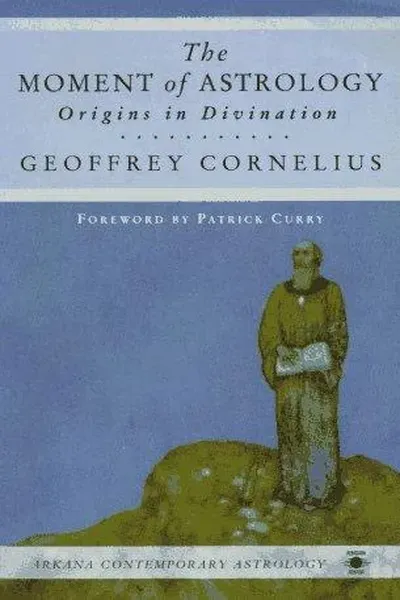
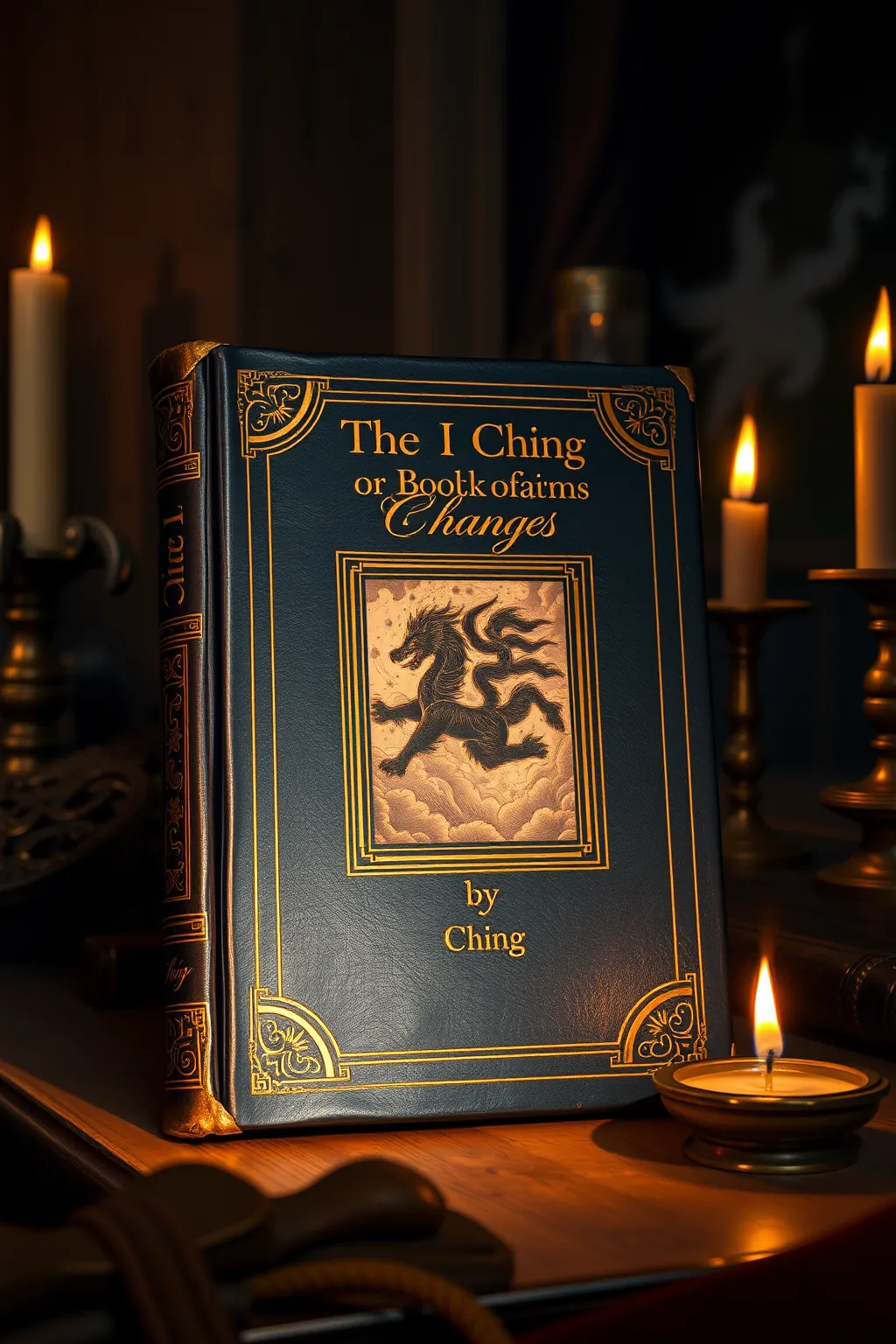
The I Ching or Book of Changes
 61
61

The I Ching or Book of Changes



Sophia Crane (Associate Editor) — 'The I Ching, or Book of Changes' is an essential cornerstone of esoteric literature. Its profound exploration of universal patterns and cyclical change offers unparalleled insights into the nature of reality. The hexagrams, with their layered symbolism, serve as potent tools for divination, personal growth, and philosophical contemplation. This text is not merely for casual perusal; it demands introspection and a willingness to engage with its subtle wisdom. It is indispensable for serious students of metaphysics, ancient divination systems, and anyone seeking a deeper understanding of the cosmic dance.
📝 Description
61
The I Ching, or Book of Changes, is a foundational Chinese classic dating back at least to the 11th century BCE.
This ancient Chinese text uses a system of sixty-four hexagrams, each built from six yin (broken) and yang (solid) lines, to describe the fundamental patterns of change in the universe. These hexagrams are not static predictions but represent dynamic processes and the interplay of forces. The text associates each hexagram with specific imagery, judgments, and often lines of advice or commentary, suggesting appropriate actions or attitudes in response to particular situations. It functions as a complex philosophical work, a method of divination, and a tool for self-cultivation.
The I Ching's core philosophy centers on the belief that change is the only constant and that understanding these cyclical patterns allows one to align oneself with the natural order of things. Its wisdom extends to personal conduct, governance, and understanding the broader cosmos. The text's enduring influence lies in its ability to offer insight into the nature of reality and to guide individuals toward making decisions with greater awareness and foresight. It encourages a reflective approach to life's challenges.
The I Ching is a cornerstone of Chinese esoteric traditions, including Taoism and Confucianism. It is understood as a cosmological map that reveals the underlying principles governing all phenomena. Its use in divination, particularly through the manipulation of yarrow stalks or coins, connects it to practices aimed at discerning the will of Heaven or the flow of universal energies. The text's philosophical depth also places it within traditions concerned with self-cultivation and achieving harmony with the natural order.
💡 Why Read This Book?
Unravel the ancient secrets of cosmic balance and personal transformation. The I Ching offers a unique framework for understanding life's inevitable changes, providing guidance for decision-making and fostering profound self-awareness. Ideal for seekers of wisdom, practitioners of divination, and scholars of Eastern philosophy who wish to explore a foundational text of human thought.
⭐ Reader Reviews
Honest opinions from readers who have explored this book.
❓ Frequently Asked Questions
What is the I Ching?
The I Ching, or Book of Changes, is an ancient Chinese divination text and foundational philosophical work, comprising 64 hexagrams that represent fundamental archetypes of situations and transformations.
How is the I Ching used?
It is traditionally consulted using yarrow stalks or coins to generate hexagrams, which are then interpreted based on their symbolism and associated textual commentaries to provide guidance on current situations or future possibilities.
Who is the intended audience for the I Ching?
The I Ching is intended for anyone seeking wisdom, self-understanding, and guidance through life's complexities, including philosophers, spiritual seekers, practitioners of divination, and scholars of ancient texts.
Is the I Ching a religious text?
While deeply influential in Chinese philosophy and spirituality, the I Ching is primarily a philosophical and divinatory text rather than a strictly religious scripture, focusing on the observation and understanding of natural patterns.
What makes the I Ching 'esoteric'?
Its esoteric nature lies in its symbolic language, its exploration of hidden cosmic principles, and its use as a tool for inner transformation and divination, revealing deeper truths beyond the superficial.
🔮 Key Themes & Symbolism
The Nature of Change
Fundamentally, the I Ching is a profound meditation on the immutable principle of change. It illustrates that existence is a continuous flux, a dynamic interplay of opposing forces constantly transforming. Through its sixty-four hexagrams, it maps the archetypal patterns of these shifts, from nascent beginnings to ultimate conclusions, teaching us to recognize the opportune moments for action and the wisdom of yielding. Understanding this fundamental principle allows one to align with the cosmic flow, mitigating resistance and navigating life's inevitable transitions with greater equanimity and insight.
Cosmic Harmony and Balance
The I Ching reveals a universe governed by intricate laws of balance and harmony, where opposing forces – yin and yang – are in constant, dynamic relationship. These forces are not inherently good or bad but represent fundamental energies that, when in equilibrium, create stability and prosperity, and when out of balance, lead to discord and disruption. By studying the hexagrams, one learns to perceive these forces at play in their own lives and in the world, striving to restore balance and foster a harmonious existence through conscious action and understanding.
The Art of Divination and Self-Reflection
Beyond its philosophical depth, the I Ching serves as a powerful oracle, offering guidance through the intricate art of divination. The process of consulting its hexagrams encourages deep introspection, prompting the querent to examine their situation from multiple perspectives. Each hexagram's imagery and accompanying text offer symbolic insights into the underlying dynamics of a problem, revealing potential outcomes and suggesting courses of action. This practice fosters self-awareness, clarifies intentions, and empowers individuals to make more informed and aligned decisions in their journey.
💬 Memorable Quotes
Direct passages from the work, attributed to the author.
“When the strong has an excess, it must be diminished; when the weak has an insufficient, it must be increased.”
— Illustrates the principle of balance and correction inherent in the I Ching's philosophy, advocating for equilibrium in all things.
“The superior man, when he is in the midst of danger, finds himself in the midst of the order of Heaven.”
— Suggests that through inner alignment with cosmic principles, one can find peace and order even in the most perilous circumstances.
“To know the changes is to know the Tao.”
— Emphasizes the profound connection between understanding the principles of change and grasping the fundamental Way or universal principle of existence.
“The superior man makes himself strong.”
— A call to personal development and resilience, encouraging individuals to cultivate their inner strength and capacity to adapt to life's challenges.
💡 Key Ideas
Editorial paraphrase of the work's core concepts — not direct quotes.
The Book of Changes is the repository of the secrets of Heaven and Earth.
This quote highlights the I Ching's status as a foundational text containing profound cosmic truths and universal principles that govern all existence.
🌙 Esoteric Significance
Tradition
The I Ching is a central to Taoist and Confucian philosophical traditions, deeply embedded within Chinese esoteric thought. It is considered a foundational text for understanding the principles of cosmic order, balance, and the cyclical nature of existence. Its esoteric significance lies in its symbolic language, which acts as a key to unlocking deeper layers of reality and human consciousness, often employed in practices of spiritual cultivation and divination.
Symbolism
The hexagrams, formed from combinations of yin (broken) and yang (solid) lines, are the primary symbols, representing archetypal situations and forces. The trigrams (three-line combinations) are foundational, symbolizing natural elements (heaven, earth, thunder, etc.) and human relationships. The imagery and commentaries associated with each hexagram provide rich allegorical layers, inviting interpretation and revealing the subtle dynamics of cosmic and personal transformation.
Modern Relevance
In contemporary times, the I Ching remains a potent tool for navigating complexity and uncertainty. Its emphasis on adaptability, balance, and understanding cyclical patterns offers invaluable guidance for personal growth, decision-making, and fostering resilience in a rapidly changing world. It continues to be studied by philosophers, psychologists, spiritual seekers, and practitioners of various divination arts for its clear insights into human nature and the universal forces that shape our lives.
👥 Who Should Read This Book
This key work is a profound resource for a diverse audience. **Beginners** seeking an introduction to ancient Eastern philosophy and divination will find a foundational text that offers both practical guidance and intellectual depth. **Scholars** of comparative religion, philosophy, and East Asian studies will appreciate its historical significance and its role in shaping cultural and intellectual traditions. **Spiritual seekers** and **practitioners of esoteric arts** will discover a rich oracle for self-reflection, personal transformation, and understanding the subtle energies of the universe. Its wisdom is accessible to all who approach it with an open mind and a desire for deeper understanding.
📜 Historical Context
Emerging from the crucible of ancient China, likely during the Zhou Dynasty (c. 1046–256 BCE), 'The I Ching' represents a synthesis of millennia of observation and philosophical inquiry. Its origins are deeply intertwined with early Chinese cosmology, shamanic practices, and the development of divination. Initially a manual for predicting the future and advising rulers, its profound philosophical insights were later expounded upon by Confucian scholars, integrating it into the ethical and political thought of imperial China. Its influence spread throughout East Asia, shaping not only divination practices but also metaphysics, art, and even military strategy. The text's enduring relevance lies in its ability to transcend its historical context, offering timeless wisdom on the universal dynamics of change and human experience.
📔 Journal Prompts
Reflect on a recent situation where change was prominent. How did the I Ching's principles of transition apply?
Explore the concept of yin and yang in your daily life. Where do you see these forces in balance or imbalance?
Consider a decision you are facing. How might consulting the I Ching offer a new perspective?
What archetypal situation (represented by a hexagram) resonates most strongly with your current life circumstances?
How can the wisdom of the I Ching help you cultivate greater adaptability and resilience?
🗂️ Glossary
Hexagram
A symbol composed of six stacked lines, each being either solid (yang) or broken (yin). There are 64 unique hexagrams in the I Ching, representing fundamental archetypes of situations and cosmic processes.
Trigram
A symbol composed of three stacked lines, either solid (yang) or broken (yin). There are eight basic trigrams, each associated with natural elements, forces, or fundamental concepts.
Yin
In the I Ching, represented by a broken line (--) or (--). It signifies passive, receptive, dark, feminine, and downward-moving energies.
Yang
In the I Ching, represented by a solid line (—) or (—). It signifies active, creative, light, masculine, and upward-moving energies.
Tao (Dao)
Often translated as 'the Way.' In the context of the I Ching, it refers to the fundamental, ineffable principle that underlies and governs the entire universe, particularly its constant state of flux and transformation.
This book appears in 2 collections
🔮 Readers Also Liked
Browse all →








From the “I Ching” Collection
View all →








More Free Divination & Tarot Books
View all →