French Cartomancy

 73
73

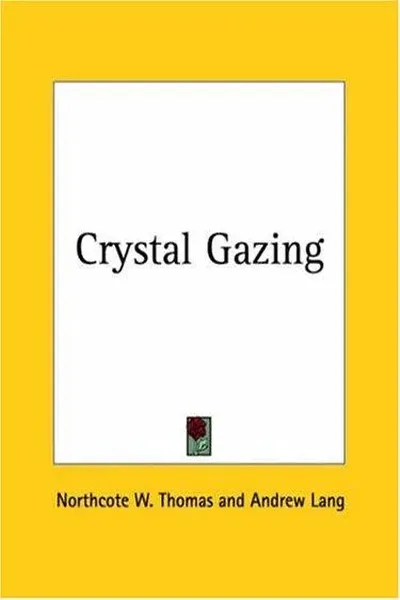
French Cartomancy
Laura Tuan's "French Cartomancy" offers a refreshing dive into a specific, often overlooked, branch of divination. The book's strength lies in its clear exposition of the Madame Lenormand tradition, presenting its symbolic language with an admirable lack of pretension. Tuan's approach to explaining card combinations, particularly how the "Great Table" layout functions, is practical and demystifies a system that can appear opaque to newcomers. The original blurb accurately highlights the connection between everyday symbols and magical evocation, a point the book successfully illustrates. A minor limitation is that while it aims for comprehensiveness, some readers might wish for more historical detail on the evolution of specific card meanings within the French school itself, beyond its primary association with Lenormand. The section on interpreting the "Great Table" offers a concrete passage that exemplifies the book's utility. Ultimately, "French Cartomancy" serves as a valuable, accessible primer for those wishing to master this distinct divinatory art.
📝 Description
73
### What It Is French Cartomancy presents a comprehensive exploration of the divinatory tradition originating in France, distinct from other European schools of card reading. It focuses on the symbolic language and interpretive methods associated with this specific lineage, emphasizing its unique approach to reading the future. The work guides readers through the visual narratives embedded within the cards, unlocking their potential for revealing everyday circumstances and their connection to subtle energies.
### Who It's For This volume is intended for cartomancers seeking to deepen their understanding of specific divinatory systems, particularly those interested in the historical French tradition. It appeals to readers who appreciate a methodical approach to card interpretation, moving beyond generalized meanings to engage with the nuanced symbolism of a particular deck and its associated interpretive framework. Aspiring practitioners looking for a solid foundation in a specific cartomantic school will also find value here.
### Historical Context The tradition explored in French Cartomancy has roots stretching back to the late 18th century, evolving alongside intellectual currents in France that sought to systematize occult knowledge. While figures like Eliphas Lévi were reinterpreting Tarot and Kabbalah, a distinct French cartomantic method, often associated with decks like the Sibylle des Salons and later the cards attributed to Madame Lenormand, developed its own systematic approach. This tradition focused on interpreting everyday occurrences and personal fortunes through a straightforward, yet symbolic, lens.
### Key Concepts The core of French Cartomancy lies in its specific card associations and interpretive techniques. Unlike more complex Tarot systems, this tradition often employs a smaller deck or specific card groupings and emphasizes direct correspondences between card imagery and life events. The work details how to interpret combinations of cards, understanding that each card modifies the meaning of its neighbors, creating a narrative flow that mirrors the querent's situation. The focus is on practical, actionable insights derived from a clearly defined symbolic vocabulary.
💡 Why Read This Book?
• Gain practical skills in interpreting the Madame Lenormand deck, understanding how its specific symbols, like the 'Tree' or 'Fox', directly map onto everyday life events, a method detailed in the book's interpretive chapters. • Learn a systematic approach to card combinations that differs from general Tarot readings, focusing on the positional influence of cards as explained in the 'Great Table' section. • Discover the historical lineage of French cartomancy, appreciating its development as a distinct divinatory school separate from other European traditions, as outlined in the historical context sections.
⭐ Reader Reviews
Honest opinions from readers who have explored this book.
❓ Frequently Asked Questions
What is the primary difference between French Cartomancy and other divination card systems like Tarot?
French Cartomancy, particularly the Lenormand tradition, typically uses a smaller deck (36 cards) with more direct, everyday symbolism compared to the complex archetypes and numerology found in many Tarot decks.
Who was Madame Lenormand, and what is her connection to this book?
Marie Anne Lenormand was a famous French fortune-teller in the late 18th and early 19th centuries. This book explores the cartomantic system attributed to her and developed from her practices.
When was "French Cartomancy" by Laura Tuan first published?
Laura Tuan's "French Cartomancy" was first published in March 2005, making it a relatively modern guide to a historical divinatory tradition.
Does this book teach specific card spreads for readings?
Yes, the book details specific spreads, most notably the 'Great Table' (Grand Tableau), which is a comprehensive layout for detailed readings within the French cartomancy tradition.
Is "French Cartomancy" suitable for beginners?
The book is designed as a definitive guide and is suitable for beginners interested in the Lenormand system, offering clear explanations of symbols and interpretation methods.
What kind of insights can one expect from French Cartomancy readings?
Readings focus on practical, real-life matters, relationships, career, and daily events, offering clear guidance and predictive insights rather than purely spiritual or psychological exploration.
🔮 Key Themes & Symbolism
Lenormand Symbolism
The core of French Cartomancy lies in understanding the potent, often deceptively simple, symbols of the Lenormand deck. Unlike Tarot's complex archetypes, these 36 cards represent everyday objects, animals, and concepts – the Knight, the Scythe, the Clouds, the House. The work meticulously unpacks each card’s meaning, emphasizing its direct correspondence to tangible events and situations, allowing for precise readings of daily life, relationships, and immediate future outcomes.
The Great Table Spread
A central technique in French Cartomancy is the 'Great Table' (Grand Tableau), a comprehensive layout designed for in-depth divination. This book guides readers through the intricate process of interpreting this spread, where cards are laid out in a grid. It explains how each card influences its neighbors and how specific card positions reveal different facets of a situation, offering a holistic view of the querent's circumstances.
Practical Divination
This tradition prioritizes practical, actionable insights. The focus is less on abstract spiritual journeys and more on understanding the concrete realities of life. French Cartomancy provides tools to interpret present circumstances and anticipate future events with clarity, making it a system for guidance in everyday matters. The work underscores how these symbols can connect the mundane to a subtle, predictive layer of reality.
French Esoteric Lineage
The book situates French Cartomancy within a specific historical and cultural context, highlighting its development in France. It distinguishes this tradition from other European cartomantic schools, emphasizing its unique evolution and interpretive framework. Understanding this lineage provides context for the system's development and its specific approach to symbolic interpretation and prediction.
💬 Memorable Quotes
“The images of Madame Lenormand lead you into a universe of symbols capable of evoking the everyday.”
— This highlights the accessible nature of Lenormand cards. They don't require deep mythological or esoteric study to understand; their symbols are rooted in common experience, making divination a practical tool for daily life.
“The cards permit the future to be revealed.”
— This statement emphasizes the predictive power attributed to cartomancy. It suggests that through careful interpretation of the card's symbolic language, a clear understanding of unfolding events and future possibilities can be attained.
“Connecting the everyday to the magic that surrounds us.”
— This interpretation focuses on the bridge cartomancy creates. It suggests that by examining ordinary events through the lens of card symbolism, one can perceive the subtle, magical currents influencing our lives.
“The definitive guide to the French cartomancy tradition.”
— This positions the book as an authoritative source, promising comprehensive coverage of a specific divinatory method, likely offering in-depth explanations and practical instruction.
“Depictions capable of evoking the everyday.”
— This points to the visual language of the cards. The imagery is designed to be immediately recognizable and relatable, drawing parallels between the card's scene and the viewer's lived experiences.
🌙 Esoteric Significance
Tradition
French Cartomancy fits within the broader Western Esoteric tradition, specifically the lineage of practical divination and fortune-telling that flourished in Europe from the 18th century onwards. It departs from more overtly mystical systems like Kabbalistic Tarot by focusing on a direct, symbolic interpretation of everyday occurrences, emphasizing predictive accuracy over abstract philosophical exploration. It represents a more grounded, almost 'mundane magic,' approach to cartomancy.
Symbolism
Key symbols in French Cartomancy include the 'Cards' (representing communication and messages), the 'House' (symbolizing home, family, and security), and the 'Fox' (signifying cunning, work, or deception). These images are direct and relatable, allowing for straightforward interpretation of life's practical matters, connecting the user's daily reality to a predictive symbolic framework.
Modern Relevance
Contemporary practitioners of Lenormand cartomancy, often found in online communities and specialized divination forums, continue to draw heavily on the systematic approach detailed in works like Tuan's. Modern esoteric thinkers and readers interested in practical, predictive divination find value in its clear symbolism and structured interpretive methods, offering an alternative to more complex or esoteric card systems.
👥 Who Should Read This Book
• Aspiring cartomancers seeking a clear, systematic method for divination, particularly those drawn to the practical, predictive style of the Madame Lenormand tradition. • Students of esoteric history interested in the development of divinatory practices in France and their distinction from other European cartomantic schools. • Experienced card readers looking to expand their repertoire beyond Tarot, by learning the unique symbolic language and interpretive techniques of French Cartomancy.
📜 Historical Context
The tradition of French Cartomancy, particularly as represented by the Madame Lenormand system, emerged from a fertile period of occult revival and intellectual curiosity in France. Following the French Revolution, there was a fascination with systematizing esoteric knowledge, partly in reaction to Enlightenment rationalism. While figures like Eliphas Lévi were reconceptualizing Tarot through Kabbalah, a more direct, predictive form of cartomancy gained traction. Lenormand herself, active from the late 18th century, became renowned for her readings, influencing a distinct style of card interpretation focused on everyday life. This method stood apart from the more complex, archetypal interpretations being explored in other European circles. The 2005 publication of Laura Tuan's work places it in a contemporary context where interest in these historical systems has resurged, offering a structured approach to a lineage that often contrasts with the esoteric explorations of Tarot.
📔 Journal Prompts
The Knight card's swift arrival and departure: how do messages impact your daily flow?
Reflect on the symbolism of the 'Clouds' card in relation to recent uncertainties.
Consider the 'House' card's meaning: what does your current living situation signify?
How does the 'Fox' card's association with work manifest in your professional life?
Analyze the 'Tree' card's representation of health and growth in your current circumstances.
🗂️ Glossary
Grand Tableau
The 'Great Table' is the most comprehensive spread in French Cartomancy, typically involving all 36 Lenormand cards laid out in a grid to provide a detailed overview of a situation and its future trajectory.
Lenormand Deck
A specific 36-card deck used in French Cartomancy, featuring simplified, everyday symbols (e.g., Dog, Ship, Stars) that are interpreted in combination to predict events and provide guidance.
Card Combinations
The practice of interpreting two or more cards together in French Cartomancy, where the meaning of one card modifies or clarifies the meaning of adjacent cards, creating a narrative.
Petit Lenormand
Refers to the standard 36-card deck system attributed to Madame Lenormand, distinct from larger Tarot decks, focusing on direct symbolic representation of daily life.
Querent
The person for whom a divination reading is performed; the individual seeking insight or answers from the cards.
Divinatory Meaning
The predictive or interpretive significance assigned to each card within a specific cartomantic system, based on its imagery and historical context.
Symbolism
The visual language and inherent meanings associated with each card in the deck, which are the foundation for interpretation in cartomancy.