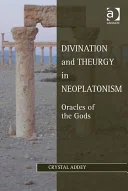
Divination and Theurgy in Neoplatonism
 84
84

Divination and Theurgy in Neoplatonism
Crystal Addey’s "Divination and Theurgy in Neoplatonism" provides a much-needed scholarly bridge between classical philosophy and esoteric practice. The book's strength lies in its meticulous engagement with primary texts, particularly highlighting how Neoplatonists like Iamblichus did not merely tolerate divination but actively integrated it into their philosophical systems as a means of spiritual ascent. Addey effectively demonstrates that for these thinkers, oracles were not simply superstitious relics but vital conduits for philosophical knowledge and divine communion. A notable limitation, however, is the dense academic prose which, while accurate, may present a barrier for those without a strong background in ancient philosophy. The section detailing Iamblichus's arguments for the efficacy of theurgy against philosophical skeptics is particularly illuminating, showcasing the sophisticated reasoning employed. This work is an essential, albeit challenging, resource for understanding the philosophical underpinnings of ancient divinatory practices.
📝 Description
84
### What It Is ### Who It's For ### Historical Context ### Key Concepts Dr. Crystal Addey's "Divination and Theurgy in Neoplatonism" offers a rigorous academic examination of the integral role oracles and various divinatory practices played within the philosophical discourse of Late Antiquity. The work specifically targets the third and fourth centuries CE, a period marked by intense intellectual exchange between pagan philosophers and emerging Christian thinkers. Addey moves beyond a mere cataloging of practices, instead analyzing how these divinatory arts were conceptualized and integrated into the metaphysical frameworks of Neoplatonic thought. The book scrutinizes primary sources to understand the philosophical underpinnings and the practical applications of seeking divine guidance through oracles and other forms of divination.
This study is primarily intended for advanced students and scholars of ancient philosophy, classics, religious studies, and the history of magic and esotericism. It will also appeal to serious practitioners of Western esotericism who seek a deeper, historically informed understanding of the philosophical roots of divinatory practices. Readers should possess a foundational knowledge of Neoplatonism and the intellectual landscape of the Roman Empire. The work is not an introductory guide to performing divination but a scholarly investigation into its philosophical significance for thinkers like Iamblichus and Plotinus.
The intellectual climate of the third and fourth centuries CE was a crucible for philosophical and religious ideas. Neoplatonism, as articulated by figures like Plotinus and later Iamblichus, sought to synthesize Platonic philosophy with mystical and religious elements. This era saw vigorous debates between pagan philosophers, who often defended the validity of oracles and theurgy, and Christian intellectuals who challenged these practices. The work situates itself within this dynamic environment, exploring how Neoplatonists defended their engagement with divination against critiques, particularly concerning the nature of divine inspiration and the efficacy of ritual.
Central to Addey's analysis are concepts such as theurgy, the practice of invoking divine powers for spiritual ascent and purification, and the philosophical interpretation of oracular pronouncements. The book investigates the Neoplatonic understanding of the soul's relationship to the divine, and how divination served as a bridge between the human and the celestial realms. It explores how these practices were not seen as mere fortune-telling but as essential tools for philosophical inquiry, ethical development, and achieving union with the One.
💡 Why Read This Book?
• Gain a scholarly understanding of how Neoplatonists like Iamblichus viewed divination not as superstition, but as a philosophical method for spiritual ascent, informed by analyses of texts from the 3rd and 4th centuries CE. • Understand the philosophical debates surrounding oracles between pagan thinkers and Christian intellectuals, providing context for the reception of these practices in Late Antiquity. • Discover the specific Neoplatonic concepts of theurgy and the soul’s relationship to the divine, as explored through Addey's examination of primary philosophical sources.
⭐ Reader Reviews
Honest opinions from readers who have explored this book.
❓ Frequently Asked Questions
What is the primary focus of "Divination and Theurgy in Neoplatonism"?
The book focuses on the philosophical integration and significance of oracles and other divinatory practices within Neoplatonism, particularly during the 3rd and 4th centuries CE, examining their role in philosophical thought and spiritual development.
Who are the key Neoplatonic philosophers discussed in the book?
While the book covers various thinkers of the era, it gives significant attention to Iamblichus and Plotinus, analyzing their contributions to the philosophical understanding of divination and theurgy.
Does this book teach how to perform divination?
No, "Divination and Theurgy in Neoplatonism" is a scholarly work examining the historical and philosophical context of divination. It does not provide practical instructions for divinatory techniques.
What is the historical period covered by the book?
The book primarily covers Late Antiquity, with a specific focus on the third and fourth centuries CE, a crucial period for Neoplatonic philosophy and its interactions with other intellectual traditions.
What is theurgy according to Neoplatonism, as discussed in the book?
Theurgy, as explored in the book, refers to a set of ritual practices intended to facilitate spiritual purification and ascent, enabling a connection with the divine realm, and was considered integral to Neoplatonic philosophy.
How does the book address the conflict between pagan and Christian intellectuals?
Addey examines the debates and critiques exchanged between pagan philosophers defending divination and theurgy, and Christian intellectuals who often rejected these practices, highlighting the intellectual tensions of the era.
🔮 Key Themes & Symbolism
Oracles as Philosophical Tools
This work argues that for Neoplatonists, oracles were not merely instruments of fortune-telling but sophisticated tools for philosophical inquiry. They served as a means to access divine knowledge, verify philosophical doctrines, and guide ethical living. The book details how thinkers like Porphyry and Iamblichus engaged with oracular pronouncements, interpreting them within their complex metaphysical systems as evidence of the soul's connection to higher intelligences and the divine One.
Theurgy and Spiritual Ascent
A central theme is the Neoplatonic concept of theurgy, a system of sacred rites and rituals intended to purify the soul and facilitate its ascent towards the divine. Addey explores how theurgy was intrinsically linked to divination, with oracular insights often guiding the practice of these rituals. This was seen not as magic in the modern sense, but as a divinely sanctioned method for achieving spiritual enlightenment and union with the ultimate reality.
Pagan-Christian Intellectual Contention
The book situates Neoplatonic divination within the broader intellectual landscape of Late Antiquity, specifically addressing the significant debates between pagan philosophers and Christian intellectuals. Addey examines how Christian thinkers, such as Eusebius, critiqued the validity and divine origin of pagan oracles, while Neoplatonists defended their practices. This dialectic reveals the philosophical stakes involved in understanding divine communication and human interaction with the sacred.
The Soul's Divine Connection
Underpinning the Neoplatonic approach to divination and theurgy is the concept of the soul's inherent connection to the divine. Addey explains how Neoplatonists believed that through specific practices and philosophical contemplation, the soul could transcend its earthly limitations and access higher realms of knowledge. Divination, in this context, was a way to remember and re-establish this innate connection, guiding the soul back to its divine source.
💬 Memorable Quotes
“Neoplatonists considered oracles an important part of philosophical thought and practice.”
— This core idea highlights that divination wasn't peripheral but central to the philosophical systems of thinkers like Iamblichus, integrated into their methods for understanding the cosmos and the soul's place within it.
“The book examines debates between pagan philosophers and Christian intellectuals on the nature of oracles.”
— This points to the intellectual friction of the 3rd and 4th centuries CE, where the perceived validity and source of divine inspiration through oracles became a key point of contention between differing religious and philosophical worldviews.
“Divination served as a bridge between the human and the celestial realms.”
— This conceptualization illustrates how Neoplatonists viewed divinatory practices not as mere prediction, but as a sophisticated mechanism for mediating knowledge and influence between the material world and higher spiritual planes.
“Theurgy involved invoking divine powers for spiritual ascent and purification.”
— This definition emphasizes the active, transformative purpose of theurgy within Neoplatonism, distinguishing it from passive reception of knowledge and highlighting its role in the soul's journey toward the divine.
“Late Antiquity saw Neoplatonism synthesize Platonic philosophy with mystical and religious elements.”
— This statement frames the historical context, showing how Neoplatonism emerged as a complex philosophical system that integrated metaphysical speculation with religious practices like divination and theurgy.
🌙 Esoteric Significance
Tradition
This work fits squarely within the lineage of Western Esotericism, specifically Neoplatonism, which itself draws from Platonic, Pythagorean, and Hermetic traditions. It examines how Neoplatonists integrated philosophical inquiry with religious practices, particularly theurgy and divination, to achieve spiritual illumination. Addey's analysis highlights how this tradition sought a sophisticated, intellectualized path to the divine, distinct from later, more overtly magical or alchemical pursuits, but foundational to them.
Symbolism
Key symbols explored include the oracle itself, representing divine communication and hidden knowledge, and the concept of the 'One,' the ultimate, ineffable source of all reality. Theurgy employs various ritualistic symbols and invocations, understood as correspondences that bridge the human and divine realms. The book also implicitly deals with symbols of the soul's journey, often depicted as an ascent through various cosmic spheres.
Modern Relevance
Contemporary esoteric traditions, particularly those focused on ceremonial magic, spiritual psychology, and philosophical mysticism, draw heavily on Neoplatonic thought. Thinkers and practitioners interested in the philosophical underpinnings of ritual, the nature of consciousness, and the possibility of direct divine experience find resonance in Addey's exploration of how ancient philosophers conceptualized these very issues through divination and theurgy.
👥 Who Should Read This Book
• Academic researchers in Classics, Ancient Philosophy, and Religious Studies seeking rigorous analysis of divination in Late Antiquity. • Students of Neoplatonism needing to understand the philosophical integration of oracles and theurgy within the systems of Plotinus, Iamblichus, and their contemporaries. • Serious practitioners of Western Esotericism aiming to grasp the historical and philosophical foundations of divinatory and theurgic practices beyond mere technique.
📜 Historical Context
The third and fourth centuries CE constituted a period of intense intellectual ferment in the Roman Empire, witnessing the flourishing of Neoplatonism as a dominant philosophical school. Thinkers like Plotinus, Porphyry, and Iamblichus sought to synthesize Platonic metaphysics with religious and mystical traditions, creating sophisticated systems designed for spiritual purification and union with the divine. This era was also marked by the rise of Christianity and increasing tensions between pagan philosophical traditions and the new religion. Neoplatonists actively defended their engagement with oracles and theurgy against critiques from Christian intellectuals, such as Eusebius of Caesarea, who often viewed these practices as demonic or fraudulent. Addey’s work situates itself within this dynamic, exploring how Neoplatonists articulated philosophical justifications for divination, integrating it into their broader cosmological and soteriological frameworks, thereby contributing to a vibrant intellectual discourse on the nature of divine knowledge and human interaction with the sacred.
📔 Journal Prompts
The Neoplatonic conceptualization of oracles as philosophical tools.
Iamblichus's defense of theurgy against philosophical skeptics.
The role of divination in the soul's ascent.
Pagan philosophical arguments for divine communication versus Christian critiques.
The relationship between theurgy and the ultimate source, the One.
🗂️ Glossary
Neoplatonism
A philosophical system originating in the 3rd century CE, primarily associated with Plotinus, that synthesized Platonic ideas with mystical and religious elements, emphasizing the ascent of the soul towards the ultimate reality, the One.
Theurgy
A set of religious rites and practices, central to later Neoplatonism, intended to facilitate spiritual purification, invoke divine powers, and enable the soul's ascent towards the divine realm.
Oracle
In the context of Late Antiquity, a source of divine or prophetic pronouncement, often delivered at a sacred site, which Neoplatonists sought to interpret philosophically and integrate into their understanding of the cosmos.
Late Antiquity
The historical period spanning roughly from the 3rd to the 6th or 7th century CE, characterized by significant cultural, religious, and intellectual transformations, including the rise of Christianity and the development of Neoplatonism.
The One
The ultimate, ineffable, and transcendent principle in Neoplatonic metaphysics, from which all existence emanates. It is the ultimate goal of the soul's spiritual journey.
Pagan
A term used historically to refer to adherents of indigenous or polytheistic religious traditions of the Greco-Roman world, particularly in contrast to Christianity during Late Antiquity.
Metaphysics
The branch of philosophy that deals with the fundamental nature of reality, including the relationship between mind and matter, substance and attribute, and potentiality and actuality.