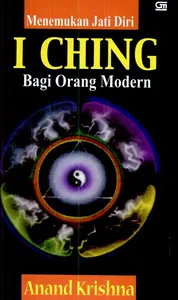
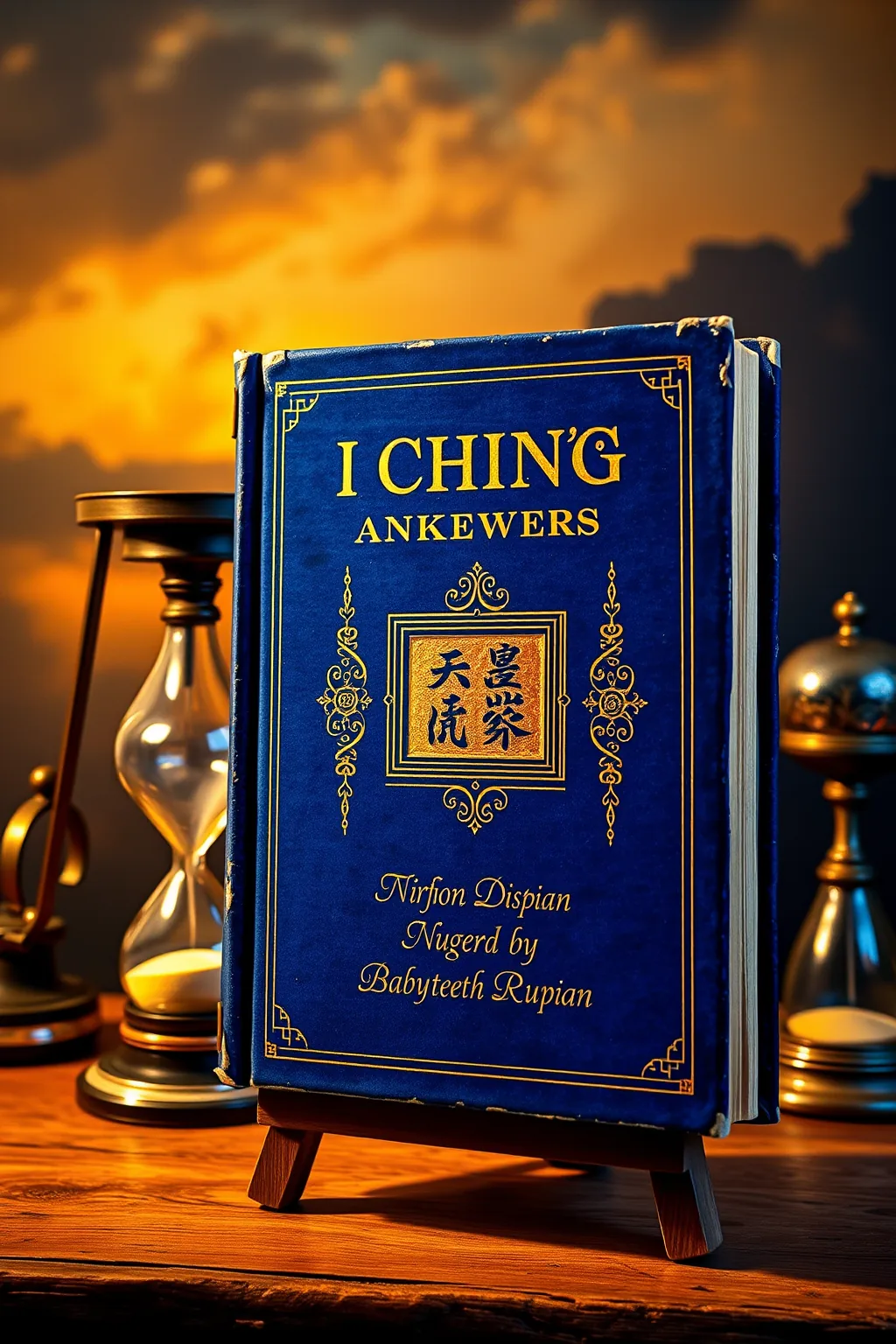
I Ching's Answers to Life's Deepest Questions
 61
61

I Ching's Answers to Life's Deepest Questions



Lorelei Sage (Contemplative Literature Editor) — Babyteeth Rupian's "I Ching's Answers to Life's Deepest Questions" is a luminous beacon for those navigating the labyrinth of existence. Rupian's profound understanding of the I Ching's esoteric currents shines through, transforming abstract symbols into tangible guidance for the soul. This work doesn't just present interpretations; it offers a portal to understanding the cosmic dance of Yin and Yang, the principles of change, and the interconnectedness of all things. For seekers yearning for deeper meaning and practitioners seeking to refine their connection to the Tao, this book is an indispensable companion. Its clarity and depth make it a vital addition to any serious collection on Eastern mysticism and divination.
📝 Description
61
Babyteeth Rupian's 2023 book decodes the I Ching's hexagrams for modern life.
In "I Ching's Answers to Life's Deepest Questions," Babyteeth Rupian examines the ancient Chinese oracle through a contemporary esoteric viewpoint. Rupian breaks down the sixty-four hexagrams, connecting their symbolic meanings to principles of cosmic order and individual fate. The text encourages readers to look inward and find personal growth by understanding these ancient patterns.
This volume is aimed at those interested in self-reflection and deeper understanding of life's dynamics. It presents the I Ching not just as a tool for fortune telling, but as a system that reflects universal forces and their influence on personal circumstances. Readers are invited to connect with subtle cosmic energies, observe the shifts in fortune, and find balance within daily life.
This book engages with the tradition of Chinese divination, specifically the I Ching, a practice with roots stretching back millennia. It situates itself within esoteric interpretations that move beyond purely divinatory uses, focusing instead on the philosophical and psychological insights offered by the hexagrams. Rupian's approach aligns with modern esoteric thought that seeks to find universal laws and patterns of transformation within ancient systems, applying them to personal development and understanding one's place in the cosmos.
💡 Why Read This Book?
Embark on an inner odyssey where ancient wisdom meets modern inquiry. This book offers profound insights into the cyclical nature of existence, the art of strategic transformation, and the hidden patterns governing our lives. Ideal for spiritual seekers, students of esoteric philosophy, and anyone desiring to tap into a timeless source of guidance for personal growth and profound understanding.
⭐ Reader Reviews
Honest opinions from readers who have explored this book.
❓ Frequently Asked Questions
What is the primary purpose of the I Ching?
The I Ching serves as a profound philosophical text and a divinatory tool, offering guidance on navigating life's challenges by revealing the underlying patterns of change and balance in the universe.
How does Babyteeth Rupian interpret the I Ching?
Rupian offers an esoteric and mystical interpretation, focusing on the symbolic language of the hexagrams to unlock deeper spiritual and philosophical insights relevant to contemporary seekers.
Is this book suitable for beginners in divination?
Yes, while rich in esoteric depth, the book is crafted to be accessible, guiding newcomers through the core principles and symbolic language of the I Ching with clarity and insight.
What are the main benefits of studying the I Ching?
Studying the I Ching fosters self-awareness, enhances decision-making abilities, cultivates patience and adaptability, and deepens one's connection to the flow of universal energies and personal destiny.
Can the I Ching offer answers to practical life questions?
Absolutely. The I Ching's wisdom extends to all aspects of life, providing nuanced perspectives and guidance on relationships, career, personal development, and overcoming obstacles.
🔮 Key Themes & Symbolism
The Dynamics of Change
This core theme studies the fundamental principle of the I Ching: that all existence is in a state of perpetual flux. Rupian illuminates how understanding and harmonizing with these natural cycles of transformation is key to navigating life's uncertainties. The book explores how embracing change, rather than resisting it, leads to growth, resilience, and spiritual evolution. It unpacks the interplay of Yin and Yang as the driving forces behind every shift, offering practical wisdom for adapting to new circumstances and seizing opportunities for advancement.
Symbolism and Cosmic Resonance
The I Ching's power lies in its rich symbolic language, a lexicon of archetypes and natural phenomena that resonate with the deepest levels of the human psyche. Rupian meticulously decodes these symbols, revealing their profound connection to cosmic energies and universal laws. This theme explores how the hexagrams act as mirrors reflecting the soul's journey and the subtle influences shaping our reality. Understanding this symbolic framework allows practitioners to perceive the interconnectedness of all things and to align their intentions with the greater cosmic order.
The Path of Self-Cultivation
Beyond mere prediction, the I Ching is a profound guide to self-cultivation and ethical development. Rupian highlights how the wisdom gleaned from the oracle serves as a compass for moral growth, encouraging introspection, mindfulness, and the refinement of character. This theme emphasizes the I Ching's role in fostering inner harmony, promoting virtuous action, and guiding the seeker toward a life of purpose and authenticity. It presents the oracle as a tool for conscious evolution, helping individuals to embody the highest potentials of their nature.
💬 Memorable Quotes
Direct passages from the work, attributed to the author.
“To understand change is to master destiny.”
— This highlights the transformative power of embracing the I Ching's teachings on impermanence, suggesting that by accepting and working with life's constant shifts, one can proactively shape their future.
“Within the stillness of the question lies the echo of the answer.”
— This points to the meditative and introspective nature of consulting the I Ching, emphasizing that true understanding emerges from a calm, focused mind open to the subtle guidance within.
“Seek not fortune, but wisdom; not answers, but understanding.”
— This encourages a deeper approach to using the I Ching, prioritizing personal growth and insight over superficial predictions, and focusing on the process of self-discovery.
💡 Key Ideas
Editorial paraphrase of the work's core concepts — not direct quotes.
The hexagrams are whispers from the Tao, guiding the soul through the eternal dance of becoming.
This quote expresses the I Ching's essence as a conduit to universal wisdom, suggesting that its symbolic patterns reveal the fundamental flow of existence and offer useful insights for personal transformation.
The Great Ultimate breathes through every line, every symbol, every moment.
This quote speaks to the pervasive presence of the divine or the fundamental cosmic principle (Tao) within the I Ching, suggesting its sacredness and its connection to all of reality.
🌙 Esoteric Significance
Tradition
The I Ching is a foundational text within Taoist and Chinese esoteric traditions, deeply interwoven with concepts of Yin and Yang, the five elements, and the natural cycles of the cosmos. It serves as a primary tool for understanding the Tao, the fundamental principle of the universe, and its manifestations in human life. Esoterically, it is seen as a map of consciousness and a guide to spiritual alchemy, helping practitioners harmonize their inner world with the outer universe.
Symbolism
The core symbolism revolves around the 64 hexagrams, each composed of six lines representing Yin (broken) or Yang (solid). These binary combinations are seen as archetypal representations of all possible states of change and situation. The trigrams (three-line combinations) further break down into elemental forces and natural phenomena (heaven, earth, thunder, water, etc.), creating a complex symbolic language that maps the dynamics of the universe and human experience. This intricate web of symbols allows for useful insights into causality and interconnectedness.
Modern Relevance
In contemporary times, the I Ching's relevance has broadened significantly. Beyond its traditional role in divination, it offers profound psychological insights, serving as a tool for self-reflection, personal growth, and working through the complexities of modern life. Its emphasis on adaptability, balance, and understanding cyclical patterns provides a valuable framework for confronting societal changes, technological advancements, and personal challenges. Esoteric practitioners continue to utilize its symbolic depth for spiritual development, meditation, and aligning with universal energies in an increasingly fragmented world.
👥 Who Should Read This Book
This book is an essential guide for the dedicated spiritual seeker yearning to deepen their understanding of cosmic principles and personal destiny. Scholars of Eastern philosophy and comparative religion will find its nuanced interpretations important for academic pursuit. Practitioners of divination, especially those drawn to the I Ching, will discover a fresh, esoteric perspective that enhances their divinatory craft. Beginners curious about ancient wisdom traditions will find an accessible yet profound introduction to one of the world's most significant oracles, encouraging introspection and a more conscious engagement with life's unfolding journey.
📜 Historical Context
The I Ching, or Book of Changes, boasts an lineage stretching back over three millennia, making it one of the oldest and most enduring texts in human history. Its origins are deeply entwined with ancient Chinese shamanism and early cosmological thought, evolving from simple divination practices to a sophisticated philosophical and ethical system. During the Zhou Dynasty (c. 1046–256 BCE), the I Ching began to take its canonical form, with its hexagrams and associated judgments forming the basis of its divinatory and interpretive framework. Later, during the Han Dynasty (206 BCE–220 CE), Confucian scholars integrated the I Ching into the Confucian canon, imbuing it with ethical and political significance. Throughout subsequent dynasties, it remained a central to Chinese intellectual and spiritual life, influencing everything from statecraft and philosophy to art and medicine. Its influence later spread to East Asia and, in the modern era, has captivated Western esotericists and philosophers, offering a timeless perspective on the universal principles of change and order.
📔 Journal Prompts
Reflect on a recent situation where you felt resistant to change. How might the principles of the I Ching offer a different perspective?
Consider a hexagram that has appeared frequently in your readings. What recurring themes or lessons does it seem to be highlighting for your life?
How does the concept of Yin and Yang manifest in your daily interactions and internal experiences?
What aspect of your life feels out of balance, and what symbolic imagery from the I Ching could guide you toward equilibrium?
In what ways can you consciously cultivate greater harmony between your inner world and the external circumstances you face?
🗂️ Glossary
Hexagram
A figure composed of six stacked horizontal lines, either solid (Yang) or broken (Yin). There are 64 unique hexagrams in the I Ching, each representing a fundamental state or situation in the universe and human life.
Trigram
A figure composed of three stacked lines, either solid (Yang) or broken (Yin). There are eight trigrams, each associated with specific natural elements, forces, or concepts (e.g., Heaven, Earth, Water, Fire).
Tao (Dao)
The fundamental, ineffable principle of the universe in Taoist philosophy. It represents the natural order, the underlying reality, and the ultimate source of all existence, often translated as 'the Way'.
Yin and Yang
The two fundamental, complementary opposing forces or principles that underlie all phenomena in the universe. Yin is typically associated with the feminine, passive, dark, and receptive, while Yang is associated with the masculine, active, light, and creative.
Divination
The practice of seeking knowledge of the future or the unknown by supernatural means. In the context of the I Ching, it involves consulting the text through specific methods (like coin tossing or yarrow stalks) to gain insight into present circumstances and potential future developments.
This book appears in 2 collections
🔮 Readers Also Liked
Browse all →








From the “I Ching” Collection
View all →









More Free Divination & Tarot Books
View all →