Coping with the Future
 83
83

Coping with the Future
The scholarship in *Coping with the Future* offers a welcome, rigorous approach to a subject often relegated to the sensational. Its strength lies in its detailed historical tracing of mantic arts, particularly its engagement with the evolution of I Ching (Book of Changes) interpretations from early Chinese dynasties through to its modern academic study. The work’s limitation, however, is its academic distance; readers seeking practical divination guides will be disappointed. A passage discussing the political anxieties that drove the formalization of divination practices in the Han Dynasty, for instance, highlights the book's analytical depth but also its focus on societal structures over individual experience. This is a critical resource for understanding the *context* of divination, not its practice.
📝 Description
83
### What It Is
Coping with the Future: Theories and Practices of Divination in East Asia presents a scholarly examination of mantic arts across various East Asian cultures. The work traces the historical development and theoretical underpinnings of divination techniques from ancient origins to contemporary manifestations. It offers a comprehensive overview of how these practices have been integrated into literature, religious observances, and political decision-making.
### Who It's For
This volume is intended for academics, researchers, and serious students of East Asian religions, cultural history, and comparative esotericism. It is particularly relevant for those interested in understanding the societal and individual roles of divination, its evolution over centuries, and its cross-cultural influences. Those seeking a critical, evidence-based exploration of divination will find value here.
### Historical Context
The book situates the study of East Asian divination within a broad historical sweep, beginning with the earliest documented practices. It covers the evolution of these arts through imperial dynasties and into the modern era, demonstrating their persistent presence. The analysis spans from ancient oracle bones used in Shang Dynasty China to contemporary applications, highlighting the enduring human need to understand and predict the future.
### Key Concepts
Central to the work are the theoretical frameworks used to understand divination, its practical methodologies, and its societal impact. Concepts explored include the semiotics of omens, the role of intermediaries in interpreting signs, and the ethical considerations surrounding predictive arts. The book emphasizes how these practices function not merely as fortune-telling but as integral components of worldview and social order.
💡 Why Read This Book?
• Gain a nuanced understanding of how divination served as a critical tool in East Asian political and religious life, as explored through the analysis of ancient oracle bone inscriptions and their societal function. • Learn about the cross-cultural transmission of divinatory theories and practices, specifically how concepts evolved from early Chinese traditions to influence neighboring cultures. • Appreciate the historical trajectory of key divinatory systems, such as the I Ching, from its earliest documented forms to its scholarly assessment in the present day.
⭐ Reader Reviews
Honest opinions from readers who have explored this book.
❓ Frequently Asked Questions
What historical periods does 'Coping with the Future' cover regarding East Asian divination?
The book spans from the earliest documented mantic arts, potentially referencing practices from the Shang Dynasty (c. 1600–1046 BCE), through various imperial periods, up to their manifestations in the present time.
Does this book offer practical instructions on how to perform East Asian divination?
No, 'Coping with the Future' focuses on the theories, historical evolution, and societal assessment of divination techniques rather than providing practical how-to guides for practitioners.
Which East Asian cultures are primarily examined in the book?
While the exact scope varies, the title 'East Asia' typically encompasses China, Japan, Korea, and sometimes Vietnam, with the book likely exploring the pervasive manifestations of divination across these regions.
What is the significance of divination in East Asian literature and religious life, according to the book?
The book highlights divination's pervasive presence, showing it as integral to literature, religious rites, and political decision-making, reflecting its relevance for both society and individuals.
Is 'Coping with the Future' accessible to someone with no prior knowledge of East Asian studies?
While academically rigorous, the work aims to offer insights into diverse techniques and their evolution. Readers with a general interest in esoteric practices and cultural history will find it informative, though some background may enhance comprehension.
When was 'Coping with the Future' first published?
The book was first published on June 12, 2018, offering contemporary scholarship on ancient and evolving divinatory practices.
🔮 Key Themes & Symbolism
Evolution of Mantic Arts
This work meticulously charts the historical development of divination across East Asia. It moves beyond simple descriptions of techniques to analyze how practices like bone scrying and the interpretation of trigrams evolved from early ritualistic uses, perhaps in the Shang Dynasty, to become sophisticated systems embedded within philosophical and political discourse. The book examines the continuous adaptation of these arts in response to changing social, religious, and intellectual landscapes, demonstrating their enduring relevance through millennia.
Divination in Society
The book emphasizes the pervasive influence of divination on the fabric of East Asian societies. It investigates how mantic arts were not isolated esoteric pursuits but were deeply integrated into literature, religious ceremonies, and governmental decision-making. The analysis explores the societal functions of prediction, including maintaining social order, legitimizing authority, and providing frameworks for understanding fate and individual agency across different historical periods.
Cross-Cultural Exchange
A significant focus is placed on the cross-cultural dimensions of divination in East Asia. The work explores how various divinatory theories and practices were transmitted, adapted, and synthesized across different regions and cultures within the East Asian sphere. This includes examining shared motifs, parallel developments, and the unique transformations that occurred as these techniques interacted with local beliefs and cosmologies over time.
Theoretical Frameworks
Beyond cataloging practices, the book engages with the theoretical underpinnings of divination. It addresses how these systems were conceptualized, the epistemological assumptions they relied upon, and the methods used for their assessment. The work delves into the intellectual history of interpreting signs and omens, providing a critical lens through which to understand the philosophical and religious thought that supported these enduring practices.
💬 Memorable Quotes
“The contributions cover the period from the earliest documents on East Asian mantic arts to their appearance in the present time.”
— This statement highlights the book's comprehensive historical scope, emphasizing its chronological breadth from ancient origins to contemporary relevance.
“The volume reflects the pervasive manifestations of divination in literature, religious and political life, and their relevance for society and individuals.”
— This signifies the work's focus on the societal integration and practical impact of divination, positioning it as a fundamental aspect of East Asian culture.
“Special emphasis is placed on cross-cultural comparisons.”
— This points to a key analytical approach of the book, suggesting an investigation into the shared and divergent development of divinatory practices across different East Asian traditions.
“Theories and Practices of Divination in East Asia offers insights into various techniques of divination, their evolution, and their assessment.”
— This encapsulates the core academic mission of the book: to provide critical analysis and understanding of divination, not just a descriptive list.
“The work explores their evolution and their assessment.”
— This short phrase underscores the critical and analytical nature of the book, indicating it probes not just *what* divination is, but *how* it changed and *how* it has been evaluated historically and theoretically.
🌙 Esoteric Significance
Tradition
While not strictly an esoteric text itself, *Coping with the Future* engages with practices deeply embedded in East Asian esoteric traditions, particularly Taoism and folk religions. It approaches these from a scholarly, historical, and comparative perspective, fitting within the broader academic study of world religions and comparative mysticism. It serves as a critical bridge, analyzing the structures and historical contexts of practices that are often considered esoteric by their adherents.
Symbolism
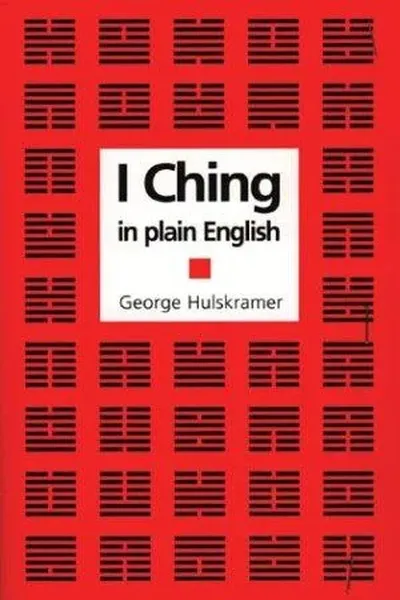
The book implicitly engages with the symbolic language inherent in divinatory practices. For example, the hexagrams of the I Ching represent a complex symbolic system, mapping correspondences between the natural world, human affairs, and cosmic forces. The interpretation of omens, often derived from natural phenomena or unusual events, relies on a rich symbolic vocabulary that the work seeks to contextualize historically and culturally.
Modern Relevance
Contemporary thinkers and practitioners in fields like comparative religion, cultural studies, and even some branches of depth psychology (e.g., Jungian analysis of archetypes) can draw upon this work. Its meticulous historical tracing and cross-cultural analysis provide a solid foundation for understanding the enduring human impulse towards seeking meaning and foresight, informing modern discussions on ritual, belief, and the human psyche.
👥 Who Should Read This Book
• Researchers in East Asian religious studies and cultural history seeking to understand the societal integration and evolution of divinatory practices from antiquity to the present. • Students of comparative esotericism and world religions interested in the theoretical frameworks and historical development of mantic arts beyond Western traditions. • Academics and practitioners who analyze the role of divination in shaping literature, political discourse, and individual worldviews across East Asian civilizations.
📜 Historical Context
Published in 2018, *Coping with the Future* emerged into an academic landscape where the study of East Asian religions and cultures was well-established, yet often treated divination as a fringe or purely historical curiosity. The book situates itself within a tradition of scholarship that seeks to integrate these practices into mainstream analyses of East Asian history and thought, moving beyond earlier, more exoticizing perspectives. It engages with the legacy of scholars who meticulously documented Chinese classics, such as James Legge, while offering a contemporary critical framework. The era saw increased global interest in comparative esotericism and the anthropology of religion, providing a conducive environment for this type of cross-cultural study. Unlike purely anthropological accounts, this work places significant emphasis on theoretical and textual evolution, tracing concepts from early Chinese dynasties through to modern academic discourse.
📔 Journal Prompts
The societal role of divination as presented in 'Coping with the Future'.
The evolution of I Ching interpretation across historical periods.
Cross-cultural influences on East Asian mantic arts.
The assessment of divination techniques discussed in the book.
How literature reflects divinatory practices.
🗂️ Glossary
Mantic Arts
Practices and techniques used for divination, seeking knowledge of the future or the unknown through supernatural or magical means. This term encompasses a wide range of methods.
Divination
The practice of seeking knowledge of the future or the unknown by supernatural means. In East Asia, this includes methods like astrology, geomancy, and the interpretation of omens.
Oracle Bones
Inscribed animal bones and turtle shells used for divination in ancient China, particularly during the Shang Dynasty. They represent some of the earliest written records of Chinese history.
I Ching (Book of Changes)
An ancient Chinese divination text and one of the oldest of the Chinese classics. It uses hexagrams composed of solid and broken lines to represent philosophical concepts and predict outcomes.
Omens
Events or phenomena believed to portend future good or evil. The interpretation of omens has been a significant aspect of divinatory practices across many cultures.
Geomancy
A method of divination based on the interpretation of landforms, watercourses, and spatial arrangements. It is also known as 'feng shui' in China, though with broader applications than just divination.
Cosmology
A theory or doctrine, especially one forming the basis of a particular philosophy or religion, that describes the origin and structure of the universe. Divination often draws heavily on specific cosmologies.