Cicero
 83
83

Cicero
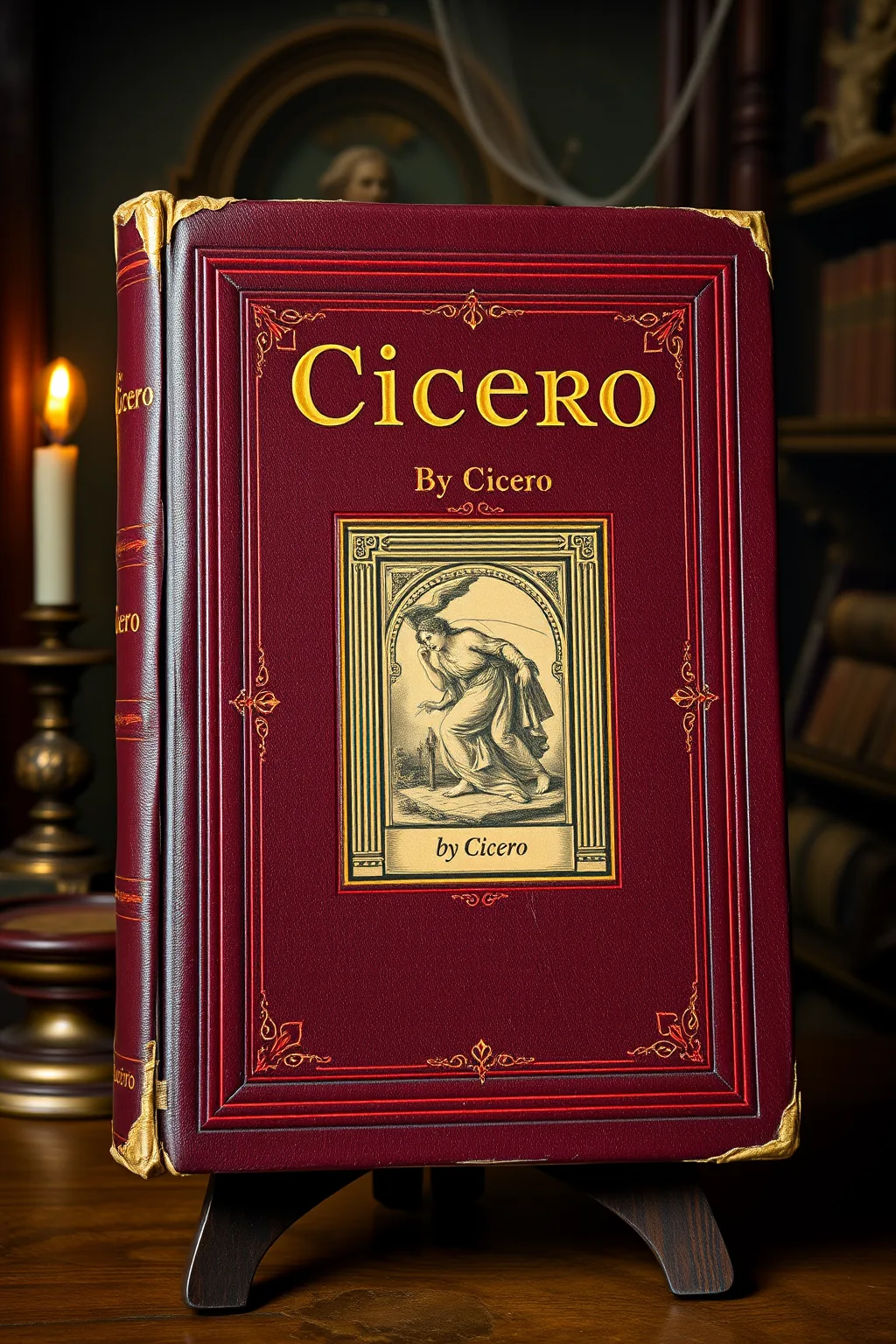
The decision to frame Cicero's extensive writings through an esoteric perspective, particularly in a 1923 publication context, is an intriguing one. This edition highlights the philosophical underpinnings of Stoicism and Platonism found in Cicero's works, which certainly hold relevance for esoteric traditions seeking classical roots. The strength lies in its attempt to connect ancient Roman thought to later mystical systems, offering a novel interpretive layer. However, the limitation is the inherent subjectivity; without clear scholarly attribution for these esoteric interpretations, they risk appearing as speculative readings rather than direct historical exegesis. The exploration of *virtus* as a cosmic principle, for instance, is a compelling concept, but its direct lineage to specific esoteric doctrines from Cicero's time remains undemonstrated. This volume is best approached as a collection of provocative interpretations rather than definitive historical scholarship.
📝 Description
83
### What It Is Cicero, originally published in 1923, is a collection of writings attributed to the Roman statesman and orator Marcus Tullius Cicero. This edition, however, presents these texts through an esoteric lens, reinterpreting classical philosophy and rhetoric for practitioners and scholars of mystical traditions. It examines the underlying spiritual and symbolic dimensions often overlooked in secular analyses of Cicero's work, focusing on concepts relevant to personal gnosis and ancient wisdom.
### Who It's For This volume is curated for individuals engaged with esoteric studies, comparative religion, and the history of Western mysticism. It appeals to those who seek to understand the philosophical underpinnings of Western esoteric thought and its roots in classical antiquity. Readers interested in the intersection of Stoicism, Neoplatonism, and early Christian thought, as filtered through a mystical interpretive framework, will find particular value.
### Historical Context The early 20th century saw a surge in interest in classical texts, often re-examined for their occult or spiritual significance. Figures like Helena Blavatsky and the burgeoning Theosophical Society were reinterpreting ancient philosophies, and this work likely emerged from that milieu. It positions Cicero's prolific output, which includes works like *De Officiis* and *On the Nature of the Gods*, within a broader narrative of perennial wisdom, bridging the gap between classical Rome and the esoteric revival of the modern era.
### Key Concepts The text explores concepts such as the Platonic Forms as divine blueprints, the Stoic ideal of virtue as the sole good, and the Roman understanding of *religio* as a binding cosmic force. It investigates Cicero's engagement with Greek philosophical schools and his efforts to synthesize them for a Roman audience, highlighting potential esoteric interpretations of his dialogues and philosophical treatises. The focus is on finding universal truths and spiritual directives within his ethical and metaphysical explorations.
✍️ Author
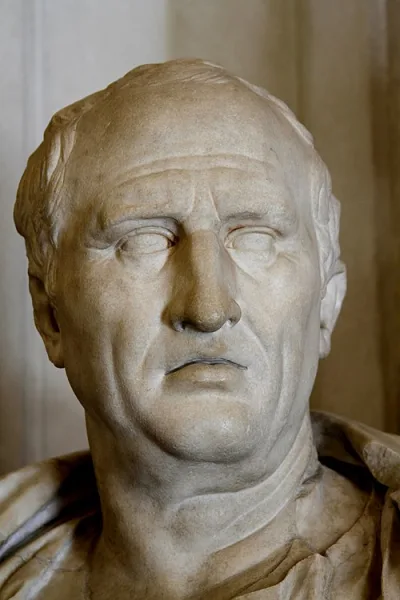
Cicero
The writings of Marcus Tullius Cicero constitute one of the most renowned collections of historical and philosophical work in all of classical antiquity. Cicero was a Roman politician, lawyer, orator, political theorist, philosopher, and constitutionalist …
💡 Why Read This Book?
• Gain an esoteric perspective on classical Roman philosophy, understanding how Cicero's concepts like *virtus* (virtue) could be interpreted as cosmic forces, moving beyond standard academic views. • Explore the historical connection between Roman intellectual life and the early 20th-century esoteric revival, specifically how texts from the era of the Roman Republic were re-examined. • Discover unique interpretations of Cicero's engagement with Greek philosophy, such as his synthesis of Stoic and Platonic ideas, presented with a focus on mystical applicability.
⭐ Reader Reviews
Honest opinions from readers who have explored this book.
❓ Frequently Asked Questions
What specific works of Cicero are primarily referenced or reinterpreted in this 1923 esoteric edition?
While not explicitly detailed, this esoteric edition likely draws upon Cicero's major philosophical dialogues such as *De Re Publica*, *De Legibus*, and *De Natura Deorum*, re-examining their themes of governance, law, and cosmology through a mystical framework.
How does this edition connect Cicero's thought to esoteric traditions beyond its initial publication date?
The work's esoteric framing positions Cicero's ideas on virtue and divine order as foundational elements that later esoteric schools, from Hermeticism to Neoplatonism, could have implicitly drawn upon or resonated with.
What is the significance of the 1923 publication date for this esoteric interpretation of Cicero?
The 1923 date places this work within the early 20th-century esoteric revival, a period where classical texts were frequently re-evaluated for their hidden spiritual meanings, influenced by movements like Theosophy.
Does this book present Cicero as an esotericist himself, or as a source for esoteric interpretation?
This edition appears to present Cicero as a source for esoteric interpretation. It re-contextualizes his known philosophical positions within frameworks that emphasize spiritual or mystical dimensions not always apparent in classical scholarship.
What kind of esoteric traditions might find Cicero's ideas particularly relevant according to this book?
Traditions emphasizing natural law, cosmic order, and the pursuit of wisdom, such as Stoicism, Neoplatonism, and certain branches of Hermeticism, would likely find Cicero's ethical and metaphysical discussions relevant.
Are there specific Roman concepts that this edition highlights for their esoteric potential?
Yes, concepts like *religio* (interpreted as a cosmic binding force) and Cicero's understanding of *virtus* (virtue, potentially as a spiritual attribute or cosmic principle) are likely highlighted for their esoteric resonance.
🔮 Key Themes & Symbolism
Virtue as Cosmic Principle
This work reinterprets Cicero's extensive discussions on *virtus* (virtue) not merely as personal ethics but as fundamental principles governing the cosmos. It suggests that for Cicero, as understood by this esoteric lens, true virtue aligns individuals with universal order, echoing Stoic ideals of living in accordance with nature. The text explores how this alignment could be seen as a path to spiritual understanding, bridging the gap between Roman civic duty and esoteric self-perfection. This concept provides a foundation for understanding moral action as a participation in divine law.
Philosophical Synthesis and Perennial Wisdom
The book examines Cicero's role in transmitting and synthesizing Greek philosophical schools—particularly Plato's Academy and the Stoics—for a Roman audience. From an esoteric viewpoint, this synthesis is presented as an early attempt to articulate perennial wisdom, the idea that core spiritual truths are universally present across cultures and eras. It highlights Cicero's efforts to find common ground between seemingly disparate philosophical systems, suggesting an underlying unity that resonates with esoteric traditions seeking a unified source of knowledge.
The Nature of the Divine and Cosmos
This edition revisits Cicero's inquiries into the nature of the gods and the universe, as seen in works like *De Natura Deorum*. The esoteric interpretation focuses on the underlying metaphysical principles and the potential for divine consciousness within the cosmos. It moves beyond a purely philosophical debate to explore the implications for a spiritual worldview, where the natural order reflects a divine intelligence. Concepts of fate, providence, and the human soul's place within this grand design are examined for their esoteric significance.
Rhetoric and Spiritual Persuasion
Beyond his philosophical contributions, Cicero was a master orator. This work may explore how his rhetorical techniques, aimed at persuading audiences of philosophical and political truths, can be viewed through an esoteric lens. The power of language to shape perception and inspire higher understanding is a key element. The text could analyze how Cicero's skillful use of argumentation and eloquent prose might have served not just civic purposes, but also, implicitly, the spiritual cultivation of his listeners, mirroring the role of sacred texts in spiritual guidance.
💬 Memorable Quotes
“The highest good is the practice of virtue.”
— This paraphrased concept emphasizes Cicero's core Stoic influence, presented here as a directive for aligning oneself with cosmic order. It suggests that ethical conduct is not arbitrary but intrinsically linked to universal principles, a foundational idea for many esoteric paths.
“Nature has given us the seeds of wisdom.”
— This interpretation highlights Cicero's belief in inherent human capacity for understanding. In an esoteric context, this points to the divine spark or inner gnosis within individuals, suggesting that true knowledge is accessible through introspection and connection to natural law.
“The gods themselves have ordained the order of the universe.”
— This paraphrased concept reflects Cicero's engagement with the divine and cosmic structure. Esoterically, it affirms a divinely ordered cosmos, implying that understanding this order is key to spiritual realization and harmony with higher powers.
“To understand is to know.”
— This interpretation focuses on the power of comprehension. Within an esoteric framework, it suggests that true understanding transcends mere intellectual knowledge, implying a deeper, intuitive, or spiritual grasp of reality's fundamental truths.
“True law is right reason in agreement with nature.”
— This concept, central to Stoic thought and Cicero's philosophy, is framed here as a cornerstone of natural and divine order. Esoterically, it represents the universal principles that govern existence, accessible through reason and attunement with the cosmos.
🌙 Esoteric Significance
Tradition
This work is situated within the broader tradition of Western Esotericism, particularly drawing from Neoplatonic and Hermetic interpretations of classical philosophy. It aligns with the 20th-century trend of finding esoteric correspondences and perennial wisdom in ancient sources, viewing Cicero not just as a Roman statesman but as a conduit for timeless philosophical principles relevant to spiritual development and cosmic understanding.
Symbolism
The concept of *virtus* (virtue) is central, interpreted not just as moral character but as a force aligning the individual with cosmic order, akin to a divine emanation. The Roman understanding of *religio* is also highlighted, viewed esoterically as a fundamental cosmic principle of connection and binding, rather than solely religious ritual. Cicero's dialogues themselves can be seen as symbolic structures, representing the mind's journey towards truth.
Modern Relevance
Contemporary practitioners of Stoicism seeking deeper spiritual or metaphysical connections, scholars of comparative religion exploring the roots of Western thought, and students of Western Esotericism looking for classical antecedents find value here. Modern Neoplatonists and Hermeticists may draw on Cicero's synthesis of Greek thought as a precursor to their own traditions, seeking continuity in the pursuit of wisdom.
👥 Who Should Read This Book
• Students of Western Esotericism seeking to trace the lineage of mystical thought back to classical Roman philosophy and its Greek influences. • Comparative religion scholars interested in how ancient texts are reinterpreted through different spiritual or occult frameworks across historical periods. • Readers of philosophy who are curious about unconventional interpretations of Stoicism and Platonism, particularly concerning their metaphysical and ethical implications for spiritual life.
📜 Historical Context
The early 20th century, particularly the 1920s, was a fertile ground for re-examining classical antiquity through non-traditional lenses. This era saw the flourishing of movements like Theosophy, Anthroposophy, and various Hermetic orders, all seeking to uncover a perennial philosophy or hidden wisdom within ancient texts. Scholars and mystics alike were scrutinizing Plato, the Neoplatonists, and even figures like Cicero, not just for their historical significance but for their potential spiritual teachings. This milieu likely influenced the esoteric interpretation of Cicero presented here. Contemporary figures such as Manly P. Hall were also actively publishing on esoteric interpretations of Western tradition. While Cicero himself engaged with Hellenistic philosophies, this 1923 edition places his work within a lineage of esoteric interpretation that gained significant traction during the interwar period, often contrasting with the more secular, philological approaches dominant in academic circles.
📔 Journal Prompts
The concept of *virtus* as cosmic alignment.
Cicero's synthesis of Greek philosophical schools.
The divine order of the universe as presented by Cicero.
The role of right reason in understanding natural law.
Nature's endowment of wisdom within the human soul.
🗂️ Glossary
*Virtus*
Latin for virtue, often encompassing moral excellence, courage, and manliness. In this esoteric context, it may be interpreted as a fundamental cosmic principle or spiritual quality aligning individuals with universal order.
*Religio*
Latin term that Cicero used, often translated as religion or duty. Esoterically, it can be understood as a binding cosmic force or a principle of connection between humanity and the divine or the natural order.
Stoicism
A school of Hellenistic philosophy emphasizing virtue, reason, and living in accordance with nature. Cicero was a significant interpreter and transmitter of Stoic ideas to the Roman world.
Platonism
Philosophical system originating with Plato, emphasizing the theory of Forms (ideal, eternal realities) and the soul's pursuit of knowledge. Cicero engaged deeply with Platonic thought.
Perennial Philosophy
The concept that all major world religions and esoteric traditions share a common, underlying metaphysical wisdom or spiritual truth, often traced back to ancient sources.
Gnosis
Greek for knowledge, specifically a spiritual or intuitive knowledge of divine things. In esoteric traditions, gnosis is often seen as the key to salvation or enlightenment.
Cosmic Order
The idea that the universe operates according to fundamental, often divinely ordained, principles and laws that ensure harmony and structure, a concept explored in Cicero's philosophical works.