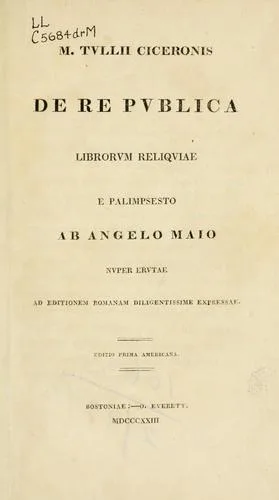
Cato maior de senectute

 76
76

Cato maior de senectute
Cicero's 'On Old Age' is less a discourse on senility and more an extended argument for the value of accumulated experience. The dialogue format, featuring Cato the Elder, effectively grounds abstract philosophical points in the voice of a respected, albeit idealized, historical figure. A notable strength lies in its persistent refutation of common anxieties surrounding aging, framing it instead as a period of elevated potential. However, the work's classical context can present a barrier; some arguments rely on Roman social structures and ideals that require careful contextualization for a modern reader.
The passage where Cato discusses the importance of engaging in public affairs and maintaining intellectual pursuits, even in old age, serves as a powerful anchor. It challenges the notion of retirement as mere withdrawal, advocating for continued contribution. While the text offers considerable wisdom, its lack of direct engagement with the physical indignities that can accompany extreme old age, beyond a general dismissal, is a noticeable limitation.
Read more ↓
Ultimately, 'Cato Maior de Senectute' offers a robust philosophical framework for approaching the final third of life with purpose and intellectual vigor.
📝 Description
76
### What It Is Cato Maior de Senectute, or On Old Age, is a philosophical dialogue penned by Marcus Tullius Cicero, originally published around 44 BCE. It presents a profound exploration of aging, not as a period of decline, but as a stage of life that can be embraced with dignity, wisdom, and fulfillment. The text is structured as a conversation between the elder statesman Cato the Elder and his younger contemporaries, Scipio Aemilianus and Laelius.
### Who It's For This work speaks to individuals contemplating the later stages of life, seeking philosophical grounding for navigating the challenges and opportunities of advanced years. It appeals to students of classical philosophy, Roman history, and those interested in ethical frameworks for living a complete life. Readers seeking solace from common anxieties about aging will find reasoned arguments and enduring perspectives.
### Historical Context Written during the turbulent final years of the Roman Republic, Cicero's treatise emerged in a world grappling with political instability and philosophical shifts. It reflects the Stoic and Peripatetic influences common in Roman intellectual life, offering a counterpoint to more pessimistic views on aging prevalent in some Greek philosophical schools. The work was composed shortly before Cicero's own death in 43 BCE, lending it a personal resonance.
### Key Concepts The dialogue addresses the four common complaints against old age: that it distracts from duties, that it weakens the body, that it deprives one of physical pleasures, and that it brings one closer to death. Cicero, through Cato, systematically refutes these notions, arguing that wisdom gained with age enhances one's ability to fulfill duties, that the mind's capacity often surpasses physical limitations, and that true contentment arises from a life well-lived, diminishing the fear of mortality.
✍️ Author
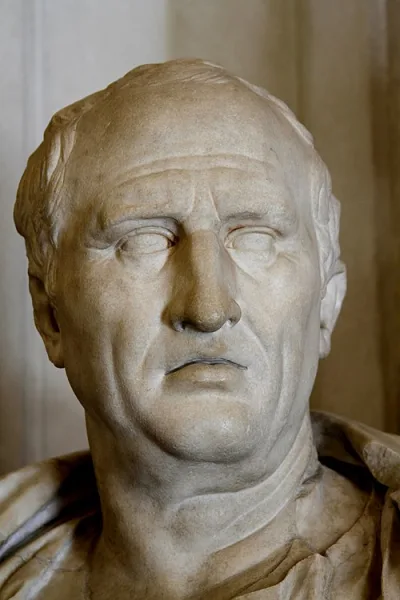
Cicero
The writings of Marcus Tullius Cicero constitute one of the most renowned collections of historical and philosophical work in all of classical antiquity. Cicero was a Roman politician, lawyer, orator, political theorist, philosopher, and constitutionalist …
💡 Why Read This Book?
• Learn how Cicero, through Cato the Elder, systematically dismantled the four common objections to old age, offering a reasoned approach to life's final phase, a perspective often overlooked in contemporary discussions. • Discover the value of intellectual engagement and continued civic participation as presented in the dialogue, challenging passive notions of aging and highlighting the enduring power of wisdom beyond physical decline. • Understand the philosophical underpinnings of a dignified old age, drawing on Stoic and Peripatetic thought prevalent in 44 BCE, to cultivate a mindset of purpose and acceptance as one matures.
⭐ Reader Reviews
Honest opinions from readers who have explored this book.
❓ Frequently Asked Questions
When was Cicero's 'On Old Age' written and why is this date significant?
Cicero's 'Cato Maior de Senectute' was composed around 44 BCE. This period was marked by intense political upheaval in the Roman Republic, shortly before Cicero's own assassination in 43 BCE, lending the work a poignant, personal dimension to its reflections on life and mortality.
What are the main arguments Cicero makes against common fears of old age?
Cicero, speaking through Cato the Elder, addresses four main fears: that old age hinders duties, weakens the body, removes physical pleasures, and brings one near death. He argues that wisdom can compensate for physical decline, that duties can be adapted, and that a life well-lived diminishes the dread of mortality.
What philosophical schools influenced Cicero's 'On Old Age'?
The work is significantly influenced by Hellenistic philosophies, particularly Stoicism and elements of the Peripatetic school. These traditions provided frameworks for understanding virtue, reason, and the acceptance of life's natural stages, which Cicero adapted for his Roman audience.
Is 'Cato Maior de Senectute' a historical account or a philosophical dialogue?
It is primarily a philosophical dialogue. While it features historical figures like Cato the Elder, Scipio Aemilianus, and Laelius, Cicero uses them as literary devices to explore ethical and existential questions about aging, rather than providing a strict historical record.
What is the symbolic meaning of Cato the Elder as the main speaker?
Cato the Elder (Marcus Porcius Cato) was chosen as the speaker because he represented traditional Roman virtues, wisdom, and a life of public service, even into advanced years. His persona lent authority and gravitas to Cicero's arguments about the potential and dignity of old age.
Can 'On Old Age' be considered an esoteric text?
While not strictly esoteric in the vein of hidden magical traditions, its deep philosophical inquiry into the nature of life, virtue, and mortality, and its enduring influence on ethical thought, grants it a significance often appreciated by those seeking deeper meaning beyond conventional philosophies.
🔮 Key Themes & Symbolism
Virtue and Duty in Maturity
Cicero, through Cato, argues that old age is not a time for withdrawal but for continued engagement, albeit with adapted means. The focus shifts from physical prowess to the cultivation of wisdom and the fulfillment of duties through reason and experience. This theme counters the common perception of aging as a period of obsolescence, emphasizing that intellectual and moral contributions remain vital, aligning with classical ideals of civic responsibility and personal integrity that transcend physical limitations.
Confronting Mortality
The dialogue directly addresses the fear of death, a pervasive anxiety associated with aging. Cicero proposes that a life lived virtuously and purposefully diminishes the terror of the end. By reflecting on the brevity of life from the perspective of age, and by understanding death as a natural process, individuals can achieve a state of equanimity. This perspective encourages a focus on the quality of life lived, rather than solely on its duration or impending conclusion.
The Power of Experience
A central tenet is the unique value of accumulated experience that comes with age. Cicero posits that older individuals possess a perspective and understanding that younger generations lack. This wisdom, tempered by years of observation and action, allows for sound judgment and effective guidance. The text elevates the elder not merely as someone who has lived long, but as someone whose accumulated knowledge is a societal asset.
Contentment Beyond Physicality
Cicero refutes the notion that old age is miserable because it lacks physical pleasures. Instead, he champions the intellectual and spiritual satisfactions that become more accessible with age. The capacity for contemplation, the enjoyment of friendships, and the satisfaction derived from a life of purpose are presented as superior and more enduring forms of contentment, independent of bodily sensations or youthful vigor.
💬 Memorable Quotes
“Old age is not to be blamed for being old, but for being old without wisdom.”
— This statement encapsulates Cicero's core argument: the perceived ills of aging are not inherent to the condition but stem from a lack of internal development. True maturity lies in the acquisition of wisdom, which can imbue old age with dignity and purpose, regardless of physical state.
“The decline of physical strength is compensated by the growth of intellectual strength.”
— This paraphrased concept highlights the Stoic ideal of inner resilience. Cicero suggests a balance: as the body weakens, the mind's capacity for reason, contemplation, and understanding can and should be cultivated, providing a source of power and fulfillment independent of corporeal limitations.
“The authority of age is often greater than the power of youth.”
— This interpretation emphasizes the social and ethical standing Cicero attributes to the elderly. Experience and accumulated wisdom are presented as conferring a natural authority, allowing older individuals to guide and influence through counsel rather than force, reflecting Roman values of respect for elders.
“Old age is the final act of life, which should be performed without a tragic mask.”
— This paraphrased concept frames old age not as a decline into despair but as a concluding phase to be approached with acceptance and grace. It advocates for a natural and dignified end, free from the pretense or fear that often accompanies the contemplation of mortality.
“A life well-lived is long enough.”
— This concise statement, reflecting a common sentiment in classical philosophy, suggests that the value of life is measured by its quality, not its quantity. It implies that contentment and fulfillment derived from virtue and purpose render the length of years secondary, promoting acceptance of life's natural span.
🌙 Esoteric Significance
Tradition
While Cicero's work is primarily classical philosophy, its deep engagement with virtue, the soul's endurance, and the nature of existence aligns with broader perennial philosophical currents. It shares with Hermeticism and Neoplatonism an emphasis on the inner life and the pursuit of wisdom as a path to a higher state of being. Its rational approach to life's stages and the acceptance of natural cycles can be seen as a foundational element for later esoteric systems that seek to understand the human condition within a larger cosmic order.
Symbolism
The central figure of Cato the Elder symbolizes wisdom, gravitas, and unwavering adherence to traditional Roman virtues, representing an ideal of aged statesmanship. The dialogue itself can be seen as a symbolic journey from the anxieties of decline to the serenity of acceptance, guided by reason. The contrast between physical frailty and intellectual fortitude symbolizes the enduring power of the mind and spirit over the transient limitations of the body, a concept echoed in many mystical traditions.
Modern Relevance
Contemporary thinkers and practitioners in fields ranging from positive psychology to Stoic revivalism draw upon Cicero's arguments for resilience and purpose in aging. His emphasis on virtue, duty, and the power of the mind resonates with modern therapeutic approaches that focus on cognitive reframing and finding meaning in later life. The work continues to inform discussions on gerontology, ethical living, and the philosophical aspects of mortality, appealing to those seeking a rational yet profound perspective on human development.
👥 Who Should Read This Book
• Individuals approaching or experiencing later life stages seeking a philosophical framework for dignity and purpose, moving beyond societal narratives of decline. • Students of classical philosophy and Roman history interested in primary source material on ethical thought and the intellectual currents of the late Roman Republic. • Anyone grappling with anxieties about aging or mortality, looking for reasoned arguments and enduring perspectives that foster acceptance and a sense of continued value.
📜 Historical Context
Composed around 44 BCE, Marcus Tullius Cicero's 'Cato Maior de Senectute' emerged during a period of profound political instability in Rome, the twilight of the Republic. Intellectual life was dominated by the reception and adaptation of Greek philosophical schools, notably Stoicism, Epicureanism, and the Peripatetics. Cicero, a prominent statesman and philosopher, engaged deeply with these traditions, often synthesizing them for a Roman audience. His work on aging directly counters more pessimistic views found in some earlier Greek thought and offers a vision of a dignified, purposeful later life. While Cicero himself was assassinated in 43 BCE, the treatise was written before this tragic event, lending it an air of philosophical preparation. It gained immediate recognition and remained influential, debated and cited by subsequent generations of thinkers, including Seneca and later Renaissance humanists.
📔 Journal Prompts
Cato's refutation of old age hindering duties: How can your present responsibilities be adapted to your current capabilities?
The compensation of intellectual strength for physical decline: Identify one mental pursuit you can deepen.
The value of experience: Reflect on a time your accumulated knowledge proved crucial.
Fear of death: How does the concept of a 'life well-lived' alter your perspective on mortality?
The authority of age: In what ways can wisdom, rather than force, be effectively applied in your interactions?
🗂️ Glossary
Cato Maior
Latin for 'Cato the Elder,' referring to Marcus Porcius Cato (234–149 BCE), a Roman statesman, orator, and writer known for his conservative values and opposition to Carthaginian influence.
Senectute
Latin for 'old age,' the subject of Cicero's philosophical dialogue, exploring its challenges and potential.
Scipio Aemilianus
A prominent Roman general and statesman (c. 185–129 BCE), grandson of Scipio Africanus. He is depicted as a younger interlocutor in Cicero's dialogue.
Laelius Sapiens
Gaius Laelius Sapiens (c. 186–129 BCE), a Roman statesman and close friend of Scipio Aemilianus, known for his wisdom and eloquence, also a character in the dialogue.
Stoicism
A Hellenistic school of philosophy emphasizing virtue, reason, and living in accordance with nature. It teaches that destructive emotions result from errors in judgment and that a sage should be indifferent to fortune.
Peripatetic School
A school of philosophy founded by Aristotle. Its followers are known as Peripatetics. The term generally refers to Aristotelian thought, focusing on empirical observation and logic.
Virtue
In classical philosophy, virtue (aretē) refers to excellence of character, moral goodness, and the capacity to fulfill one's function or purpose effectively.