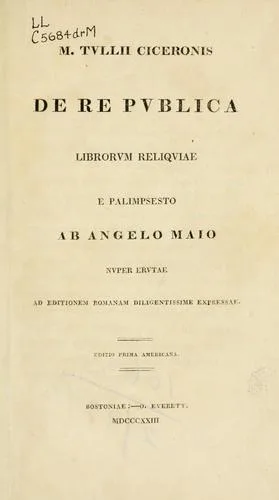
Brutus

 82
82

Brutus
Cicero's "Brutus" presents a fascinating, if dense, chronicle of Roman oratory. The sheer breadth of figures discussed, from the earliest recorded speakers to Cicero's own contemporaries like Hortensius, provides an unparalleled historical sweep. While the English translation of 1923 makes the content accessible, it occasionally feels academic, requiring sustained focus from the reader. A particular strength lies in Cicero's nuanced critique of different rhetorical styles; his dissection of what constitutes true philosophical grounding for a speaker, beyond mere stylistic flourish, remains sharp. However, the work's focus is exclusively on Roman male orators, offering little insight into other forms of public discourse or the perspectives of women. Despite this limitation, "Brutus" stands as a vital primary source for understanding classical rhetoric's theoretical and historical dimensions. It is an indispensable, though demanding, study for anyone serious about the foundations of Western persuasive art.
📝 Description
82
### What It Is
Cicero's "Brutus" is a philosophical dialogue that examines the history of Roman oratory, tracing the development of rhetorical skill and its connection to virtue and public life. Published in 1923 in its English translation, this work offers a detailed account of prominent Roman figures, their speaking styles, and their impact on legal and political discourse. It serves as both a historical survey and a philosophical exploration of what constitutes effective and ethical persuasion.
### Who It's For
This text is intended for students of classical rhetoric, Roman history, and political philosophy. It will appeal to readers interested in the evolution of public speaking and its role in shaping societal values. Scholars examining the intellectual traditions of ancient Rome, particularly the Stoic and Academic influences on Roman thought, will find "Brutus" a valuable resource. Individuals curious about the lives and legacies of figures like Cicero himself, Cato, and Hortensius will gain a deeper appreciation for their contributions.
### Historical Context
First published in 1923, this translation of Cicero's "Brutus" emerged during a period of renewed interest in classical studies and the philosophical underpinnings of Western civilization. The early 20th century saw significant scholarship on Roman law and oratory, often influenced by German classical philology. Cicero's work was already a foundational text, studied alongside contemporaries like Quintilian. This translation made his detailed historical account of Roman speakers accessible to a wider English-speaking audience, contributing to ongoing debates about rhetoric's place in education and public life, particularly in contrast to emerging modern communication theories.
### Key Concepts
"Brutus" centers on several core concepts: the ideal orator, the relationship between eloquence and wisdom, and the historical progression of rhetorical art in Rome. Cicero critiques various schools of oratory, distinguishing between those who merely possessed style and those who combined it with true philosophical understanding. The work emphasizes the importance of *virtus* (virtue) in a speaker, arguing that true eloquence stems from a morally grounded intellect and a commitment to the public good. The dialogue also explores the concept of *gravitas*, a sense of seriousness and dignity essential for commanding respect.
✍️ Author
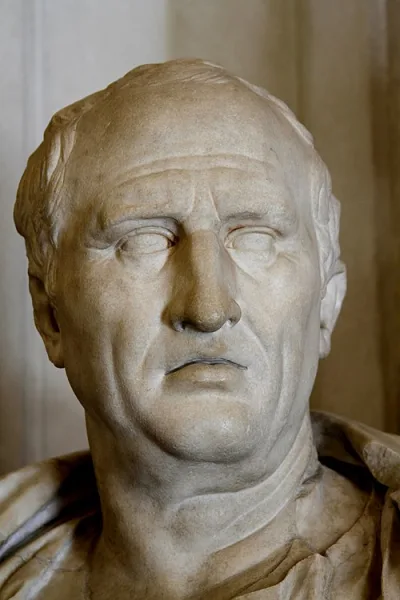
Cicero
The writings of Marcus Tullius Cicero constitute one of the most renowned collections of historical and philosophical work in all of classical antiquity. Cicero was a Roman politician, lawyer, orator, political theorist, philosopher, and constitutionalist …
💡 Why Read This Book?
• Gain an understanding of Roman rhetorical theory by examining Cicero's detailed analysis of figures like Cato the Elder, learning how eloquence was historically conceived. • Appreciate the evolution of public speaking by tracing the lineage of Roman orators from the Republic's early days to Cicero's own era, as depicted in the dialogue. • Grasp the connection between rhetoric and philosophy through Cicero's arguments for the necessity of wisdom in effective persuasion, a concept central to his Stoic-influenced views.
⭐ Reader Reviews
Honest opinions from readers who have explored this book.
❓ Frequently Asked Questions
What is the primary focus of Cicero's "Brutus"?
The book is a dialogue examining the history of Roman oratory. Cicero discusses various Roman speakers, their styles, and their contributions to rhetoric and public life, linking eloquence to philosophical understanding and virtue.
Who are some key figures discussed in "Brutus"?
Key figures include Marcus Antonius, Lucius Licinius Crassus, Cato the Elder, and Cicero's contemporary, Quintus Hortensius. Cicero himself is a central participant in the dialogue.
What is the historical period covered by "Brutus"?
The work covers the history of Roman oratory from its earliest known practitioners in the Roman Republic up to Cicero's own time, roughly spanning from the 2nd century BCE to the mid-1st century BCE.
What is the relationship between oratory and philosophy in "Brutus"?
Cicero argues that true eloquence requires philosophical grounding. He critiques orators who possess style without substance, emphasizing that wisdom and virtue are essential for effective and ethical persuasion.
When was the English translation of "Brutus" first published?
The English translation of Cicero's "Brutus" that is commonly referenced was first published in 1923.
Is "Brutus" a practical guide to public speaking?
While it analyzes speaking styles, "Brutus" is primarily a historical and philosophical work. It explores the theory and history of oratory rather than offering direct, actionable advice for contemporary speakers.
🔮 Key Themes & Symbolism
The Ideal Orator
Cicero's "Brutus" grapples with the definition of the perfect orator, moving beyond mere stylistic proficiency. The work posits that true eloquence is inseparable from wisdom, philosophical depth, and a commitment to justice. It critiques those who prioritize delivery over substance, advocating for a speaker whose command of rhetoric is matched by intellectual rigor and moral integrity. This ideal orator is not just a performer but a thinker and a citizen, capable of guiding the state through persuasive discourse grounded in truth and reason.
History of Roman Rhetoric
The dialogue meticulously traces the development of public speaking within the Roman Republic. It chronicles the contributions and shortcomings of numerous influential figures, creating a genealogical account of rhetorical art. From the early Atticizing styles to the Asianic exuberance, Cicero surveys the shifting tastes and techniques that shaped Roman oratory. This historical perspective serves to contextualize his own theories and to demonstrate the long tradition of rhetorical training and practice that underpinned Roman political and legal life.
Eloquence and Virtue
A central tenet of "Brutus" is the inextricable link between eloquence and virtue (*virtus*). Cicero argues that genuine rhetorical power stems from a well-ordered mind and a commitment to the common good. He criticizes orators who are merely skilled manipulators of language, asserting that their success is superficial and ultimately detrimental. True eloquence, in his view, is a moral force, requiring a speaker to possess both intellectual capacity and ethical character to persuade effectively and justly.
Philosophical Schools and Oratory
Cicero uses the dialogue to explore the influence of various philosophical schools, particularly the Stoics and the Academics, on the practice of oratory. He examines how different philosophical doctrines shape a speaker's approach to argumentation, style, and ethical considerations. The work implicitly champions a form of rhetoric informed by Academic skepticism and Stoic virtue, suggesting that a balanced philosophical education is crucial for developing a comprehensive and responsible oratorical practice.
💬 Memorable Quotes
“The history of orators is the history of our republic.”
— This statement highlights Cicero's view that the development of skilled public speaking in Rome was intrinsically tied to the evolution and functioning of the Roman state itself, indicating oratory's central role in governance.
“Wisdom is the principal thing; therefore get wisdom.”
— Paraphrased concept: Cicero emphasizes that true effectiveness in public discourse originates from a foundation of wisdom and intellectual depth, suggesting that rhetorical skill alone is insufficient without genuine understanding.
“The orator must be a philosopher.”
— This concept underscores Cicero's belief that a great speaker needs more than just stylistic talent; they must possess philosophical acumen and a robust understanding of ethics and truth to be truly persuasive.
“I have always thought that the orator should be a master of all subjects.”
— This paraphrased idea reflects Cicero's ambition for the orator, envisioning them as a well-rounded intellectual capable of speaking authoritatively on a wide range of topics due to extensive knowledge.
“Style is the dress of thoughts.”
— This interpretation suggests that while thoughts are primary, their presentation through style is crucial for effective communication, implying a balance between substance and form in oratory.
🌙 Esoteric Significance
Tradition
While Cicero was not an esotericist in the modern sense, "Brutus" touches upon themes resonant within the Hermetic and Neoplatonic traditions, particularly the pursuit of wisdom and the ideal of the philosopher-king or orator. His emphasis on the connection between inner virtue and outer expression aligns with Hermetic principles of correspondence and the idea that true knowledge manifests outwardly. The work's focus on perfecting human faculties through study and practice echoes the alchemical or magical goal of transformation, albeit applied to intellectual and civic life.
Symbolism
The "Brutus" itself, named after the Roman hero Lucius Junius Brutus, can be seen symbolically as representing the ideal of civic virtue and righteous action, a concept explored in various mystery traditions. The dialogue's structure, a conversation between learned men, symbolizes the transmission of knowledge and the dialectical pursuit of truth. Specific rhetorical figures and devices, while technical, can be interpreted esoterically as symbolic tools for shaping perception and influencing consciousness, akin to the power of sacred language.
Modern Relevance
Contemporary thinkers interested in rhetoric, communication ethics, and classical philosophy continue to draw from "Brutus." Its exploration of how eloquence intersects with virtue and public responsibility remains relevant in an age of pervasive media and political spin. Modern schools of rhetoric and communication studies often revisit Cicero's arguments about the orator's moral duty. Furthermore, individuals exploring the philosophical underpinnings of Western governance and intellectual history find the work essential for understanding the classical roots of persuasive discourse.
👥 Who Should Read This Book
['• Students of Classical Rhetoric: Those studying the historical development and theoretical underpinnings of Western persuasive arts will find "Brutus" an indispensable primary source detailing Roman oratorical traditions.', "• Scholars of Roman History and Politics: Readers interested in the functioning of the Roman Republic and the role of public discourse in shaping political outcomes will gain crucial insights into the era's intellectual landscape.", "• Aspiring Communicators and Philosophers: Individuals seeking to understand the ethical dimensions of communication and the connection between wisdom and effective expression will benefit from Cicero's enduring arguments."]
📜 Historical Context
Cicero's "Brutus," first translated into English and widely disseminated in 1923, emerged during a period of intense classical scholarship. The early 20th century saw a concerted effort to understand the foundational texts of Western civilization, with Roman law and rhetoric being prominent fields. This era was influenced by German philology's rigorous textual analysis and a general academic interest in the intellectual heritage of antiquity. Cicero's work was already a cornerstone, studied alongside figures like Quintilian, who offered a later, more systematic treatise on oratory. The 1923 translation made Cicero's historical survey accessible to a broader English-speaking audience, contributing to pedagogical debates about classical education and its relevance to modern public life, particularly in contrast to emerging mass media and political communication strategies.
📔 Journal Prompts
The concept of the ideal orator as presented by Cicero.
Reflections on the historical figures discussed in relation to their rhetorical impact.
The perceived link between eloquence and virtue in Roman society.
Cicero's critique of different rhetorical schools and their philosophical underpinnings.
The role of *gravitas* in contemporary public address.
🗂️ Glossary
Oratory
The art or practice of formal public speaking. In "Brutus," it refers specifically to the skill and tradition of persuasive speaking within the Roman legal and political spheres.
Rhetoric
The art of effective or persuasive speaking or writing, especially the use of figures of speech and other compositional techniques. Cicero analyzes its theory and practice extensively.
Virtus
Latin for virtue, excellence, or manliness. In the context of "Brutus," it refers to moral and intellectual excellence, considered essential for a true orator.
Gravitas
Latin for seriousness, dignity, or importance. It signifies a weighty and solemn demeanor expected of prominent Roman citizens and orators.
Atticizing Style
A rhetorical style characterized by simplicity, clarity, and restraint, favoring precise language and logical structure, often associated with Athenian orators.
Asianic Style
A rhetorical style known for its exuberance, emotional appeal, and elaborate ornamentation, often seen as more flamboyant than the Attic style.
Dialogue
A literary form in which characters engage in conversation. Cicero uses this format to explore complex philosophical and historical ideas, as seen in "Brutus."