Beginners Guide to Tarot

 71
71

Beginners Guide to Tarot
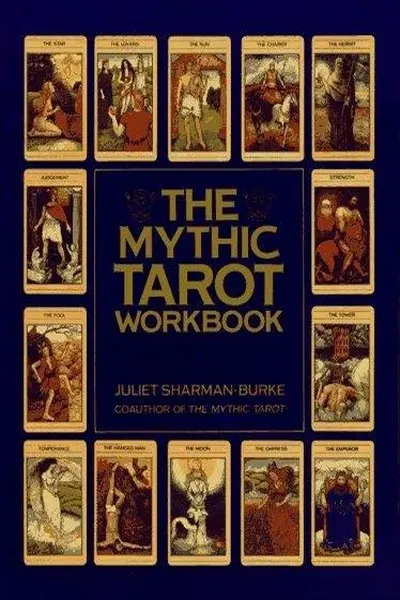
Juliet Sharman-Burke's Beginners Guide to Tarot presents a refreshingly straightforward approach to a subject often clouded by jargon. Its primary strength lies in its clarity; the 2017 publication avoids the esoteric excesses that can alienate newcomers. The breakdown of the seventy-eight cards, particularly the distinction between Major and Minor Arcana, is handled with commendable logic. However, the book occasionally leans towards a more traditional, perhaps less nuanced, interpretation of certain cards, such as the often-misunderstood Devil. A passage detailing the symbolism of the suit of Swords, linking them to intellectual and conflict-based themes, exemplifies the book's directness. While it successfully grounds the reader in basic interpretation, it may leave those seeking deeper symbolic or psychological exploration wanting more. Nevertheless, for its intended audience, it serves as a solid, unfussy entry point.
📝 Description
71
### What It Is Beginners Guide to Tarot, first published in 2017, offers a structured introduction to the practice and symbolism of Tarot cards. It systematically breaks down the seventy-eight-card deck, covering the Major and Minor Arcana. The guide aims to demystify the cards, presenting them not as predictive tools but as symbolic systems for self-reflection and understanding.
### Who It's For This book is explicitly designed for individuals new to Tarot. It assumes no prior knowledge, making it accessible to those who have never encountered a Tarot deck before. It also serves those who may have had brief exposure but seek a more coherent framework for interpreting the cards beyond simple divinatory meanings.
### Historical Context The practice of Tarot divination has roots in 18th-century Europe, evolving from playing cards. Its association with esoteric traditions solidified in the late 19th century with occultists like Eliphas Lévi and the Hermetic Order of the Golden Dawn, who linked the cards to Kabbalistic and astrological systems. Juliet Sharman-Burke's work, published in the 21st century, engages with this rich historical lineage while adapting it for contemporary beginners.
### Key Concepts The guide introduces fundamental Tarot concepts such as the Fool's Journey, the archetypal significance of the Major Arcana, and the elemental associations of the Minor Arcana suits (Wands, Cups, Swords, Pentacles). It emphasizes the importance of card spreads and intuitive interpretation, moving beyond rote memorization to foster a personal connection with the symbolism.
💡 Why Read This Book?
• Learn the foundational structure of the seventy-eight-card Tarot deck, including the distinct roles of the Major and Minor Arcana, to build a solid interpretive base. • Understand the elemental correspondences for the suits of Wands, Cups, Swords, and Pentacles, as explained in the guide's early sections, to connect card meanings to broader symbolic systems. • Grasp the concept of the Fool's Journey, as presented by Sharman-Burke, to view the Major Arcana as a narrative of personal development and spiritual unfolding.
⭐ Reader Reviews
Honest opinions from readers who have explored this book.
❓ Frequently Asked Questions
When was Beginners Guide to Tarot first published?
Beginners Guide to Tarot by Juliet Sharman-Burke was first published in 2017, making it a relatively contemporary introduction to the practice.
Does this book cover advanced Tarot techniques?
No, the book is specifically designed as a beginner's guide. It focuses on foundational knowledge of the seventy-eight cards, their meanings, and basic interpretation methods, rather than advanced spreads or complex symbolic systems.
What is the significance of the Major Arcana according to the book?
The book explains the Major Arcana as representing significant life events, spiritual lessons, and archetypal forces that shape our journey, often referred to as the Fool's Journey.
Are Tarot cards presented as purely predictive in this guide?
Sharman-Burke presents Tarot cards primarily as tools for self-reflection and understanding, rather than solely for fortune-telling, emphasizing their symbolic language.
What are the four suits of the Minor Arcana discussed?
The guide details the four suits of the Minor Arcana: Wands (representing passion and creativity), Cups (emotions and relationships), Swords (intellect and conflict), and Pentacles (material world and security).
Is this book suitable for someone with no prior Tarot experience?
Yes, the book is explicitly crafted for novices. It assumes no prior knowledge and systematically introduces all aspects of the Tarot deck from the ground up.
🔮 Key Themes & Symbolism
Archetypal Journeys
The book frames the Major Arcana as a narrative arc, often termed the Fool's Journey. This concept posits that the twenty-two Major Arcana cards represent stages of development, from innocence to wisdom. Each card signifies a distinct challenge, lesson, or spiritual insight encountered along this path. Understanding this archetypal progression allows readers to see their own life experiences mirrored in the cards' symbolism, fostering introspection and personal growth.
Elemental Correspondences
A core theme is the connection between the Minor Arcana suits and the four classical elements: Wands with Fire (passion, action), Cups with Water (emotions, intuition), Swords with Air (intellect, communication), and Pentacles with Earth (materiality, security). This elemental framework provides a consistent lens through which to interpret the diverse situations and energies depicted in the numbered cards of each suit, enriching their symbolic meaning.
Symbolic Language of Cards
The guide emphasizes that Tarot cards function as a symbolic language. Rather than literal predictions, the imagery, numbers, and symbols on each card offer insights into underlying psychological states, potential outcomes, and areas for personal attention. Readers are encouraged to develop their intuition and personal associations with these symbols, moving beyond rigid interpretations to a more fluid and personalized understanding.
Structured Interpretation
Beyond individual card meanings, the book addresses the art of reading Tarot spreads. It introduces basic layouts that help organize the cards into a coherent narrative or diagnostic picture. This structured approach provides a practical method for applying card knowledge, enabling beginners to move from understanding single cards to interpreting their interplay within a reading.
💬 Memorable Quotes
“The seventy-eight cards form a complete system.”
— This statement underscores the book's foundational premise: that the Tarot deck is not a random collection of images but an interconnected symbolic universe designed for a holistic approach to understanding.
“The Fool represents the beginning of a journey.”
— This highlights the central concept of the Fool's Journey, framing the Major Arcana as a narrative of growth and experience, with the Fool embodying innocence and the leap into the unknown.
“Each suit relates to a different aspect of life.”
— This refers to the elemental associations of the Minor Arcana suits—Wands (action/spirit), Cups (emotion/relationships), Swords (intellect/conflict), and Pentacles (material/physical)—providing a framework for understanding their distinct energies.
“Tarot is a mirror to the self.”
— This interpretation suggests that the cards do not dictate fate but reflect the querent's inner state, subconscious patterns, and potential paths, encouraging self-awareness and personal agency.
“Understanding the imagery is key to interpretation.”
— This emphasizes the visual nature of Tarot, advocating for close observation of the artwork on each card to unlock its deeper symbolic meanings and intuitive messages.
🌙 Esoteric Significance
Tradition
This work situates itself within the broad Western esoteric tradition, particularly drawing from the lineage that popularized Tarot as a divinatory and spiritual tool in the late 19th and 20th centuries. While not explicitly aligned with a single school like the Hermetic Order of the Golden Dawn, it adopts their approach of assigning symbolic meanings and archetypal narratives to the cards, particularly the Major Arcana. It departs from more complex Kabbalistic or astrological integrations favored by some esotericists, opting for a more direct, beginner-focused symbolic reading.
Symbolism
Key symbols include the archetypal figures of the Major Arcana, such as The Fool, The Magician, and The High Priestess, representing stages of consciousness and universal human experiences. The four suits of the Minor Arcana—Wands (action/spirit), Cups (emotion/relationships), Swords (intellect/conflict), and Pentacles (material world/security)—are central, each embodying a distinct elemental energy and domain of life, providing a framework for interpreting everyday situations.
Modern Relevance
Contemporary Tarot practice, influenced by works like Sharman-Burke's, often emphasizes self-discovery, mindfulness, and psychological insight over strict divination. Modern practitioners, including many online communities and contemporary authors, draw on this accessible approach to use Tarot as a tool for personal development, creative inspiration, and ethical guidance, continuing the evolution of Tarot's role in spiritual and psychological exploration.
👥 Who Should Read This Book
['• Absolute beginners to Tarot seeking a clear, step-by-step introduction to the seventy-eight cards and their basic meanings.', '• Individuals interested in using Tarot as a tool for self-reflection and personal growth, rather than solely for predictive purposes.', '• Students of esoteric symbolism looking for a foundational text that explains the archetypal significance of the Major Arcana and the elemental nature of the Minor Arcana.']
📜 Historical Context
The late 20th and early 21st centuries saw a significant resurgence of interest in Tarot, moving beyond niche occult circles into broader popular culture. While the Tarot's esoteric associations were firmly established by figures like A.E. Waite and Pamela Colman Smith in the early 20th century with the Rider-Waite deck, subsequent authors like Juliet Sharman-Burke aimed to make this complex system accessible. This period also witnessed a proliferation of Tarot books, some focusing on predictive methods, others on psychological or spiritual applications. Sharman-Burke's work, published in 2017, arrives in a landscape enriched by psychoanalytic interpretations of Tarot, influenced by Carl Jung's theories of archetypes, and the New Age movement's emphasis on personal empowerment. It engages with a tradition that had previously seen figures like Paul Foster Case developing complex Kabbalistic interpretations, offering a more direct path for newcomers.
📔 Journal Prompts
The Fool's Journey: Trace the archetypal path from The Fool to The World.
Elemental Suits: Reflect on the energy of Wands in your current projects.
The High Priestess's Symbolism: Consider the mysteries she represents in your intuition.
Interpreting the Swords: Analyze a recent conflict through the lens of the Sword cards.
The Fool's First Step: What does the initial leap into the unknown signify for you?
🗂️ Glossary
Major Arcana
The set of twenty-two cards in a Tarot deck, numbered from 0 (The Fool) to XXI (The World), representing significant life lessons, archetypal figures, and major spiritual or psychological themes.
Minor Arcana
The set of fifty-six cards in a Tarot deck, divided into four suits (Wands, Cups, Swords, Pentacles), which represent the events, challenges, and energies of daily life and more mundane matters.
The Fool's Journey
A concept that interprets the Major Arcana as a narrative sequence depicting the spiritual and psychological development of an individual, from innocence and potential to wisdom and completion.
Wands
One of the four suits of the Minor Arcana, traditionally associated with the element of Fire, representing passion, creativity, inspiration, ambition, and action.
Cups
One of the four suits of the Minor Arcana, associated with the element of Water, representing emotions, relationships, intuition, love, and the subconscious.
Swords
One of the four suits of the Minor Arcana, associated with the element of Air, representing intellect, thoughts, communication, conflict, challenges, and truth.
Pentacles
One of the four suits of the Minor Arcana, associated with the element of Earth, representing the material world, finances, work, health, and practical matters.