Reading the Leaves
 61
61

Reading the Leaves



Lorelei Sage, Contemplative Literature Editor: Sandra Maria Wright's 'Reading the Leaves' is an exceptional contribution to the field of divination. Wright masterfully bridges the gap between the mundane act of reading tea leaves and the profound psychological and spiritual insights it can unlock. Her approach is both scholarly and deeply intuitive, offering a rich lexicon of symbols and their resonant meanings. This book is not merely a how-to guide; it is an invitation to engage with the archetypal language of the universe, fostering self-awareness and a deeper connection to the subtle energies that shape our reality. Essential for anyone seeking to deepen their divinatory practice with clarity and soulful understanding.
📝 Description
61
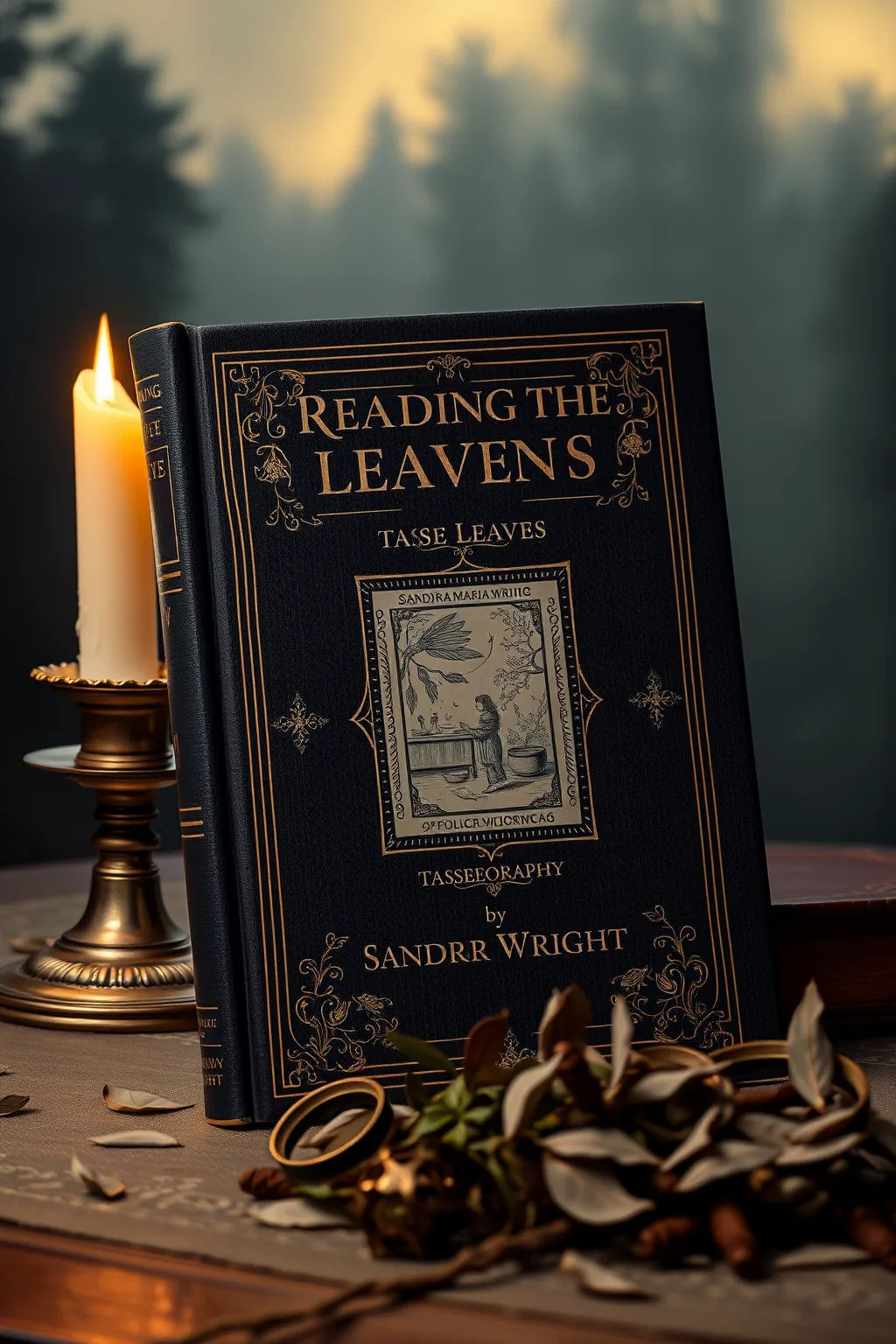
Sandra Maria Wright's 'Reading the Leaves' decodes the symbolic language found in tea leaves.
Sandra Maria Wright's 'Reading the Leaves' examines the practice of tasseography, the interpretation of patterns left by tea leaves. The book treats this ritual not just as fortune telling, but as a method for connecting with subconscious thoughts and unseen influences. Wright discusses how symbols and intuitive insights found in the teacup reflect one's inner world and life's unfolding story.
This volume aims to guide those interested in esoteric knowledge, from beginners to experienced practitioners. It presents tasseography as a way to access deeper understanding of oneself and the universe. The book touches on synchronicity and the role of intuition in navigating existence, suggesting that ancient practices can offer guidance for personal development and spiritual awareness.
This book fits within the broader tradition of divination and scrying, practices that seek insight through symbolic interpretation of natural phenomena or created patterns. Tasseography, specifically, has roots in ancient practices and connects to esoteric thought systems that view the universe as interconnected, with symbols acting as a bridge between the physical and spiritual or psychological realms. It shares common ground with methods that use everyday objects or natural formations to understand personal circumstances or future possibilities, aligning with a worldview where meaning can be found in seemingly random arrangements.
💡 Why Read This Book?
Uncover the hidden wisdom woven into the patterns of tea leaves. 'Reading the Leaves' offers a unique path to self-discovery, fostering intuitive development and a deeper connection to universal symbolism. Ideal for seekers of esoteric knowledge, practitioners of divination, and those curious about the profound insights that can be gleaned from everyday rituals. Embark on a journey of inner exploration and unlock the secrets whispered by the leaves.
⭐ Reader Reviews
Honest opinions from readers who have explored this book.
❓ Frequently Asked Questions
What is tasseography?
Tasseography, or tasseomancy, is the ancient art of interpreting patterns formed by tea leaves, coffee grounds, or wine sediments. It is a form of divination that taps into the subconscious and universal symbolism to offer insights into the past, present, and future.
Do I need special tea or equipment?
While loose-leaf tea is generally preferred for its distinct leaf patterns, most common black teas will suffice. The key is to have enough residue left after drinking to form discernible shapes. A simple teacup and saucer are all that is needed to begin.
How does reading tea leaves relate to psychology?
The practice draws heavily on psychological principles like projection and the interpretation of symbols, which are deeply embedded in the collective unconscious. The patterns seen in the leaves often reflect the querent's inner thoughts, emotions, and subconscious concerns.
Is this book suitable for beginners?
Absolutely. Sandra Maria Wright provides a clear and accessible introduction to tasseography, guiding beginners through the fundamental techniques and symbol interpretations. The book builds confidence and encourages intuitive development from the very first reading.
What kind of insights can be gained from tea leaf readings?
Tea leaf readings can offer profound insights into various aspects of life, including relationships, career, personal growth, and spiritual development. They serve as a reflective tool, helping individuals to understand challenges, opportunities, and their own inner wisdom.
🔮 Key Themes & Symbolism
The Language of Symbols
This theme explores the universal language of symbols and archetypes that manifest within tea leaf patterns. It explores how these visual representations, often rooted in ancient mythologies and the collective unconscious, act as a conduit for intuitive understanding. The book guides readers in decoding these potent symbols, revealing their multi-layered meanings and their profound connection to human psychology and spiritual truths. It emphasizes that symbols are not arbitrary but carry inherent energies and narratives that can illuminate our life path.
Intuition and Inner Knowing
Central to 'Reading the Leaves' is the cultivation of intuition – the inner knowing that transcends rational thought. The practice of tasseography is presented as a powerful exercise in honing this innate faculty. Wright guides readers to trust their gut feelings, their spontaneous associations, and the subtle whispers of their subconscious as they interpret the tea leaves. This theme highlights how developing intuitive skills can lead to greater clarity, more confident decision-making, and a profound sense of personal empowerment in navigating life's complexities.
The Mirror of the Soul
This theme positions the tea leaf reading as a sacred act of self-reflection, a 'mirror of the soul.' The patterns observed in the teacup are not viewed as fixed prophecies but as dynamic reflections of the querent's current energetic state, their inner landscape, and their potential future trajectories. By engaging with these reflections, readers are encouraged to engage in a deep dialogue with themselves, fostering self-awareness, understanding their motivations, and identifying areas for personal growth and transformation. It's an invitation to see oneself with greater clarity and compassion.
💬 Memorable Quotes
Direct passages from the work, attributed to the author.
“Every pattern is a story waiting to be told.”
— This highlights the narrative aspect of divination, framing the symbols in the leaves as elements of a personal story that can be interpreted and understood.
“The cup holds a map of your inner world.”
— This metaphor underscores the idea that a tea leaf reading serves as a visual representation of the querent's psychological and emotional state.
“Trust the whispers, not just the shouts.”
— This encourages readers to pay attention to subtle intuitive nudges and symbolic nuances, rather than solely relying on overt or easily recognizable messages.
💡 Key Ideas
Editorial paraphrase of the work's core concepts — not direct quotes.
The leaves whisper secrets the mind cannot yet grasp.
This quote emphasizes the intuitive and subconscious nature of tasseography, suggesting that the insights gleaned from tea leaves bypass logical processing to reveal deeper truths.
Synchronicity blooms in the residue of the brew.
This quote connects the practice to the concept of synchronicity, suggesting that the meaningful coincidences found in tea leaf patterns reflect a deeper cosmic order.
🌙 Esoteric Significance
Tradition
Rooted in the esoteric tradition of divination, 'Reading the Leaves' draws parallels with practices like scrying and augury, where patterns in natural elements are interpreted to divine meaning. It aligns with hermetic principles of correspondence, suggesting that the microcosm (the teacup) reflects the macrocosm (the universe). The practice emphasizes the interconnectedness of all things and the potential for the subtle realms to communicate through tangible forms, fostering a deeper spiritual awareness.
Symbolism
The book meticulously explores the symbolic language embedded within tea leaf patterns. These symbols, often archetypal in nature, range from common objects and animals to abstract shapes, each carrying a collection of meanings derived from mythology, folklore, and psychological associations. Wright illuminates how these symbols act as a visual lexicon for the subconscious, offering insights into emotional states, karmic patterns, and potential life trajectories, thereby enhancing self-understanding and spiritual growth.
Modern Relevance
In an age saturated with information and often disconnected from deeper intuition, 'Reading the Leaves' offers a grounding and empowering practice. It provides a tangible method for slowing down, engaging with symbols, and cultivating inner wisdom. The book's relevance lies in its ability to bridge the gap between ancient practices and contemporary psychological needs, offering a unique tool for self-discovery, stress reduction, and fostering a more mindful and intuitive approach to life's challenges.
👥 Who Should Read This Book
This useful volume is a treasure for a diverse array of readers. For the **beginner** beginning their divinatory journey, Sandra Maria Wright offers a clear, accessible, and encouraging introduction to tasseography, clarifying the process and building confidence. **Scholars** of esoteric traditions will appreciate the historical context and the insightful exploration of symbolism and its psychological underpinnings. **Seekers** yearning for deeper self-understanding and a connection to the subtle energies of life will find a profound tool for introspection and guidance. **Practitioners** of other divinatory arts will discover a unique and complementary method to enrich their readings and expand their intuitive repertoire.
📜 Historical Context
Tasseography, the art of reading tea leaves, boasts a rich and ancient lineage, with roots tracing back to ancient China and later flourishing in the Ottoman Empire and across Europe during the 17th and 18th centuries. As the popularity of tea spread, so too did the practice of interpreting its residual patterns. Initially embraced by various cultures as a form of folk divination and a means of seeking guidance, it was often practiced in intimate settings, fostering a sense of shared experience and intuitive connection. During periods of heightened interest in the occult and spiritualism, such as the Victorian era, tasseography found a place alongside other divinatory arts, viewed by some as a legitimate path to uncovering hidden truths. Sandra Maria Wright’s contemporary exploration builds upon this historical foundation, revitalizing the practice for a modern audience seeking to reconnect with ancient wisdom and personal intuition.
📔 Journal Prompts
What recurring symbols have you noticed in your tea leaf readings, and what emotions do they evoke?
How does the act of focusing on the tea leaves shift your mental state and bring you into the present moment?
Reflect on a past tea leaf reading that proved particularly insightful. What did it reveal, and how did it manifest in your life?
Consider the connection between the shapes in your teacup and the current challenges or opportunities you are facing.
How can you integrate the practice of mindful tea consumption and reflection into your daily routine for greater self-awareness?
🗂️ Glossary
Tasseography
The art and practice of divining the future by interpreting the patterns of tea leaves, coffee grounds, or wine sediments left in a cup.
Archetype
A universal, archaic symbol or motif that derives its meaning from the collective unconscious and recurs in art, literature, and mythology.
Collective Unconscious
A concept by Carl Jung referring to a part of the unconscious mind that is inherited and common to all humanity, containing basic patterns and images.
Synchronicity
The occurrence of events that appear meaningfully related but lack a causal connection, often perceived as meaningful coincidences.
Querent
The person for whom a divination or reading is performed; the individual seeking guidance or insight.
This book appears in 1 collection
🔮 Readers Also Liked
Browse all →









From the “Tea Leaf Reading” Collection
View all →



More Free Divination & Tarot Books
View all →