An Illustrated Guide to Runes
 79
79

An Illustrated Guide to Runes
Jonathan Dee's *An Illustrated Guide to Runes* presents the Elder Futhark with commendable clarity, avoiding the sensationalism that often plagues occult literature. The strength of this work lies in its balanced approach, grounding runic interpretation in historical context while maintaining a focus on practical application. Dee's explanation of the rune *Ansuz* as representing divine inspiration and communication, for instance, is particularly well-articulated. However, the guide occasionally falters by presenting some interpretations as definitive, when scholarly consensus on certain runic meanings remains elusive. The illustrations, while helpful, could benefit from greater stylistic variety to reflect the diverse historical periods of runic use. Despite this minor limitation, Dee provides a solid foundation for understanding and working with these ancient symbols.
📝 Description
79
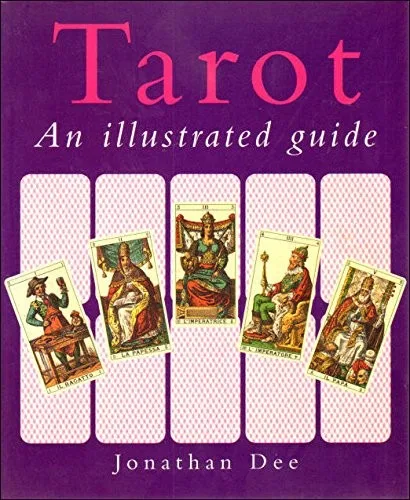
### What It Is An Illustrated Guide to Runes by Jonathan Dee, first published in 2001, offers a comprehensive exploration of the ancient Germanic alphabet and its divinatory applications. The work presents the Elder Futhark, the oldest runic alphabet, detailing each rune's name, phonetic value, and symbolic meaning. It moves beyond simple definitions to explore the mythological and historical underpinnings of these potent symbols, integrating them into a practical framework for personal insight and spiritual development.
### Who It's For This guide is suited for individuals beginning their study of runic divination, as well as those seeking to deepen an existing practice. It caters to students of esoteric traditions, paganism, and Northern European mythology who wish to understand the practical use of runes. Readers interested in historical linguistics and the evolution of alphabets will also find value, particularly in the sections detailing the origins and development of runic scripts.
### Historical Context The book situates the runes within their historical milieu, tracing their origins to Germanic tribes of the early centuries CE. It acknowledges the Elder Futhark's use not only for divination but also for inscriptions and magical purposes. Dee references scholarly debate regarding the precise origins and influences on runic symbolism, touching upon its connection to Proto-Germanic language and broader Indo-European mythic structures. The work implicitly engages with the revival of interest in Norse and Germanic traditions that gained momentum in the late 20th century.
### Key Concepts Central to the guide is the concept of the Futhark as a system of energetic principles and archetypes, rather than merely letters. Dee explores the concept of *wyrd* (fate or destiny) as it relates to runic readings, emphasizing the runes' role in illuminating the threads of causality. The inherent duality of each rune, often possessing both a straightforward and a more hidden, esoteric meaning, is a recurring theme. The book also addresses the practice of *seidr* (Norse shamanism) and its potential connections to runic magic.
💡 Why Read This Book?
• Understand the foundational Elder Futhark, learning the specific meanings of each of the 24 runes as presented in Dee's guide, which offers a practical framework for their use in divination. • Explore the concept of *wyrd* as it relates to runic divination, gaining insight into how the runes can illuminate the interplay of fate and personal agency as discussed in the text. • Examine the historical context of runic inscriptions and their connection to Germanic tribes around the early centuries CE, providing a deeper appreciation for the runes' origins beyond simple oracular tools.
⭐ Reader Reviews
Honest opinions from readers who have explored this book.
❓ Frequently Asked Questions
What is the Elder Futhark and how does Jonathan Dee explain it?
The Elder Futhark is the oldest runic alphabet, comprising 24 runes. Jonathan Dee's guide details each rune's name, phonetic value, and symbolic meaning, presenting them as energetic principles and archetypes for divination and personal insight.
When was An Illustrated Guide to Runes first published?
An Illustrated Guide to Runes by Jonathan Dee was first published in 2001, reflecting a resurgence of interest in ancient Germanic traditions and esoteric studies during that period.
Does the book cover modern rune casting techniques?
Yes, the book provides a practical framework for using runes in divination, guiding readers on how to interpret their meanings for personal insight and spiritual development beyond their historical inscription uses.
Are there illustrations in the guide?
Indeed, the title itself, 'An Illustrated Guide to Runes,' indicates that the book features visual representations of the runes, aiding in their identification and understanding of their symbolic forms.
What historical period do the runes in this book relate to?
The runes primarily discussed are from the Elder Futhark, which was used by Germanic tribes during the early centuries CE, offering a glimpse into the linguistic and spiritual landscape of that era.
What is the concept of 'wyrd' as it pertains to runes?
In the context of runic divination as explored by Dee, 'wyrd' refers to fate or destiny. The runes are presented as tools to understand the threads of causality and one's place within this larger cosmic framework.
🔮 Key Themes & Symbolism
Runic Alphabets and Symbolism
The core of Dee's work lies in dissecting the Elder Futhark, the earliest Germanic runic alphabet. It meticulously details each of the 24 runes, moving beyond their phonetic values to explore their rich symbolic meanings, often linked to Norse mythology and cosmology. For instance, the rune *Thurisaz* is presented not just as a 'thorn' or the god Thor, but as a symbol of chaotic, destructive, yet potentially protective force, embodying the inherent duality found throughout the runic system.
Divinatory Practices and Interpretation
This guide emphasizes the practical application of runes for divination and personal guidance. Dee outlines methods for casting and interpreting rune sets, focusing on how each symbol can offer insight into present circumstances and future potentials. The concept of *wyrd* is central here, suggesting that runes help reveal the intricate patterns of fate and causality that shape our lives, encouraging a more conscious engagement with destiny.
Historical and Mythological Roots
Dee situates the runes within their historical and mythological context, tracing their lineage back to the Germanic tribes of the early centuries CE. The work explores the cultural milieu in which these symbols emerged, linking them to the broader tapestry of Northern European paganism and shamanic practices like *seidr*. Understanding these roots provides a deeper appreciation for the runes' power and their multifaceted roles beyond simple communication.
The Esoteric Nature of Runes
Beyond their historical use for writing and divination, the book highlights the esoteric dimension of runes. Each rune is presented as a key to unlocking deeper spiritual truths and archetypal energies. The guide implicitly suggests that working with the runes can foster a connection to ancient wisdom, offering a path for self-discovery and spiritual growth rooted in the Northern European mystical traditions.
💬 Memorable Quotes
“Each rune carries a duality, a potential for both creation and destruction.”
— This highlights the complex nature of runic symbolism, suggesting that meanings are not always straightforward and often encompass opposing forces, reflecting the balance found in nature and human experience.
“The Futhark is not merely an alphabet, but a map of cosmic forces.”
— This interpretation frames the runes as more than just letters; they are presented as potent symbols representing fundamental energies and archetypes that govern the universe, offering a framework for understanding existence.
“Understanding *wyrd* is key to interpreting the runes' guidance.”
— This emphasizes the philosophical underpinnings of runic divination, linking the practice to the Norse concept of fate and suggesting that the runes illuminate one's path within this larger destiny.
“The visual form of a rune often hints at its core meaning.”
— This suggests an intuitive approach to runic study, where the shape and design of each symbol provide clues to its symbolic significance and energetic properties, encouraging close observation.
“Ancient peoples used runes for protection as much as for prophecy.”
— This points to the magical and apotropaic functions of runes in historical contexts, indicating their use not only for foretelling but also for warding off negative influences and invoking protective energies.
🌙 Esoteric Significance
Tradition
This work aligns with the Western Esoteric tradition, particularly its branches focusing on Northern European mythology and symbolism. It draws from the lineage that views ancient alphabets and runic scripts not merely as linguistic tools but as repositories of spiritual knowledge and magical power. While distinct from Hermeticism or Kabbalah, it shares the esoteric principle of correspondences, linking abstract symbols to divine forces and natural phenomena, echoing a broader esoteric interest in symbolic languages.
Symbolism
Key symbols explored include *Fehu*, representing wealth and abundance often linked to cattle or primal energy, and *Algiz*, the elk or protection rune, symbolizing defense and spiritual connection. The rune *Sowilo* (the sun) is presented as a potent symbol of light, victory, and life force. Dee emphasizes how these symbols, when understood in their mythological context, act as conduits for accessing specific archetypal energies and navigating life's challenges.
Modern Relevance
Contemporary practitioners of Heathenry, Asatru, and various forms of modern paganism frequently utilize Dee's guide as a foundational text. Its accessible format makes it valuable for modern animists and those exploring shamanic practices inspired by Northern European traditions. The work's focus on practical divination and personal application resonates with current trends in self-help spirituality and the search for meaning through ancient wisdom systems.
👥 Who Should Read This Book
• Beginners exploring runic divination systems who seek a clear introduction to the Elder Futhark and its symbolic meanings, grounded in historical context. • Students of Northern European mythology and Germanic paganism interested in understanding the practical and spiritual applications of runes beyond academic study. • Practitioners of esoteric arts looking to expand their divinatory toolkit with a system rich in historical depth and symbolic resonance.
📜 Historical Context
Published in 2001, Jonathan Dee's *An Illustrated Guide to Runes* emerged during a period of renewed interest in esoteric traditions and neo-paganism, particularly within Western Europe and North America. This era saw a proliferation of works exploring ancient mythologies and divination systems. The book engages with the scholarly understanding of the Elder Futhark, the earliest runic alphabet used by Germanic peoples from approximately the 2nd to 8th centuries CE. Dee's approach implicitly builds upon earlier foundational texts in runology and occultism, such as those by Guido von List or Karl Maria Wiligut, while seeking to present the subject in a more accessible format for a contemporary audience. It navigates a landscape where academic historical linguistics and practical occultism often intersect, sometimes contentiously. The work implicitly responded to a growing demand for practical guides to ancient spiritual practices, distinguishing itself from purely academic treatises on Germanic philology.
📔 Journal Prompts
The rune *Ansuz* and its representation of divine communication.
Reflections on the concept of *wyrd* as illuminated by a specific rune spread.
The duality of *Thurisaz* in personal challenge and protection.
Visualizing the solar power of *Sowilo* during meditation.
Connecting the symbolism of *Fehu* to current personal resources.
🗂️ Glossary
Elder Futhark
The oldest known runic alphabet, consisting of 24 symbols, used by Germanic tribes from roughly the 2nd to 8th centuries CE. It forms the basis for most modern runic divination systems.
Wyrd
An Old English and Old Norse concept referring to fate, destiny, or the predetermined course of events. In runic divination, it represents the interconnectedness of past, present, and future.
Seidr
A form of Norse shamanism involving prophecy, magic, and altered states of consciousness, often associated with the Vanir deities. It is sometimes linked to the deeper esoteric uses of runes.
Asatru
A modern polytheistic pagan religion based on pre-Christian Norse and Germanic beliefs and practices, often involving the worship of the Æsir and Vanir pantheon.
Bind Rune
A combination of two or more runes into a single symbol, often used for magical purposes to amplify or focus specific energies or intentions.
Divination
The practice of seeking knowledge of the future or the unknown by supernatural means. In this context, it refers to interpreting runes for insight and guidance.
Futhark
The term derived from the first six runes of the Elder Futhark (F, U, Th, A, R, K). It refers to the runic alphabet itself.