A general view of the arguments for the unity of God, and against the divinity and pre-existence of Christ, from reasons, from the scriptures, and from history

 74
74

A general view of the arguments for the unity of God, and against the divinity and pre-existence of Christ, from reasons, from the scriptures, and from history
Joseph Priestley's 1794 treatise is a formidable intellectual challenge to orthodox Christianity, grounded in an era where theological debate was as charged as scientific discovery. The strength of the work lies in Priestley's methodical dismantling of traditional arguments for Christ's divinity, drawing extensively on scriptural evidence and historical reasoning. His analysis of passages often cited by Trinitarians, such as those in John's Gospel, offers a compelling alternative interpretation for those predisposed to monotheism. However, the dense argumentation and specific theological vocabulary might prove a barrier for contemporary readers unfamiliar with 18th-century polemics. A limitation is the sheer volume of detailed exegesis, which, while thorough, can sometimes obscure the broader philosophical points for a secular audience. The section meticulously examining the historical development of Christological doctrines is particularly impactful. Priestley's work stands as a significant document in the history of Unitarian thought, offering a clear, if demanding, articulation of its core tenets.
📝 Description
74
### What It Is This 1794 work by Joseph Priestley presents a robust defense of monotheism and a critical examination of the doctrines of Christ's divinity and pre-existence. Priestley systematically dissects arguments drawn from scripture, reason, and historical accounts to dismantle traditional Trinitarian theology. The book functions as a theological treatise, aiming to persuade readers through logical argumentation and scriptural interpretation.
### Who It's For This text is intended for students of theological history, particularly those interested in the Unitarian movement and the Enlightenment's impact on religious thought. It will appeal to individuals seeking rigorous, historically-grounded arguments against the Nicene Creed and similar orthodox doctrines. Readers who appreciate philosophical theology and historical criticism of religious texts will find substantial material here.
### Historical Context Published in 1794, Priestley's work emerges from the fervent intellectual climate of the late 18th century, a period marked by scientific advancement and challenges to established religious dogma. The Enlightenment fostered critical inquiry into traditional doctrines, and Priestley, a prominent dissenting minister and scientist, was a key figure in this milieu. His arguments align with emerging Unitarian sentiments, which were gaining traction as a counterpoint to prevailing Trinitarian orthodoxy. This era saw vigorous debate among theologians and philosophers, with figures like William Ellery Channing later building upon such foundations.
### Key Concepts The central thesis revolves around the absolute unity of God, a concept Priestley derives from both rational deduction and scriptural exegesis. He challenges the notion of a pre-existent divine Christ, arguing that such a belief is not only unsupported by early Christian writings but also a historical accretion. The work scrutinizes the interpretation of key biblical passages often used to support Trinitarianism, proposing alternative readings grounded in historical context and linguistic analysis.
✍️ Author
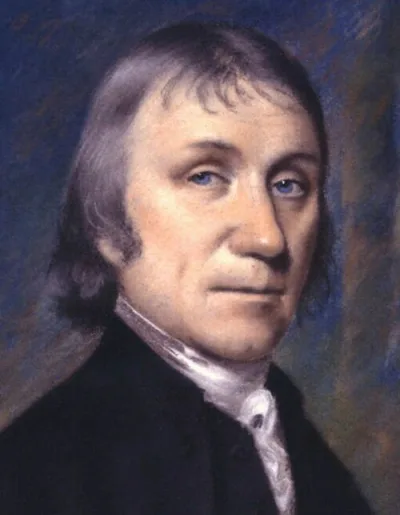
Joseph Priestley
The Joseph Priestley House was the American home of eighteenth-century British theologian, Dissenting clergyman, natural philosopher (and co-discoverer of oxygen), educator, and political theorist Joseph Priestley from 1798 until his death. Located in Nort…
💡 Why Read This Book?
• Gain a precise understanding of the historical arguments for monotheism versus Trinitarianism as articulated by Joseph Priestley in the late 18th century, moving beyond abstract theological concepts to concrete scriptural and rational proofs. • Analyze Priestley's method of scriptural interpretation, learning how he re-examines specific biblical passages to support his arguments against the pre-existence and divinity of Christ. • Understand the intellectual landscape of the Enlightenment and its impact on religious discourse, specifically how figures like Priestley engaged with historical scholarship to critique established doctrines.
⭐ Reader Reviews
Honest opinions from readers who have explored this book.
❓ Frequently Asked Questions
What is Joseph Priestley's main argument regarding the unity of God?
Priestley argues that the absolute unity of God is a foundational truth supported by both rational deduction and the direct testimony of scripture, positing that any interpretation suggesting otherwise is a deviation from original monotheistic principles.
How does Priestley challenge the divinity of Christ?
Priestley examines scriptural passages traditionally used to support Christ's divinity, proposing alternative interpretations based on historical context and linguistic analysis, arguing these doctrines were later additions rather than original tenets.
What historical evidence does Priestley cite?
Priestley refers to historical accounts and the development of Christian doctrine over centuries, suggesting that the concept of Christ's divinity evolved and was not present in the earliest Christian teachings or the life of Jesus himself.
What is the significance of the year 1794 for this book?
1794 marks the original publication date, placing the work firmly within the intellectual ferment of the Enlightenment, a period of intense rational inquiry into religious and philosophical traditions.
Is this book a primary source for Unitarian theology?
Yes, the work is considered a significant primary source, offering a detailed articulation of the theological arguments that underpinned the Unitarian movement in the late 18th century.
What intellectual movements influenced Priestley's approach?
Priestley's approach was influenced by Enlightenment rationalism, scientific inquiry, and a critical historical methodology applied to religious texts, challenging traditional interpretations through reason and evidence.
🔮 Key Themes & Symbolism
The Absolute Unity of God
Priestley anchors his theological framework in the absolute and indivisible unity of God, a concept he derives from both philosophical reasoning and a close reading of the Hebrew scriptures. He argues that this monotheistic principle is the bedrock of true religion and that any theological construct compromising it, such as the Trinity, represents a departure from divine revelation. His approach emphasizes that God's oneness is not merely numerical but an intrinsic quality that defines His being and relationship with creation, forming the core of his critique against later Christological developments.
Critique of Christ's Divinity and Pre-existence
A central focus is the systematic deconstruction of traditional Christian doctrines concerning the divinity and pre-existence of Jesus Christ. Priestley meticulously analyzes biblical texts, particularly the Gospels and Epistles, to demonstrate that these concepts are not supported by the original teachings. He posits that these doctrines emerged through historical and philosophical influences rather than divine revelation, presenting an alternative historical trajectory for Christian belief that prioritizes a human, albeit uniquely chosen, Jesus.
Scriptural Interpretation and Historical Context
Priestley champions a method of scriptural interpretation that prioritizes historical context and linguistic accuracy. He challenges prevailing allegorical or tradition-laden readings, advocating for a return to what he perceives as the original, literal meaning of biblical texts. This approach is crucial for understanding his arguments, as it forms the basis for his reinterpretation of key passages and his historical tracing of theological evolution, distinguishing between primitive Christian beliefs and later ecclesiastical doctrines.
Reason and Revelation
The work embodies the Enlightenment synthesis of reason and revelation. Priestley does not dismiss revelation but argues that it must align with sound reason. He employs rational argumentation to assess the coherence and plausibility of theological claims, using reason as a tool to discern true revelation from human philosophical speculation that has become embedded in religious dogma. This dual reliance underscores his commitment to intellectual honesty in matters of faith.
💬 Memorable Quotes
“The unity of God is the first and most essential article of true religion.”
— This statement encapsulates Priestley's core conviction: that monotheism is not merely one belief among many but the fundamental truth upon which all other religious understanding must be built, forming the basis of his entire theological project.
“The scriptures, when properly understood, do not support the divinity of Christ.”
— This paraphrase highlights Priestley's central thesis concerning Jesus. He believed that a careful, historically-informed reading of the Bible would reveal that Jesus was understood as a human prophet, not a divine being, thereby challenging millennia of orthodox interpretation.
“Historical inquiry reveals the doctrine of Christ's pre-existence as a later philosophical addition.”
— This interpretation points to Priestley's method of historical analysis. He argued that the concept of Jesus existing before his earthly birth was not an original tenet but a theological development influenced by external philosophical ideas.
“Reason must guide our interpretation of divine revelation.”
— This reflects Priestley's Enlightenment perspective, suggesting that while divine texts are the source of religious truth, human reason is the essential faculty for correctly understanding and applying that truth, filtering out error and misinterpretation.
“The primitive church was fundamentally unitarian.”
— This interpretation summarizes Priestley's historical claim. He asserted that the earliest Christian communities adhered to a strict monotheistic belief system, and that Trinitarianism developed much later in the history of the church.
🌙 Esoteric Significance
Tradition
While Priestley's work is primarily theological and philosophical, its rigorous rationalism and focus on recovering an 'original' form of belief can be seen as aligning with certain esoteric currents that seek direct, unmediated access to spiritual truth, bypassing institutional dogma. His emphasis on individual reason and scriptural clarity echoes Gnostic aims to uncover hidden knowledge, though Priestley's method is decidedly empirical and historical rather than mystical.
Symbolism
The primary 'symbol' in Priestley's work is not a visual motif but the concept of divine 'unity' itself. This unity represents an absolute, singular source of existence, a perfect, undivided principle from which all emanates. In contrast, the 'divinity of Christ' represents a perceived fragmentation or complication of this pure monotheistic source, seen as an accretion of human interpretation rather than a fundamental truth of the divine.
Modern Relevance
Priestley's arguments continue to inform contemporary Unitarian and Universalist theology, as well as other non-Trinitarian Christian denominations. His methodology of applying critical historical and rational analysis to religious texts also resonates with modern biblical scholarship and comparative religion studies, influencing how scholars and laypeople approach the study of ancient religious traditions and their evolution.
👥 Who Should Read This Book
• Students of theology and religious history interested in the Enlightenment's impact on Christian doctrine, particularly the development of Unitarian thought and arguments against Trinitarianism. • Skeptics and freethinkers seeking well-reasoned, historically-grounded critiques of traditional religious dogma, especially regarding the nature of God and Jesus. • Comparative religion scholars examining the evolution of monotheistic thought and the historical formation of Christian doctrines from a non-orthodox perspective.
📜 Historical Context
Joseph Priestley's "A General View of the Arguments for the Unity of God" emerged in 1794, a period of profound intellectual and religious upheaval across Europe and America. The Enlightenment's emphasis on reason and empirical evidence had fostered critical examination of traditional religious doctrines, leading to the rise of movements like Unitarianism. Priestley, a prolific scientist and dissenting minister, was a central figure in this intellectual milieu, advocating for rational religion and challenging orthodox Christian tenets. His work engaged directly with the prevailing Trinitarian theology, a dominant force in mainstream Christianity, and contributed to the ongoing theological debates of the era. Contemporaries like William Ellery Channing in America would later champion similar unitarian ideals, building upon the foundations laid by Priestley and others. The intellectual climate was marked by a vigorous exchange of ideas, with Priestley's work sparking debate among theologians and philosophers who sought to reconcile faith with reason.
📔 Journal Prompts
The concept of the 'absolute unity of God' as presented by Priestley: how does this differ from common conceptions of God?
Priestley's critique of Christ's 'divinity and pre-existence': identify one scriptural passage he reinterprets and analyze his reasoning.
The Enlightenment's emphasis on reason: how does Priestley employ rational argumentation in his theological treatise?
The historical context of 1794: what societal or intellectual currents might have made Priestley's arguments particularly relevant or controversial?
Priestley's method of 'scriptural interpretation': what are the implications of prioritizing historical context and literal meaning?
🗂️ Glossary
Monotheism
The belief in the existence of only one God. Priestley strongly advocates for this, viewing it as the original and purest form of religious belief, central to his theological arguments.
Trinitarianism
The doctrine that God exists as three co-equal, co-eternal persons: the Father, the Son, and the Holy Spirit. Priestley argues against this doctrine, viewing it as a deviation from true monotheism.
Pre-existence of Christ
The belief that Jesus Christ existed as a divine being before his incarnation and birth on Earth. Priestley contests this idea, arguing it is not supported by early scripture.
Scriptural Exegesis
The critical explanation and interpretation of a text, especially of the Bible. Priestley employs this method to argue for his theological positions.
Enlightenment
An 18th-century intellectual and philosophical movement that emphasized reason, individualism, and skepticism towards traditional authority. It heavily influenced Priestley's rational approach to theology.
Unitarianism
A religious movement that stresses the oneness of God and the humanity of Jesus Christ. Priestley was a key figure in its early development.
Nicene Creed
A statement of Christian belief formulated by the Council of Nicaea in 325 CE and later revised. It defines core doctrines, including the divinity of Christ, which Priestley challenges.