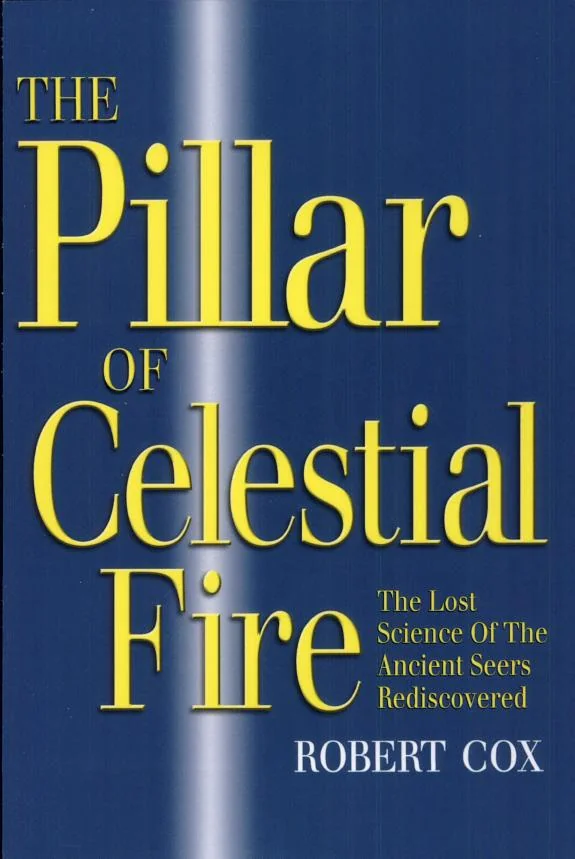
The Pillar of Celestial Fire
 72
72

The Pillar of Celestial Fire
Robert Cox's "The Pillar of Celestial Fire" attempts to reconstruct a unified sacred science, drawing on a broad spectrum of ancient traditions. The author's commitment to providing "well-documented evidence" is evident, particularly in his comparative analysis of Biblical, Egyptian, and Vedic texts. A particular strength lies in the detailed exploration of specific correspondences between these systems, suggesting a shared root of knowledge. However, the work occasionally falters by asserting speculative connections as definitive proof, a common pitfall in this genre. The chapter discussing the "cycles of time" mapped out by ancient cultures, while intriguing, could benefit from clearer demarcation between historical record and theoretical reconstruction. Despite these limitations, the book offers a compelling argument for the existence of a sophisticated, universal spiritual framework lost to modern understanding. It serves as a valuable resource for those seeking to bridge disparate esoteric traditions.
📝 Description
72
Robert Cox's 1997 book proposes a lost universal sacred science shared by ancient traditions.
Robert Cox's "The Pillar of Celestial Fire" argues for a unified body of knowledge once possessed by ancient Seers across diverse traditions, including Biblical, Egyptian, Vedic, Taoist, and Native American cultures. The book documents evidence suggesting these disparate groups shared a common understanding of universal principles that offered keys to spiritual enlightenment, robust health, and even extended lifespan. Cox posits that this sacred science, systematically lost over time, held practical applications for unlocking human potential.
This work is intended for serious students of comparative religion and ancient wisdom traditions. It will appeal to researchers looking for documented connections between spiritual systems and individuals interested in the historical roots of esoteric philosophies. Those curious about the potential for healing and longevity through ancient practices will find substantive material within its pages. The book's detailed presentation of cross-cultural parallels positions it against purely materialistic interpretations of history.
Published in 1997, "The Pillar of Celestial Fire" emerged during a period of renewed interest in esoteric studies and alternative historical perspectives. The book engages with themes of lost civilizations and advanced ancient knowledge, aligning with discussions around figures who explored similar subjects. Cox's work contributes to the tradition of comparative occultism by presenting detailed cross-cultural parallels to support the idea of a coherent, ancient mystical science that predates modern divisions.
💡 Why Read This Book?
• You will learn how Cox identifies specific parallels between ancient cosmologies, such as the shared archetypes in Vedic Yugas and proposed Egyptian cyclical histories, offering a unique perspective on temporal understanding. • Gain insight into the practical applications of this "sacred science" as presented by Cox, focusing on the documented links he draws between ancient practices and potential for enhanced health and longevity. • Discover the evidence Cox presents for a unified esoteric tradition, connecting Seers from Biblical, Egyptian, and Taoist lineages, which may challenge conventional historical narratives.
⭐ Reader Reviews
Honest opinions from readers who have explored this book.
❓ Frequently Asked Questions
What specific evidence does "The Pillar of Celestial Fire" offer for a universal sacred science?
The book presents documented evidence through comparative analysis of religious texts, symbols, and cosmologies from Biblical, Egyptian, Vedic, Taoist, and Native American traditions, suggesting shared origins and principles.
When was "The Pillar of Celestial Fire" first published?
The work was first published on November 1, 1997, placing it within a period of renewed interest in ancient wisdom and esoteric studies.
What are the primary benefits of the ancient sacred science discussed in the book?
According to Cox, the knowledge holds keys to spiritual enlightenment, perfect health, and physical immortality, suggesting a holistic approach to human potential.
Which ancient traditions does Robert Cox reference?
Cox references the Biblical, Egyptian, Vedic, Taoist, and Native American traditions as repositories of this universal sacred science.
Does the book provide practical steps for achieving spiritual enlightenment or immortality?
While the book posits the existence of such knowledge and its potential benefits, it focuses more on presenting the evidence and historical context rather than providing a step-by-step guide.
Is "The Pillar of Celestial Fire" based on verifiable historical records or esoteric interpretation?
The book aims to present "well-documented evidence," blending historical textual analysis with esoteric interpretation to support its thesis of a lost universal science.
🔮 Key Themes & Symbolism
Universal Sacred Science
The core argument of "The Pillar of Celestial Fire" is the existence of a singular, unifying sacred science shared by disparate ancient cultures. Cox meticulously draws parallels between the Biblical, Egyptian, Vedic, Taoist, and Native American traditions, suggesting a common source of profound knowledge. This science, he argues, was not merely philosophical but practical, offering tangible benefits for human existence, including spiritual attainment and physical well-being. The work explores how this unified understanding, though lost, remains accessible through careful study of ancient records and symbols.
Cyclical Time and Lost Knowledge
Cox posits that the loss of this sacred science is intrinsically linked to the concept of cyclical time, a theme prevalent in many of the traditions he examines. The book explores how these cycles, as mapped out by ancient Seers, dictate periods of revelation and obscurity for human knowledge. The "Golden Age" mentioned refers to a period when this science was universally understood, before subsequent epochs led to its fragmentation and eventual disappearance from mainstream consciousness. The work frames its recovery as a return to foundational truths.
Pathways to Enlightenment and Immortality
A significant focus of "The Pillar of Celestial Fire" is the practical application of this ancient wisdom for achieving spiritual enlightenment, perfect health, and physical immortality. Cox interprets various myths, rituals, and scriptures as encoded instructions for unlocking these states of being. The book suggests that by understanding and reintegrating this lost science, modern individuals can tap into their inherent potential for transcendence and longevity, moving beyond conventional limitations of the human condition.
Cross-Cultural Esoteric Connections
The strength of Cox's work lies in its extensive comparative analysis. It bridges the perceived divides between seemingly unrelated spiritual and philosophical systems. By highlighting shared symbols, narratives, and cosmological models, the book argues for an underlying esoteric unity. This approach challenges scholars and seekers to look beyond superficial differences and recognize the common threads of ancient wisdom that have persisted, albeit in fragmented forms, across global cultures.
💬 Memorable Quotes
Direct passages from the work, attributed to the author.
“Enlightened Seers of the Biblical, Egyptian, Vedic, Taoist, and Native American traditions shared a universal sacred science.”
— This central assertion frames the book's thesis, proposing a unified esoteric heritage that predates current cultural and religious divisions. It suggests a common source of profound spiritual and practical knowledge.
“The knowledge possessed by these ancient Seers holds the keys to spiritual enlightenment, perfect health, and physical immortality.”
— This highlights the perceived practical efficacy of the lost sacred science. It positions ancient wisdom not just as historical curiosity but as a potent system for transformative human potential.
“The loss of this knowledge is tied to the cycles of time mapped out by ancient cultures.”
— This concept explains the historical disappearance of the universal science. It links the ebb and flow of spiritual understanding to cosmic or temporal rhythms described in ancient cosmologies.
“Compelling evidence is presented that during the previous Golden Age, a universal sacred science was shared.”
— This emphasizes the book's methodology, aiming to ground its esoteric claims in documented historical and textual analysis, suggesting a systematic, evidence-based approach to reconstructing lost wisdom.
“The mysterious and powerful knowledge possessed by these ancient Seers is relevant today.”
— This underscores the enduring applicability of ancient esoteric principles. It suggests that solutions to modern challenges in health, spirituality, and personal development can be found in these venerable traditions.
🌙 Esoteric Significance
Tradition
This work operates within the broader Hermetic and esoteric revivalist movements, particularly those focused on comparative mysticism and ancient wisdom. It aligns with traditions that seek a unifying principle behind diverse spiritual expressions, echoing the goals of Theosophy but with a stronger emphasis on documented historical parallels. Cox departs from some purely Western Hermetic lineages by integrating Eastern philosophies like Vedic and Taoist thought as equally valid branches of the same root knowledge.
Symbolism
Key symbols explored include the concept of the "Pillar" itself, often representing a cosmic axis or connection between the earthly and divine realms, found in various mythologies. The "Celestial Fire" likely refers to divine inspiration, gnosis, or the animating principle of the cosmos. The book likely examines recurring motifs such as the serpent (wisdom, transformation), the sun (divine power, consciousness), and cyclical patterns (time, rebirth) across the traditions it analyzes.
Modern Relevance
Contemporary thinkers and practitioners in fields like consciousness studies, comparative spirituality, and alternative history might find resonance with Cox's thesis. His work can inform modern explorations of ancient technologies for well-being and spiritual development, potentially influencing holistic health movements and the ongoing search for unifying spiritual paradigms in an increasingly fragmented world.
👥 Who Should Read This Book
• Students of comparative religion and ancient history seeking to understand potential links between disparate global traditions. • Esoteric practitioners interested in the theoretical underpinnings of lost spiritual sciences and their purported benefits for health and enlightenment. • Researchers examining historical claims of advanced ancient knowledge and universal cosmologies that challenge conventional academic timelines.
📜 Historical Context
Published in 1997, "The Pillar of Celestial Fire" emerged during a period of significant popular and academic interest in esoteric traditions and ancient mysteries. This era saw figures like Graham Hancock gaining prominence for challenging established historical narratives with theories of advanced lost civilizations. Cox's work aligns with this trend, presenting a case for a unified "sacred science" across diverse cultures like ancient Egypt and Vedic India. The book's detailed comparative approach distinguishes it from more speculative works, aiming for a documented reconstruction. It engaged with the burgeoning field of comparative mythology and religion, offering an esoteric perspective that contrasted with purely secular or materialistic academic viewpoints prevalent at the time. While direct engagement with specific contemporaries like Mircea Eliade or Joseph Campbell might not be explicit, the intellectual currents they represented—exploring universal myths and archetypes—formed the backdrop for Cox's synthesis.
📔 Journal Prompts
The concept of a universal sacred science shared by ancient Seers: What personal resonance does this idea hold?
Reflect on the evidence presented for the connection between Vedic and Egyptian traditions.
Consider the implications of "physical immortality" as a goal of ancient esoteric science.
Explore the role of "cyclical time" in the loss and potential rediscovery of ancient wisdom.
How might the "Celestial Fire" symbolism manifest in contemporary spiritual practices?
🗂️ Glossary
Sacred Science
A hypothesized universal body of knowledge possessed by ancient cultures, encompassing spiritual, cosmological, and practical principles for human advancement.
Seers
Individuals in ancient traditions believed to possess profound spiritual insight, wisdom, and the ability to perceive hidden truths about the cosmos and human existence.
Golden Age
A mythical period in various traditions characterized by harmony, abundance, and universal understanding, often associated with the peak of spiritual knowledge before a decline.
Cyclical Time
The concept, found in many ancient cosmologies, that time progresses in recurring cycles rather than a linear fashion, often involving periods of creation, dissolution, and renewal.
Biblical Tradition
Refers to the religious and spiritual narratives, laws, and prophecies found within the Hebrew Bible (Old Testament) and Christian scriptures.
Vedic Tradition
The ancient religious and cultural traditions originating in the Indian subcontinent, primarily based on the Vedas, the oldest scriptures of Hinduism.
Taoist Tradition
An indigenous philosophical and religious tradition of China, focused on living in harmony with the 'Tao' (the Way), emphasizing balance, nature, and virtue.
This book appears in 1 collection
🔮 Readers Also Liked
Browse all →









From the “Hermetic Alchemy” Collection
View all →









More Free Alchemy & Hermeticism Books
View all →