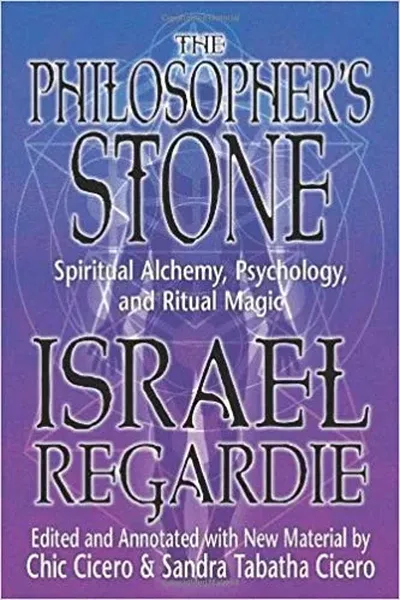
The Philosopher's Stone

 73
73

The Philosopher's Stone
Israel Regardie's "The Philosopher's Stone" remains a significant, if somewhat dense, exposition on the Western Esoteric Tradition. The strength of the work lies in Regardie's ability to connect the often-obscure symbolism of alchemy to tangible psychological processes, particularly drawing on the nascent field of depth psychology in the mid-20th century. His systematic approach, detailing the stages of the Great Work, offers a unique perspective for the serious student. However, the prose can become quite academic, occasionally obscuring the practical application for the novice magician. A particularly illustrative section is his discussion of the Nigredo, or blackening stage, which he interprets not as mere despair but as a necessary dissolution of the ego's false structures. Ultimately, it is a foundational text for understanding the theoretical underpinnings of modern magical systems.
📝 Description
73
Published in 1970, Israel Regardie's The Philosopher's Stone interprets alchemy as a psychological process.
Regardie's 1970 book, The Philosopher's Stone, does not detail physical transmutation but rather examines the Western Esoteric Tradition through its psychological and spiritual aspects. The author synthesizes various occult ideas to build a system for personal growth. He traces the historical use of alchemical symbols and shows how they relate to individual change, creating a practical guide for those on a spiritual path.
This text is valuable for students of Hermeticism, Rosicrucianism, and ceremonial magic who want to grasp the core ideas behind these practices. It will also interest those exploring the connection between psychology, especially Jungian thought on archetypes, and esoteric philosophy. Anyone seeking a structured method for self-improvement and spiritual development, drawing from historical esoteric writings, will find this book useful.
Israel Regardie, a significant figure in the 20th-century revival of Western Esotericism and associated with the Hermetic Order of the Golden Dawn, wrote The Philosopher's Stone during a time of growing interest in occultism. His work was influenced by thinkers like Carl Jung. Regardie aimed to clarify the central teachings of the Western Tradition, linking ancient alchemical processes with contemporary psychological concepts. This approach distinguished his writing from purely historical accounts or purely practical magical manuals.
💡 Why Read This Book?
• Understand the psychological interpretation of alchemical stages like Nigredo, Albedo, Citrinitas, and Rubedo, as presented in Regardie's analysis, offering a framework for personal dissolution and reintegration. • Grasp the symbolic meaning of the four elements (Earth, Air, Fire, Water) as applied to the Great Work, providing a foundational esoteric vocabulary. • Trace the historical lineage of Western Esotericism from its alchemical roots, understanding Regardie's synthesis in the context of the Hermetic Order of the Golden Dawn's teachings.
⭐ Reader Reviews
Honest opinions from readers who have explored this book.
❓ Frequently Asked Questions
Is 'The Philosopher's Stone' by Israel Regardie a practical guide to physical alchemy?
No, Regardie's "The Philosopher's Stone" primarily interprets alchemical symbolism through a psychological and spiritual lens. It uses the ancient alchemical processes as metaphors for inner transformation and spiritual development, rather than providing instructions for literal material transmutation.
What is the 'Great Work' as discussed by Regardie?
Regardie describes the 'Great Work' (Magnum Opus) as the process of spiritual enlightenment and psychological integration. It signifies the aspirant's journey toward self-realization and union with the divine, symbolized by the creation of the Philosopher's Stone.
What historical esoteric tradition does Regardie draw from?
Regardie extensively draws from the Western Esoteric Tradition, particularly Hermeticism and Rosicrucianism, and his association with the Hermetic Order of the Golden Dawn heavily influences his presentation of these teachings.
How does Regardie relate alchemy to psychology?
Regardie bridges alchemical symbolism with psychological concepts, viewing stages like Nigredo (blackening) as processes of ego dissolution and renewal, aligning with Jungian ideas of individuation and the archetypal unconscious.
When was Israel Regardie's 'The Philosopher's Stone' first published?
Israel Regardie's "The Philosopher's Stone" was first published in 1970, a significant year for the dissemination of his synthesized views on Western Esotericism.
What are the key alchemical stages mentioned in the book?
The book details the primary alchemical stages: Nigredo (blackening), Albedo (whitening), Citrinitas (yellowing), and Rubedo (reddening), interpreting each as a phase in the aspirant's psycho-spiritual journey.
🔮 Key Themes & Symbolism
The Great Work as Inner Alchemy
Regardie reinterprets the Main work not as a physical process of creating gold, but as the internal alchemical transformation of the human psyche. The stages of Nigredo, Albedo, Citrinitas, and Rubedo are presented as phases of spiritual maturation, involving dissolution of the false self, purification, illumination, and ultimately, the realization of the Higher Self. This perspective aligns the ancient art with modern psychological concepts of integration and individuation, offering a roadmap for personal spiritual evolution.
Hermetic Principles and Symbolism
The book deeply engages with the core principles of Hermeticism, particularly the axiom 'As Above, So Below.' Regardie unpacks the symbolic language of alchemy, including the four elements, the Mercurial principle, and the concepts of Sulfur and Salt, as keys to understanding the relationship between the material and spiritual realms. He demonstrates how these symbols represent fundamental forces and processes within both the cosmos and the individual consciousness.
The Role of the Higher Self
Central to Regardie's exposition is the concept of the Higher Self, the divine spark or true spiritual nature within each individual. The Philosopher's Stone is presented as the attainment of conscious union with this Higher Self. Regardie discusses various esoteric practices and contemplative techniques, including meditation and visualization, as means to connect with and manifest the qualities of this divine aspect in daily life.
Esoteric Psychology and Jungian Parallels
Regardie's work anticipates and engages with the psychological interpretations of alchemy that would become prominent. He draws explicit parallels between alchemical symbolism and the processes of the unconscious mind, suggesting that alchemical texts serve as ancient allegories for psychological integration. This approach makes the esoteric teachings accessible to a modern audience concerned with mental and spiritual well-being.
💬 Memorable Quotes
Direct passages from the work, attributed to the author.
“The Great Work is the transformation of the individual.”
— This statement expresses Regardie's central thesis: alchemy is fundamentally a process of inner change, aimed at spiritual perfection and psychological wholeness, rather than external material alteration.
“Nigredo signifies the necessary dissolution of the old self.”
— This interpretation of the blackening stage highlights its role as a crucial, albeit challenging, phase of ego-death and the breaking down of limiting beliefs before spiritual rebirth can occur.
“The elements are fundamental forces within consciousness.”
— This frames the classical elements (Fire, Water, Air, Earth) not just as physical components but as symbolic representations of psychic energies and states that can be understood and balanced.
“The Philosopher's Stone represents the attainment of the Higher Self.”
— This defines the ultimate goal of the alchemical quest as the conscious realization and integration of one's divine essence or true spiritual identity.
“Alchemy is a symbolic language of the soul's journey.”
— This perspective emphasizes the allegorical nature of alchemical texts, presenting them as profound narratives detailing the path of spiritual awakening and self-discovery.
🌙 Esoteric Significance
Tradition
Regardie's work is firmly rooted in the Western Esoteric Tradition, particularly Hermeticism, Rosicrucianism, and ceremonial magic derived from the Hermetic Order of the Golden Dawn. It synthesizes these streams, presenting alchemy as a symbolic language for psychological and spiritual transformation. The book fits within this lineage by elaborating on the Great Work, a central concept in Hermetic and alchemical literature, but notably emphasizes its psychological and spiritual dimensions over purely material or ritualistic aspects.
Symbolism
Key symbols explored include the four elements (Fire, Water, Air, Earth), representing fundamental psychic forces and states of consciousness. The stages of the alchemical process—Nigredo (blackening), Albedo (whitening), Citrinitas (yellowing), and Rubedo (reddening)—are interpreted as metaphorical stages of ego dissolution, purification, illumination, and spiritual integration. The Philosopher's Stone itself symbolizes the attainment of the perfected self or conscious union with the Higher Self.
Modern Relevance
Contemporary practitioners of Hermeticism, Jungian psychology, and various forms of Western magic continue to draw upon Regardie's work. His interpretation of alchemy as a psychological process appeals to modern therapeutic and self-help approaches that utilize archetypal imagery and inner transformation. Thinkers and schools exploring consciousness studies, comparative religion, and depth psychology find his synthesis a valuable bridge between ancient wisdom and modern understanding of the human psyche.
👥 Who Should Read This Book
• Students of Hermeticism and Rosicrucianism seeking to understand the symbolic language of alchemy as applied to personal development. • Practitioners of ceremonial magic interested in the theoretical underpinnings of the Great Work and its psychological correlates. • Readers exploring the intersection of Jungian psychology and esoteric traditions, looking for parallels between archetypal symbolism and spiritual growth.
📜 Historical Context
Published in 1970, Israel Regardie's "The Philosopher's Stone" emerged during a resurgence of interest in Western Esotericism, heavily influenced by the psychological theories of Carl Jung and the enduring legacy of the Hermetic Order of the Golden Dawn, of which Regardie was a prominent member. The mid-20th century saw a move away from purely occultist interpretations towards a more psychological understanding of esoteric traditions. Regardie’s work positioned itself within this intellectual current, bridging ancient alchemical symbolism with Jung's concepts of archetypes and individuation. While other authors focused on historical accounts or practical magical techniques, Regardie aimed to synthesize these into a coherent system for personal development. His approach offered a spiritual and psychological framework distinct from the more dogmatic religious movements or the burgeoning New Age philosophies of the era, providing a grounded, albeit complex, interpretation of the esoteric path.
📔 Journal Prompts
The symbolic meaning of the Nigredo stage in your personal journey.
Reflect on the interplay of the four elements within your consciousness.
Your conception of the Higher Self and its influence.
The stages of the Great Work and their personal application.
Interpretations of alchemical symbols relevant to modern psychological states.
🗂️ Glossary
The Great Work (Main work)
The central process of alchemy, understood by Regardie as the spiritual and psychological transformation of the individual towards enlightenment and self-realization.
Nigredo
The first stage of the alchemical process, often symbolized by blackening or putrefaction, representing dissolution, chaos, and the breakdown of the old self.
Albedo
The second stage, or 'whitening,' symbolizing purification, washing away impurities, and the emergence of a purified consciousness.
Citrinitas
The 'yellowing' stage, often seen as a transition phase linking purification to final perfection, sometimes associated with dawning illumination.
Rubedo
The final stage, or 'reddening,' representing completion, integration, and the attainment of the perfected state or spiritual union.
Hermeticism
An esoteric tradition based on writings attributed to Hermes Trismegistus, emphasizing principles like 'As Above, So Below' and spiritual wisdom.
Higher Self
The divine spark or true spiritual essence within an individual, the ultimate goal of attainment in many esoteric traditions.
🔮 Readers Also Liked
Browse all →








More by Israel Regardie
All books →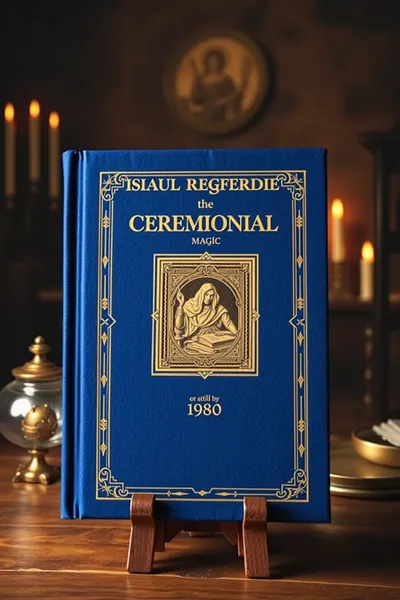



More Free Alchemy & Hermeticism Books
View all →