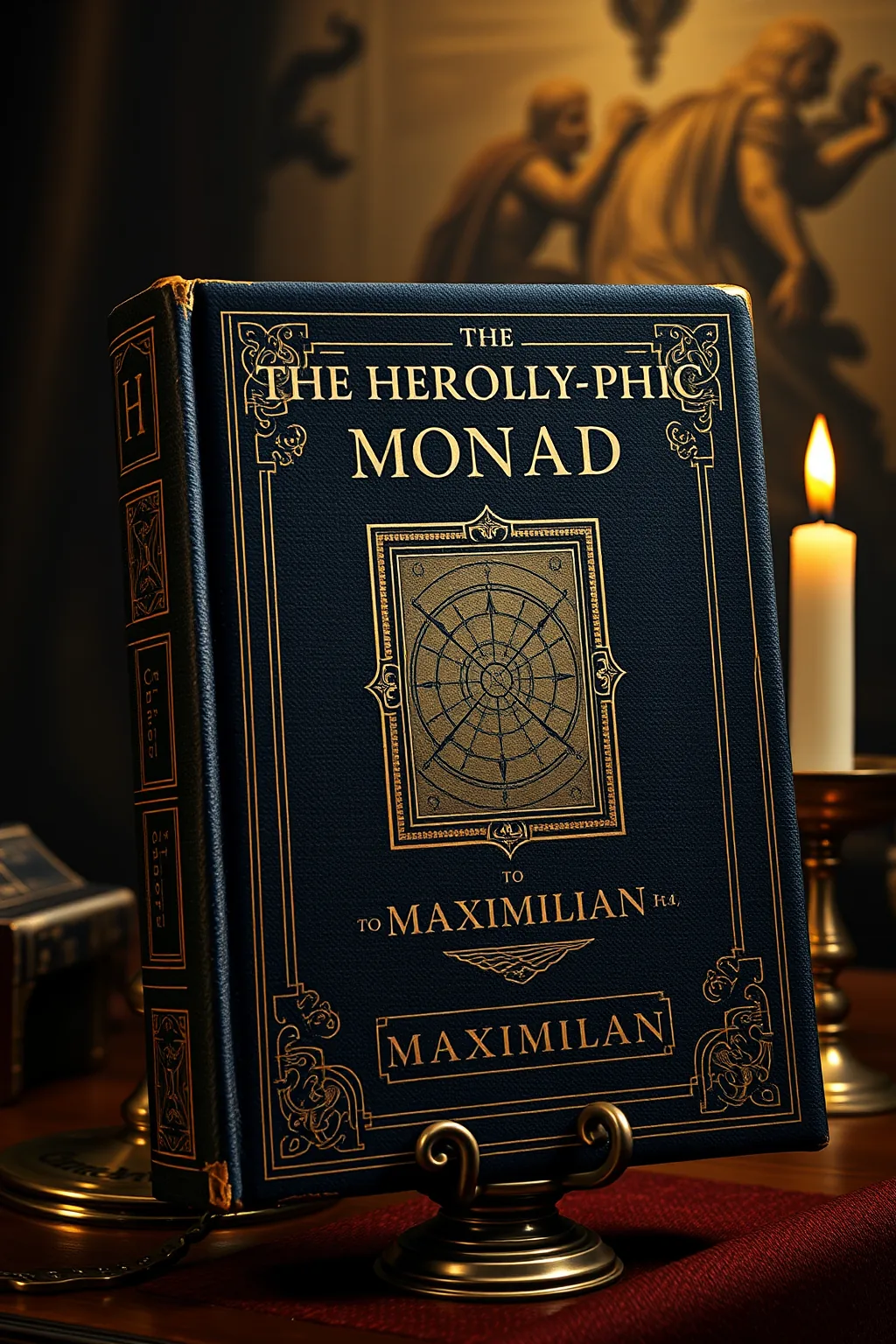
The Hieroglyphic Monad
 80
80

The Hieroglyphic Monad


Isolde Whitaker, Sacred Texts Editor, states: John Dee's 'The Hieroglyphic Monad' is an indispensable cornerstone for any serious student of Hermeticism and Renaissance esotericism. Its genius lies in its tightly woven symbolic logic, presenting a unique alchemical 'alphabet' that Dee believed held universal keys. While undeniably dense, the work rewards patient study with profound insights into the interconnectedness of all things, from the celestial spheres to the alchemical transformation of matter. This is not a casual read, but a profound intellectual and spiritual undertaking, essential for understanding Dee's broader magical philosophy and the alchemical currents of his era.
📝 Description
80
John Dee presented 'The Hieroglyphic Monad' to Emperor Maximilian II in 1564, outlining his alchemical system.
John Dee's 'The Hieroglyphic Monad' is a 1564 work that lays out his personal alchemical philosophy through a complex symbolic system. Dee, an advisor to Queen Elizabeth I, created this text as a unified key to understanding the cosmos, divinity, and the fundamental unity of all things. The book uses a series of diagrams and philosophical arguments to demonstrate these connections.
Its presentation to Emperor Maximilian II highlights its importance at the time. The Monad itself is a central symbol representing this sought-after unity. Dee's writing is dense with numerological correspondences and philosophical propositions, reflecting a Renaissance desire to synthesize magic, theology, and natural philosophy. Readers should anticipate a challenging text, as Dee himself acknowledged its potential for obscurity, but one that promises illumination for those dedicated to the Western Esoteric Tradition.
Published in 1564, 'The Hieroglyphic Monad' belongs to the Hermetic and alchemical traditions prominent in the Renaissance. It draws on Neoplatonic ideas of divine unity and the macrocosm/microcosm relationship, common in earlier Hermetic texts. Dee's unique contribution is his structured symbolic language, the Monad, which he intended as a universal key. This work reflects the era's intellectual climate, where scholars sought to reconcile Christian theology with ancient philosophies and magical practices, aiming for a comprehensive understanding of creation.
✍️ Author
John Dee to MAXIMILIAN
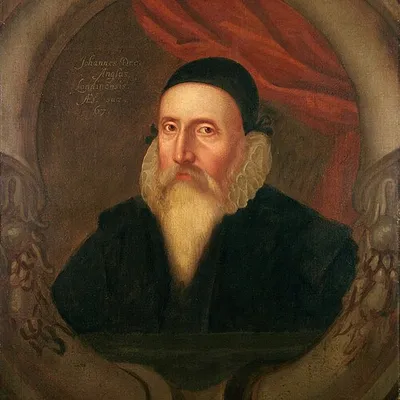
John Dee (13 July 1527 – December 1608 or March 1609) was an English mathematician, astronomer, teacher, astrologer, occultist, and alchemist. He was the court astronomer for, and advisor to, Elizabeth I, and spent much of his time on alchemy, divination, …
💡 Why Read This Book?
Unravel the esoteric cosmology of one of history's most influential occultists. 'The Hieroglyphic Monad' offers a unique symbolic language for understanding alchemy, Hermeticism, and the divine unity. It's an essential read for seekers of hidden knowledge, alchemical practitioners, and scholars of Renaissance magic who crave deep intellectual and spiritual engagement.
⭐ Reader Reviews
Honest opinions from readers who have explored this book.
❓ Frequently Asked Questions
What is the primary purpose of The Hieroglyphic Monad?
Its primary purpose is to present a unified symbolic system, the Monad, which Dee believed held the key to understanding the interconnectedness of the universe, alchemical processes, and divine principles, serving as a 'key' to deeper magical and philosophical truths.
Who was John Dee and why is this work significant?
John Dee was a prominent Elizabethan mathematician, astronomer, astrologer, and occultist, highly regarded in his time. 'The Hieroglyphic Monad' is significant as it represents his personal system of Hermetic philosophy and alchemical symbolism, a rare glimpse into his unique intellectual framework.
Is this book suitable for beginners in occult studies?
While foundational, 'The Hieroglyphic Monad' is considered an advanced text due to its complex symbolism and dense philosophical arguments. Beginners might benefit from introductory materials on Hermeticism and alchemy before delving into Dee's intricate work.
What is the 'Monad' in Dee's work?
The Monad is a central symbolic construct in Dee's work, a complex geometric figure and ideogram that encapsulates various alchemical and cosmological principles, representing the divine unity and the process of creation and transformation.
Does the book contain practical alchemical recipes?
No, 'The Hieroglyphic Monad' is primarily a theoretical and philosophical work. It outlines symbolic correspondences and alchemical principles rather than providing practical instructions for laboratory operations.
🔮 Key Themes & Symbolism
The Unified Monad: A Symbolic Key
Dee's 'Monad' is not merely a geometric figure but a sophisticated ideogram representing the divine unity and the intricate interconnectedness of all creation. This theme explores how Dee constructs a universal symbolic language, drawing from mathematics, astronomy, and alchemical principles, to reveal the underlying harmony of existence. The Monad serves as a conceptual lens through which the reader can perceive the divine blueprint and the processes of transformation inherent in both the cosmos and the human soul.
Alchemical Transformation and Spiritual Ascent
This theme looks at Dee's unique interpretation of alchemical processes as a metaphor for spiritual purification and enlightenment. The 'Great Work' is presented not just as the transmutation of base metals into gold, but as the elevation of the human spirit through stages of understanding and integration. Dee's symbolism elucidates the challenges and rewards of this inner journey, emphasizing the necessity of divine grace and profound intellectual labor in achieving spiritual perfection and union with the divine.
The Hermetic Synthesis of Science and Magic
John Dee operated at the nexus of nascent scientific inquiry and traditional occult arts. 'The Hieroglyphic Monad' exemplifies this synthesis, combining mathematical precision, astrological observations, and mystical philosophy into a cohesive worldview. This theme examines how Dee sought to reconcile empirical knowledge with magical understanding, proposing that true wisdom lies in recognizing the divine order that governs both the material and immaterial realms, and that magic is a natural science governed by divine laws.
💬 Memorable Quotes
Direct passages from the work, attributed to the author.
“Here the vulgar eye will see nothing but Obscurity and will despair considerably.”
— This prescient warning highlights the esoteric nature of Dee's work, suggesting that its profound truths are not readily accessible to the uninitiated, requiring dedicated study and a prepared mind to decipher.
“For the Monad is the very foundation of all things.”
— This emphasizes the central importance of Dee's Monad as the primordial unity, the source from which all existence emanates and to which all things ultimately return, forming the bedrock of his cosmological system.
“The knowledge of the Monad doth open the understanding.”
— This suggests that grasping the concept and symbolism of the Monad is not merely an intellectual exercise, but a transformative process that unlocks deeper faculties of perception and comprehension.
“This figure doth shewe the true number of the world.”
— This points to the numerological and cosmological significance of Dee's Monad, asserting its role in revealing the divine order and mathematical structure that underpins the entire universe.
💡 Key Ideas
Editorial paraphrase of the work's core concepts — not direct quotes.
And that the true and most secret vertues of all things created, may by this art, be discovered.
This quote captures the alchemical ambition of the text, promising the revelation of hidden properties and the fundamental essence of all created things through the symbolic language presented.
🌙 Esoteric Significance
Tradition
This work is a core part of Hermetic philosophy and Renaissance alchemy. It represents John Dee's unique synthesis of these traditions, incorporating elements of Kabbalah, Neoplatonism, and Pythagorean mathematics. Dee sought to articulate a universal symbolic language that could unlock the divine secrets of creation and the processes of alchemical transformation, positioning the Monad as a key to understanding the interconnectedness of all existence and facilitating spiritual ascent.
Symbolism
The Monad itself is a body of symbolism, drawing from geometric forms, celestial bodies, and alchemical elements. Dee intricately combines symbols for the Sun, Moon, Mercury, fire, water, and various alchemical operations. Each element within the Monad's construction is imbued with layers of meaning, intended to represent cosmic principles, stages of alchemical work, and the divine unity that underlies all phenomena, serving as a visual 'alphabet' for occult understanding.
Modern Relevance
In contemporary esoteric studies, 'The Hieroglyphic Monad' remains profoundly relevant for its exploration of symbolic logic, universal correspondences, and the pursuit of holistic understanding. It offers practitioners a sophisticated framework for contemplating the interconnectedness of the macrocosm and microcosm, and for engaging with alchemical principles on a conceptual and spiritual level. Dee's work continues to inspire those seeking to integrate intellectual rigor with mystical insight in their personal paths of spiritual development and magical exploration.
👥 Who Should Read This Book
This key work is essential for scholars of Renaissance occultism and Hermeticism seeking to understand John Dee's unique philosophical system. Alchemists and practitioners of Western Esotericism will find its dense symbolism and theoretical framework useful for deepening their understanding of transformation and divine unity. Aspiring seekers of hidden knowledge, particularly those interested in the intersection of science, magic, and philosophy, will discover a challenging yet profoundly rewarding intellectual and spiritual journey. It is recommended for those with a foundational understanding of esoteric concepts.
📜 Historical Context
Penned in 1564, 'The Hieroglyphic Monad' emerged during the vibrant intellectual ferment of the English Renaissance, a period marked by a fervent rediscovery of classical texts and a burgeoning interest in Hermeticism, Neoplatonism, and alchemy. John Dee, a polymath and trusted advisor to Queen Elizabeth I, was at the forefront of this intellectual movement. The era witnessed a unique blending of empirical observation with mystical speculation, where the study of the natural world was intrinsically linked to understanding divine providence and occult forces. Dee's work reflects this syncretic worldview, attempting to create a universal language of symbols that could bridge the gap between the material and spiritual, the scientific and the magical, offering a clear insights into the intellectual and spiritual range of Elizabethan England.
📔 Journal Prompts
Meditate on the central 'Monad' symbol. What initial impressions or intuitive meanings arise for you?
How does Dee's warning about 'obscurity' resonate with your own experiences in seeking deeper knowledge?
Explore the relationship between the geometric elements and alchemical principles presented in the text. What connections do you perceive?
Consider the idea of a universal symbolic language. How might such a language function in understanding the world and ourselves?
Reflect on the concept of 'spiritual ascent' as presented through alchemical transformation. What are the parallels in your own life journey?
🗂️ Glossary
Monad
In Dee's work, a complex symbolic construct representing the divine unity, the primordial source of all existence, and a key to understanding cosmic principles and alchemical processes.
Hermeticism
A philosophical and religious tradition based on the writings attributed to Hermes Trismegistus, emphasizing divine wisdom, the interconnectedness of all things, and the pursuit of gnosis (knowledge).
Alchemy
An ancient proto-scientific and philosophical tradition concerned with the transmutation of substances, the search for the elixir of life, and spiritual purification, often understood metaphorically.
Vulgar
In an esoteric context, referring to the common, uninitiated, or mundane understanding, contrasted with the specialized or enlightened knowledge of the adept.
Gnosis
Direct spiritual knowledge or intuitive insight, particularly concerning divine truths and the nature of reality, often achieved through mystical experience or esoteric study.
This book appears in 7 collections
🔮 Readers Also Liked
Browse all →







From the “Occultism” Collection
View all →






More Free Alchemy & Hermeticism Books
View all →