The Hermetic Experience
 81
81

The Hermetic Experience
Elias Rubenstein’s "The Hermetic Experience" attempts a comprehensive overview of a tradition often shrouded in obscurity. Rubenstein’s strength lies in his clear articulation of complex ideas, particularly his explanation of the Hermetic principle of correspondence, which he illustrates effectively by referencing the macrocosm and microcosm. The work provides a solid foundation for newcomers to the subject. However, the book occasionally feels more like a historical survey than a deeply experiential guide, which the title might suggest. While the philosophical underpinnings are well-covered, the practical application sometimes remains abstract. For instance, the section on spiritual alchemy, while informative, could benefit from more concrete exercises or case studies to bridge theory and practice. Rubenstein succeeds in making Hermeticism intellectually approachable, but the 'experience' aspect could be further amplified. It’s a valuable primer for the serious student of Western esotericism.
📝 Description
81
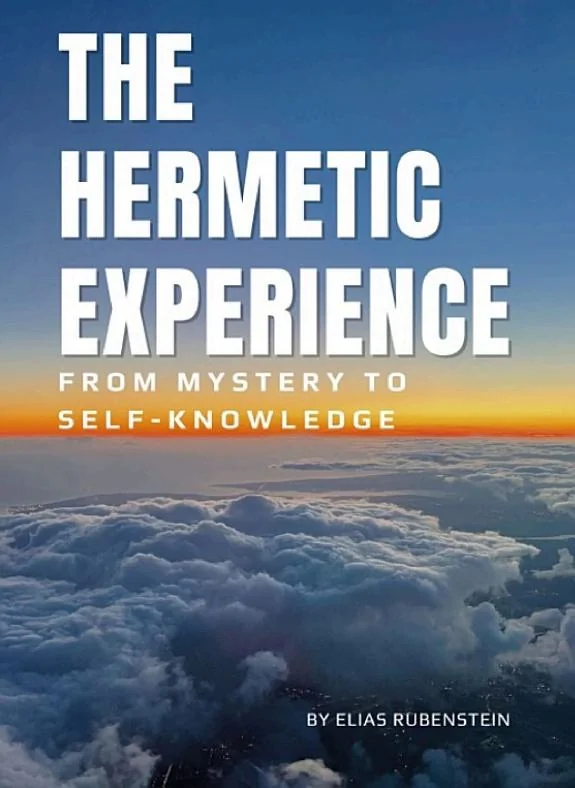
Elias Rubenstein's 2019 book, The Hermetic Experience, clarifies Hermetic philosophy for modern readers.
Published in 2019, Elias Rubenstein's The Hermetic Experience aims to make the core ideas of Hermetic philosophy accessible. The book traces the historical development of Hermetic thought, starting from its ancient roots and following its influence through later mystical and philosophical traditions. Rubenstein seeks to explain complex esoteric concepts in a way that resonates with contemporary understanding, offering a structured introduction to the subject.
This work is intended for individuals interested in Western esotericism, comparative religion, or the history of ideas. It serves as a guide for those who connect historical philosophy with personal growth and intellectual inquiry. Readers will find value in its approach to spiritual and philosophical exploration, emphasizing both understanding and practical application.
The Hermetic Experience situates Hermeticism within its historical context, referencing figures like Hermes Trismegistus and the Neoplatonic schools. It acknowledges the rediscovery of Hermetic texts during the Renaissance, such as the Corpus Hermeticum, and their effect on thinkers like Marsilio Ficino. The book differentiates Hermeticism from other ancient traditions like Gnosticism, charting its evolution through different historical periods and its place within the broader spectrum of esoteric thought.
💡 Why Read This Book?
• Gain a foundational understanding of Hermetic principles, such as 'As Above, So Below', directly from Rubenstein's systematic exposition, providing a unique framework for interpreting esoteric texts and symbols. • Explore the historical trajectory of Hermetic thought, tracing its influence from ancient Egypt and Greece through the Renaissance, as detailed in the book's historical context sections. • Discover practical applications of Hermetic philosophy for personal growth, learning how concepts like spiritual alchemy are presented as tools for inner transformation.
⭐ Reader Reviews
Honest opinions from readers who have explored this book.
❓ Frequently Asked Questions
What is the primary focus of Elias Rubenstein's 'The Hermetic Experience'?
The book primarily focuses on exploring and demystifying Hermetic philosophy, tracing its historical roots and explaining its core concepts for contemporary readers seeking spiritual insight and self-discovery.
When was 'The Hermetic Experience' first published?
Elias Rubenstein's 'The Hermetic Experience' was first published on May 1, 2024.
Who is considered the central figure associated with Hermeticism?
The central figure associated with Hermeticism is Hermes Trismegistus, a syncretic deity and philosopher whose teachings form the basis of the Hermetic tradition.
What does the Hermetic axiom 'As Above, So Below' signify?
This fundamental Hermetic axiom signifies that the principles governing the celestial or spiritual realms are mirrored in the terrestrial or material world, suggesting a universal interconnectedness.
Is 'The Hermetic Experience' suitable for beginners in esoteric studies?
Yes, the book is designed to make Hermetic concepts accessible, serving as a solid introduction for beginners interested in Western esotericism and its philosophical underpinnings.
How does the book connect Hermeticism to modern life?
Rubenstein bridges ancient Hermetic wisdom with contemporary challenges by presenting its principles as tools for self-discovery and personal growth applicable in modern contexts.
🔮 Key Themes & Symbolism
The Hermetic Macrocosm-Microcosm
The book extensively explores the Hermetic principle of correspondence, often summarized as 'As Above, So Below.' This concept posits a fundamental unity between the celestial, spiritual realms and the earthly, material plane. Rubenstein illustrates how this interconnectedness is not merely a philosophical abstraction but a guiding principle for understanding the universe and one's place within it. The text emphasizes that by studying the patterns and laws of the greater universe (macrocosm), one can gain insight into the workings of the individual human being (microcosm), and vice versa.
Spiritual Alchemy and Inner Transformation
Central to 'The Hermetic Experience' is the interpretation of alchemy not solely as a metallurgical process but as a profound metaphor for spiritual purification and self-realization. Rubenstein details how the stages of alchemical work—dissolution, purification, and reintegration—parallel the human journey of shedding egoic limitations and transforming consciousness. This inner alchemy is presented as a practical path toward achieving spiritual wholeness and a deeper connection with the divine, moving from a base state to a perfected, enlightened condition.
The Path to Gnosis
The work explores the Hermetic pursuit of Gnosis, understood as direct, intuitive knowledge of the divine or ultimate reality, rather than mere intellectual assent. Rubenstein outlines how Hermetic practices and philosophical contemplation are designed to awaken the dormant spiritual faculties within the individual. This direct apprehension of truth is presented as the ultimate goal of the Hermetic path, leading to liberation and a profound understanding of one's true nature and cosmic significance. The text highlights Gnosis as an experiential state.
Hermes Trismegistus and Ancient Wisdom
Rubenstein grounds the discussion in the figure of Hermes Trismegistus, a legendary sage credited with transmitting profound esoteric knowledge. The book traces the origins of Hermeticism to ancient Egyptian and Greek traditions, emphasizing its role as a repository of primordial wisdom. It discusses how the *Corpus Hermeticum*, a collection of texts attributed to Hermes, served as a foundational source for Western esoteric thought, influencing philosophy, religion, and mysticism for centuries.
💬 Memorable Quotes
Direct passages from the work, attributed to the author.
“The universe is a mirror reflecting the divine mind, and within us lies a spark of that same consciousness.”
— This statement expresses the Hermetic belief in the interconnectedness of all things and the divine essence present within the individual. It suggests that self-knowledge is intrinsically linked to cosmic understanding, as the microcosm reflects the macrocosm.
“Spiritual alchemy is the art of transmuting the lead of the ego into the gold of the enlightened self.”
— This interpretation highlights the book's focus on spiritual alchemy as a process of inner purification. It contrasts the limitations of the ego with the potential for higher consciousness, framing personal transformation as a sacred art.
💡 Key Ideas
Editorial paraphrase of the work's core concepts — not direct quotes.
To know the All is to know oneself, for the All resides within.
This paraphrase emphasizes the Hermetic concept of unity and the presence of the divine within. It suggests that the path to universal understanding is an inward journey of self-discovery.
The principles of the heavens are inscribed upon the fabric of our being.
This quote directly references the 'As Above, So Below' axiom, illustrating the Hermetic belief that cosmic laws and patterns are mirrored in the human constitution and experience.
Gnosis is not learned from books alone, but awakened through direct experience and inner contemplation.
This paraphrase underscores the experiential nature of Gnosis in Hermeticism, distinguishing it from purely academic or theoretical knowledge and pointing towards intuitive insight.
🌙 Esoteric Significance
Tradition
This work firmly belongs to the Western Esoteric Tradition, specifically within the Hermetic lineage. It draws directly from the philosophical and spiritual teachings attributed to Hermes Trismegistus, as found in texts like the *Corpus Hermeticum*. Rubenstein's approach aims to clarify this tradition for modern seekers, positioning Hermeticism as a distinct path focused on cosmic principles, divine knowledge (Gnosis), and personal transformation, often differentiating it from overtly magical practices or purely theological doctrines.
Symbolism
Key symbols explored include the Caduceus of Hermes, representing balance, union of opposites, and the flow of cosmic energy. The Ouroboros, the serpent eating its tail, symbolizes eternity, cyclical nature, and the unity of all things. The Emerald Tablet, a foundational Hermetic text, represents the distillation of cosmic laws and the principle of 'As Above, So Below,' serving as a symbolic blueprint for understanding universal principles.
Modern Relevance
Contemporary practitioners of Western Esotericism, including students of ceremonial magic, Rosicrucianism, and various forms of occult philosophy, find foundational concepts within Rubenstein's work. Thinkers and groups focused on consciousness studies, spiritual psychology, and integral spirituality also draw upon Hermeticism's emphasis on inner transformation and cosmic interconnectedness, seeking to integrate its ancient wisdom into modern frameworks for personal and collective evolution.
👥 Who Should Read This Book
• Aspiring students of Western Esotericism seeking a clear, foundational text on Hermetic philosophy and its historical development. • Individuals interested in comparative religion and philosophy who wish to understand the unique contributions of Hermeticism to spiritual thought. • Seekers of personal growth and self-discovery looking for a framework that connects universal principles with inner transformation.
📜 Historical Context
Elias Rubenstein’s "The Hermetic Experience" emerges from a long lineage of scholarship and esoteric revivalism. While published in 2024, its subject matter is deeply rooted in the Renaissance rediscovery of the *Corpus Hermeticum* around the 15th century, an important moment that significantly influenced Neoplatonism and Western magic. This period saw thinkers like Marsilio Ficino championing these ancient texts, integrating them into a Christianized Neoplatonic framework, often in dialogue with and sometimes in contrast to the burgeoning interest in Kabbalah. The book acknowledges this intellectual ferment, situating Hermeticism amidst other mystical traditions that flourished during antiquity and the Middle Ages. Its emergence in 2024 places it within a contemporary landscape where interest in esoteric philosophy, alternative spirituality, and comparative mysticism continues to grow, often seeking direct engagement with foundational texts and historical interpretations.
📔 Journal Prompts
The principle of 'As Above, So Below': how do cosmic patterns manifest in your daily life?
Reflect on the concept of spiritual alchemy as presented in the book: what aspects of yourself require transmutation?
Consider the Hermetic pursuit of Gnosis: what are your current pathways to intuitive understanding?
The role of Hermes Trismegistus: how does his attributed wisdom influence your perception of ancient knowledge?
Analyze the macrocosm-microcosm relationship: what parallels do you observe between universal laws and your personal experiences?
🗂️ Glossary
Hermeticism
A religious and philosophical tradition based primarily upon writings attributed to Hermes Trismegistus, a syncretic combination of Greek deity Hermes and Egyptian Thoth. It emphasizes esoteric knowledge, divine wisdom, and the interconnectedness of the cosmos.
Corpus Hermeticum
A collection of Greek philosophical and religious texts, dating from the 1st to the 3rd century AD, which are attributed to Hermes Trismegistus. It forms the core literature of Hermetic philosophy.
As Above, So Below
A fundamental Hermetic axiom, originating from the Emerald Tablet, signifying the correspondence between the spiritual/celestial realm (macrocosm) and the material/terrestrial realm (microcosm).
Gnosis
Greek for 'knowledge,' referring in esoteric contexts to direct, intuitive, or spiritual knowledge of divine mysteries, often seen as salvific or liberating.
Nous
The Greek term for intellect or mind, often used in Hermeticism to refer to the divine mind or cosmic intellect, the source of all creation and knowledge.
Spiritual Alchemy
The Hermetic practice of inner transformation, using alchemical metaphors to describe the purification, refinement, and perfection of the human soul or consciousness.
Macrocosm
The 'great world' or universe, as opposed to the 'little world' or microcosm (the human being).
This book appears in 1 collection
🔮 Readers Also Liked
Browse all →









From the “Hermetic Alchemy” Collection
View all →








More Free Alchemy & Hermeticism Books
View all →