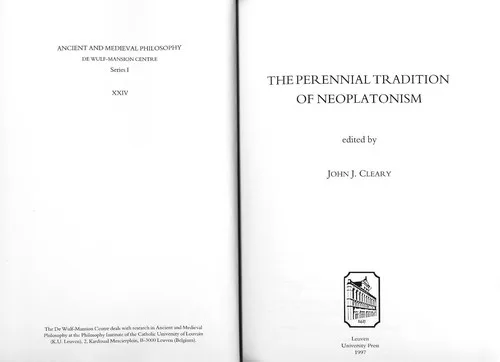
The Arcane Formulas: Or Mental Alchemy
 78
78

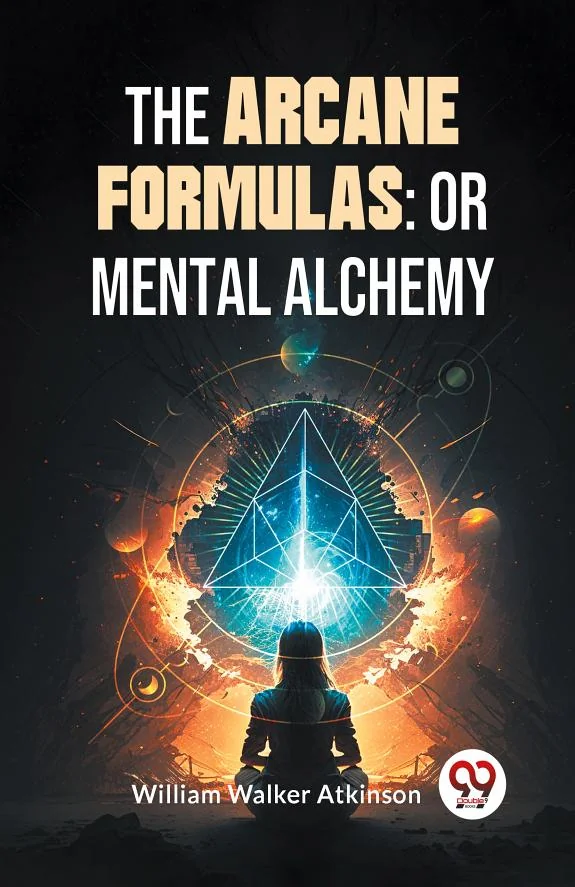
The Arcane Formulas: Or Mental Alchemy
William Walker Atkinson's "The Arcane Formulas: Or Mental Alchemy" presents a compelling, if stark, blueprint for mental self-governance. Its strength lies in its directness; Atkinson doesn't shy away from presenting mental discipline as a rigorous practice. The chapter on "The Control of Thought" offers particularly lucid guidance on identifying and redirecting errant mental currents, a crucial skill for anyone seeking to align their inner state with their aspirations. However, the text occasionally suffers from a certain rigidity. While advocating for mental flexibility, the prescriptive nature of some exercises can feel overly formulaic, potentially overlooking the nuanced emotional states that often accompany thought. A passage discussing the "Will-Force" as a trainable faculty exemplifies this: it's practical, but perhaps undersells the complex interplay of desire, fear, and habit that truly governs volition. Despite this, the book remains a valuable, no-nonsense guide to the mechanics of focused intention.
📝 Description
78
William Walker Atkinson's 1911 book explains mental alchemy as a science of directing the mind's creative power.
Published in 1911, "The Arcane Formulas: Or Mental Alchemy" by William Walker Atkinson is a manual for psychological transformation. Atkinson, a key figure in the New Thought movement, presents mental alchemy not as vague philosophy but as a practical science. He details methods for cultivating specific mental states, influencing one's environment, and achieving goals through focused thought. The book is for individuals seeking to master their inner lives and external situations. It appeals to those interested in applying psychological principles for self-improvement and spiritual growth.
Readers will find direct instruction and clear methodologies for understanding mental causation. Atkinson's work is valuable for students of metaphysics and practical psychology who appreciate a non-dogmatic approach. It suggests that disciplined thought is a force capable of shaping reality. The book elaborates on applied psychology as a tool for personal development.
Emerging in the early 20th century, "The Arcane Formulas" coincided with a surge of interest in mental science and esoteric thought. Atkinson, writing prolifically within the New Thought milieu, connected Western hermetic traditions with burgeoning psychological research. This period saw thinkers exploring the mind's potential to influence reality, drawing from diverse sources including Eastern philosophies and Western occultism. Atkinson's contribution was to frame these ideas as systematic principles for practical application, accessible to the earnest student.
💡 Why Read This Book?
• Learn the core principles of "Mental Causation" as detailed by Atkinson in the early 20th century, understanding how specific thought patterns are proposed to influence external reality. • Acquire practical "Applied Psychology" techniques for cultivating focused "Concentration" and potent "Visualization," directly from Atkinson's methods for achieving personal goals. • Develop an understanding of "Mental Habits" and how to consciously reshape them, offering a structured approach to personal transformation that moves beyond abstract concepts.
⭐ Reader Reviews
Honest opinions from readers who have explored this book.
❓ Frequently Asked Questions
What is "Mental Alchemy" according to William Walker Atkinson?
William Walker Atkinson defines "Mental Alchemy" as the art and science of transforming one's mental states to reshape one's reality and achieve personal growth. It involves consciously directing thought and will-power to bring about desired changes, a concept he detailed in his 1911 work.
When was "The Arcane Formulas" first published?
"The Arcane Formulas: Or Mental Alchemy" by William Walker Atkinson was first published in 1911, making it a foundational text from the early New Thought movement.
What are the main techniques discussed in "The Arcane Formulas"?
The book primarily discusses techniques centered around "Concentration," "Visualization," the cultivation of "Will-Force," and the systematic modification of "Mental Habits" to achieve specific outcomes.
Is this book suitable for beginners in metaphysical studies?
Yes, the book is suitable for beginners interested in the practical application of mental sciences. Atkinson's clear, direct style makes complex ideas accessible, though it requires diligent practice of the outlined methods.
How does Atkinson connect thought to external reality?
Atkinson posits "Mental Causation," suggesting that focused thoughts act as energetic forces or vibrations that influence the external world, attracting corresponding circumstances and events through principles akin to the Law of Attraction.
What is the "New Thought" movement, and how does Atkinson relate to it?
The New Thought movement is a spiritual, philosophical, and mental healing movement that emerged in the 19th century, emphasizing the power of positive thinking and divine potential within each individual. Atkinson was a highly influential author and proponent of its core tenets.
🔮 Key Themes & Symbolism
Mental Causation and Reality
Atkinson posits that thoughts are not mere ephemeral occurrences but potent forces that directly influence and shape one's external reality. This "Mental Causation" is the bedrock of his "Mental Alchemy." He argues that by understanding and directing these mental forces, individuals can actively create their circumstances, attract desired outcomes, and manifest their will. The book provides frameworks for understanding how the mind's output, through focused intention and belief, generates corresponding effects in the material world, moving beyond passive reception to active creation.
The Science of Applied Psychology
This theme frames mental development not as mystical happenstance but as a systematic science. Atkinson champions "Applied Psychology" as the practical application of mental laws for tangible results. He details specific exercises and disciplines designed to train the mind, emphasizing "Concentration" to focus mental energy and "Visualization" to create clear mental blueprints for desired outcomes. The focus is on practical, repeatable methods that anyone can implement to achieve greater control over their thoughts and, consequently, their lives.
Cultivating Will-Force and Mental Habits
Central to achieving mastery is the development of "Will-Force," which Atkinson describes as a muscle that can be strengthened through deliberate practice. This involves overcoming mental inertia and external distractions to maintain focus and execute one's intentions. Complementary to this is the conscious cultivation of "Mental Habits." The book provides insight into how ingrained patterns of thought can either limit or empower an individual, offering strategies to identify and replace detrimental habits with constructive ones, thereby altering one's trajectory.
Personal Transformation and Manifestation
The ultimate goal of "Mental Alchemy" as presented by Atkinson is personal transformation and the manifestation of one's highest potential. By mastering the mind, individuals can transcend limitations, overcome obstacles, and achieve success in various aspects of life, from personal well-being to material prosperity. The work suggests that true change originates from within, advocating for a proactive approach where individuals take responsibility for their mental states and actively use them as instruments for creating a more fulfilling existence.
💬 Memorable Quotes
Direct passages from the work, attributed to the author.
“The operator of the mental machinery is the Will.”
— This concise statement highlights Atkinson's view of the Will as the active, directing principle within the mind. It emphasizes that the Will is not a passive observer but the executive force that drives mental processes and brings about intended results.
“Concentration is the ability to hold the mind fixed upon one subject.”
— This defines concentration as a skill of mental discipline, focusing on the capacity to sustain attention on a single point or idea without distraction. It is presented as a fundamental requirement for effective mental alchemy and directed thought.
“Imagination is the workshop of the mind.”
— This metaphor suggests that the imagination is the creative space where new ideas, possibilities, and realities are conceived and formed before they can be actualized through other mental faculties.
“The habit of thinking is the habit of becoming.”
— This aphorism underscores the transformative power of consistent thought patterns. Atkinson implies that our prevailing thoughts directly shape our character, destiny, and identity over time, making habit formation crucial for personal evolution.
“The power of the mind is not limited.”
— This assertion reflects the optimistic and expansive view of human potential central to New Thought. It suggests that the mind's capabilities are vast and, when properly directed, can achieve extraordinary feats.
🌙 Esoteric Significance
Tradition
Atkinson's work is deeply rooted in the Hermetic and New Thought traditions, which emphasize the principle of "As Above, So Below" and the power of the human mind as a divine spark. "The Arcane Formulas" adapts these ancient concepts into a practical system of "Mental Alchemy," focusing on the transformation of consciousness and the deliberate creation of reality through psychological discipline. It bridges esoteric principles with a more secular, applied psychological framework, making complex metaphysical ideas accessible for personal empowerment.
Symbolism
While "The Arcane Formulas" is more focused on psychological mechanisms than overt symbolism, the concept of "Alchemy" itself is a potent symbol. It represents the alchemical process of transmutation – turning base mental "lead" (uncontrolled thoughts, negative emotions) into "gold" (focused intention, positive outcomes, spiritual growth). The mind is portrayed as the laboratory where this transformation occurs, with "Concentration" and "Will-Force" serving as the essential tools for this inner work.
Modern Relevance
Atkinson's emphasis on "Mental Causation," "Applied Psychology," and the power of "Mental Habits" finds strong echoes in contemporary self-help literature, the Law of Attraction movement, and positive psychology. Thinkers and practitioners in fields like neuro-linguistic programming (NLP) and mindfulness-based cognitive therapy (MBCT) implicitly or explicitly engage with principles Atkinson articulated over a century ago. His work remains a foundational text for understanding the modern discourse on mind-power and personal manifestation.
👥 Who Should Read This Book
• Aspiring practitioners of "Mental Alchemy" seeking a structured, foundational guide to directing their thoughts and will. Readers will gain actionable techniques for mental discipline. • Students of the New Thought movement looking to understand the practical psychological underpinnings of its core tenets, as articulated by a key early proponent. • Individuals interested in the historical development of applied psychology and self-help literature, particularly those focusing on the mind's role in shaping reality.
📜 Historical Context
William Walker Atkinson's "The Arcane Formulas: Or Mental Alchemy," first published in 1911, emerged from the fertile intellectual soil of the late 19th and early 20th centuries. This era was marked by a widespread fascination with the power of the mind, fueled by the burgeoning New Thought movement, Theosophy, and early explorations into psychology. Atkinson, a prolific writer often using pseudonyms like Yogi Ramacharaka, was a key architect of this movement, alongside contemporaries such as Prentice Mulford and Emma Curtis Hopkins. His work offered practical, systematic methods for harnessing mental energies, often contrasting with more philosophical or purely spiritual approaches. While not facing explicit censorship, the ideas of mental causation and self-directed manifestation were often viewed with skepticism by mainstream religious and scientific establishments of the time, positioning Atkinson's practical psychology as a distinct, accessible alternative to more established doctrines.
📔 Journal Prompts
The nature of "Mental Causation" and its observable effects in your daily life.
Exercises for strengthening "Concentration" on a chosen subject for 15 minutes.
Identifying and challenging one limiting "Mental Habit" this week.
Visualizing a desired outcome using the techniques described for "Applied Psychology."
Reflecting on the role of "Will-Force" in overcoming a recent mental obstacle.
🗂️ Glossary
Mental Alchemy
The art and science of transforming one's mental states and processes to influence one's reality and achieve personal growth and manifestation.
Mental Causation
The principle that thoughts, intentions, and mental states are active forces that directly produce effects and shape external circumstances.
Applied Psychology
The practical application of psychological principles and mental laws to achieve specific goals and effect desired changes in one's life.
Concentration
The ability to focus the mind's attention on a single subject, idea, or object without wavering, considered a key tool for mental control.
Visualization
The practice of creating vivid mental imagery of desired outcomes or states, used to impress the subconscious mind and attract corresponding realities.
Will-Force
The faculty of the mind that directs intention and effort; a power that can be trained and strengthened through practice to overcome inertia and achieve goals.
Mental Habits
Recurring patterns of thought, belief, and reaction that shape an individual's character and destiny. The book advocates for conscious cultivation of beneficial habits.
This book appears in 1 collection
🔮 Readers Also Liked
Browse all →








From the “Mental Alchemy” Collection
View all →









More Free Alchemy & Hermeticism Books
View all →