The Alchemist's Path
 73
73

The Alchemist's Path
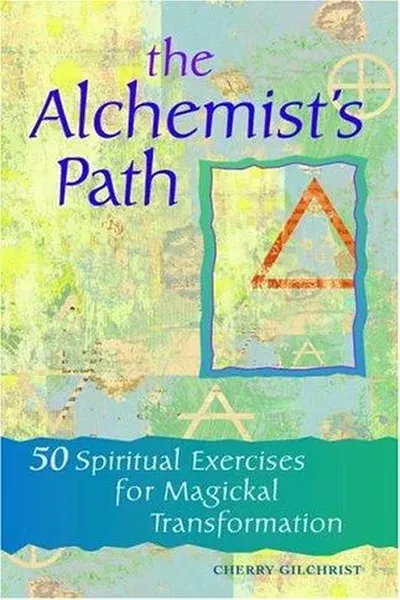
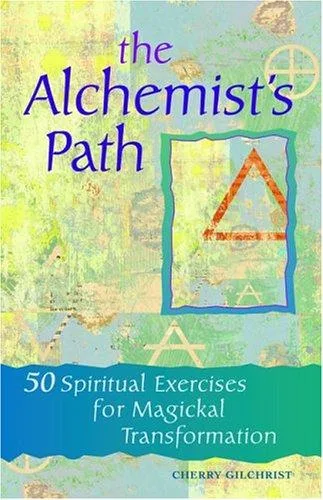
Cherry Gilchrist's The Alchemist's Path offers a refreshingly grounded perspective on a subject often shrouded in mystique. Instead of sensationalizing the pursuit of gold, Gilchrist meticulously traces the evolution of alchemical symbolism, particularly its profound connection to psychological integration. The book excels in its clear exposition of complex ideas, drawing connections between ancient practices and modern psychological theory. A particular strength lies in its detailed examination of the stages of the alchemical process, such as calcination and dissolution, as they mirror internal spiritual development. However, the work's academic rigor, while laudable, occasionally leads to a dense prose that might challenge readers seeking a more introductory overview. A passage detailing the symbolic significance of the 'coniunctio' as the union of opposites within the psyche stands out for its insightful synthesis of alchemical imagery and psychological principles. Ultimately, The Alchemist's Path is a valuable contribution for those willing to engage with its scholarly depth.
📝 Description
73
Cherry Gilchrist's 2004 book, The Alchemist's Path, examines alchemy's psychological and spiritual dimensions.
Published in 2004, The Alchemist's Path by Cherry Gilchrist moves beyond the common idea of alchemy as mere metal transmutation. Instead, the book focuses on the psychological and spiritual transformations that alchemical symbolism represents. Gilchrist's research shows how alchemical ideas spread through various cultural and intellectual movements. The writing is clear and makes complex alchemical concepts accessible to readers interested in esoteric traditions.
This work is well-suited for students and practitioners of Western esotericism, especially those interested in alchemy, Hermeticism, and Jungian psychology. It also appeals to academics studying the history of science, religion, and philosophy, as it connects historical practice with symbolic interpretation. Readers who want to grasp the deeper, transformative aspects of alchemy will find this book valuable. Artists and writers exploring archetypal imagery might also benefit.
The Alchemist's Path situates alchemy within the broader study of Western esotericism. It connects alchemical thought to Renaissance Neoplatonism and Enlightenment philosophies. By emphasizing psychological and spiritual dimensions, Gilchrist's work follows scholars who began to re-evaluate alchemy in the mid-20th century, moving beyond purely historical or occultist interpretations. The book acknowledges alchemy's role in intellectual history while highlighting its potential for personal transformation, a common concern within esoteric traditions.
💡 Why Read This Book?
• Gain a nuanced understanding of the 'Great Work' beyond mere metallurgy, recognizing its application as a metaphor for personal spiritual evolution, as detailed in the book's exploration of alchemical stages. • Decipher the symbolic meaning of the 'Philosopher's Stone' as an agent of inner transformation, a concept elucidated through specific references to its multifaceted roles in alchemical texts. • Grasp the psychological significance of alchemical processes like 'dissolution' and 'distillation' as pathways to purification and self-discovery, as presented in the book's detailed analysis.
⭐ Reader Reviews
Honest opinions from readers who have explored this book.
❓ Frequently Asked Questions
What is the primary focus of The Alchemist's Path by Cherry Gilchrist?
The book primarily focuses on the symbolic and psychological dimensions of alchemy, exploring it as a path of inner transformation and spiritual evolution rather than solely a chemical pursuit.
When was The Alchemist's Path first published?
The Alchemist's Path was first published in 2004, a period of significant interest in esoteric studies and their connection to psychology.
Does the book explain the historical process of alchemy?
Yes, while emphasizing symbolic interpretation, the book also provides historical context, tracing the evolution of alchemical ideas and practices through various eras.
What is the 'Great Work' as described in The Alchemist's Path?
The 'Great Work' (Magnum Opus) is presented as a metaphor for spiritual development and the integration of the self, moving beyond its literal interpretation of creating gold.
Is this book suitable for beginners in esoteric studies?
The book is suitable for those with some interest in esoteric traditions, offering a scholarly yet accessible exploration. Beginners might benefit from prior familiarity with basic alchemical concepts.
What esoteric traditions does The Alchemist's Path draw upon?
It draws upon Western esoteric traditions, particularly Hermeticism and its alchemical branches, often interpreting them through a Jungian psychological lens.
🔮 Key Themes & Symbolism
The Magnum Opus as Inner Work
Gilchrist reinterprets the 'Great Work' (Magnum Opus) not as a literal quest for material transmutation but as a profound metaphor for spiritual development and psychological integration. The book details how alchemical texts often encoded instructions for inner purification and the transformation of consciousness. This perspective aligns with the Hermetic principle 'As Above, So Below,' applying cosmic principles to the human psyche. The arduous stages of the alchemical process, from calcination to the final perfection, are presented as symbolic representations of the soul's journey towards wholeness and enlightenment.
Symbolism of the Philosopher's Stone
The enigmatic 'Philosopher's Stone' is examined beyond its mythical status as a substance for creating gold. In Gilchrist's analysis, it symbolizes the ultimate attainment of spiritual wisdom, inner perfection, and the unification of opposites. The book explores how this symbol represented the alchemist's goal of achieving a state of enlightened consciousness and profound understanding of the cosmos. Its symbolic power lies in representing the potential for complete transformation, both of the self and, metaphorically, of the material world.
Alchemical Processes as Psychological Stages
The book elucidates how fundamental alchemical operations—such as dissolution, distillation, and coagulation—serve as potent symbols for stages of psychological purification and self-discovery. Dissolution, for instance, represents the breakdown of ego structures and old patterns, while distillation signifies the refinement of consciousness and the extraction of essential truths. These processes are presented as a practical guide to inner work, mirroring the arduous yet ultimately rewarding journey of integrating the shadow aspects of the psyche and achieving a balanced, enlightened state.
The Coniunctio and Union of Opposites
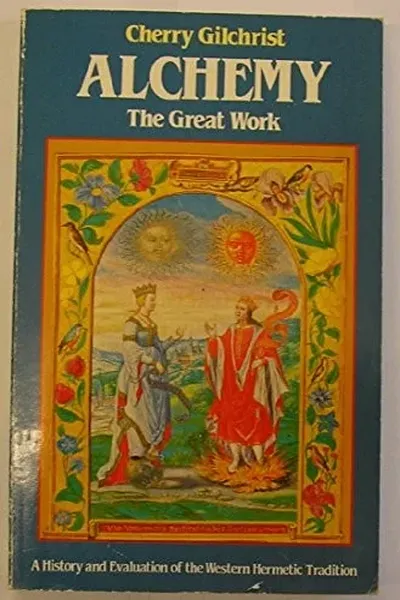
A central theme is the alchemical concept of 'coniunctio,' or the sacred marriage, which symbolizes the integration of dualistic forces within the psyche. Gilchrist explores how alchemical imagery, such as the union of the sun and moon or the king and queen, represents the reconciliation of opposing elements—masculine and feminine, conscious and unconscious, spirit and matter. Achieving this union is depicted as essential for achieving wholeness and realizing the full potential of the alchemist's transformative path.
💬 Memorable Quotes
“The alchemical laboratory was also a psychotherapeutic space.”
— This statement highlights the book's core argument: that alchemical practices were not merely experimental but served a profound purpose in the inner development and psychological healing of the practitioner.
“The stages of the Great Work mirror the soul's journey.”
— This paraphrased concept emphasizes the symbolic parallel between the alchemical process and personal spiritual growth, suggesting that the external operations were intended to facilitate internal transformation.
“The Philosopher's Stone represents ultimate spiritual attainment.”
— This interpretation focuses on the elevated meaning of the Stone, portraying it not as a material object but as a symbol for enlightened consciousness and perfected wisdom.
“Calcination and dissolution break down the old self.”
— This concept underscores the destructive yet necessary initial phases of the alchemical path, illustrating how the breakdown of ego and ingrained patterns is a prerequisite for spiritual renewal.
“The coniunctio signifies the integration of inner opposites.”
— This highlights the alchemical union of dualities as a metaphor for achieving psychological balance and wholeness by reconciling conflicting aspects of the personality.
🌙 Esoteric Significance
Tradition
This work is firmly rooted in the Western esoteric tradition, specifically Hermeticism and its alchemical permutations. It aligns with the Hermetic principle of 'As Above, So Below,' applying cosmic symbolism to the human psyche. Gilchrist departs from purely historical or dogmatic interpretations by integrating a psychological lens, particularly influenced by Jungian thought, to understand alchemical texts not just as formulae but as maps of inner transformation. It fits within a lineage that seeks to uncover universal spiritual principles encoded in ancient symbolic systems.
Symbolism
Key symbols explored include the 'Philosopher's Stone,' representing the attainment of spiritual perfection and enlightened consciousness, and the 'Great Work' itself, a metaphor for the arduous but ultimately rewarding journey of self-realization. The book also delves into the symbolism of alchemical processes like 'calcination' (purification through fire, symbolizing ego dissolution) and 'coniunctio' (the sacred marriage, representing the integration of opposing psychic forces), offering layered meanings relevant to spiritual and psychological development.
Modern Relevance
Contemporary practitioners of Jungian psychology and archetypal studies find resonance in Gilchrist's interpretation of alchemy as a symbolic language of the unconscious. Modern alchemists and spiritual seekers who focus on inner transformation rather than literal transmutation also draw heavily on this work. Thinkers and artists exploring symbolic systems, mythology, and the integration of the self continue to find The Alchemist's Path a valuable resource for understanding the enduring power of alchemical imagery in contemporary life.
👥 Who Should Read This Book
• Students of Western Esotericism seeking a scholarly yet accessible guide to the symbolic meanings of alchemy, moving beyond simplistic interpretations. • Practitioners of Jungian Psychology and those interested in archetypal symbolism who want to understand the historical roots of concepts like individuation and the integration of opposites. • Academic researchers in the history of science, religion, and philosophy looking for a nuanced exploration of how alchemical ideas influenced intellectual and cultural landscapes.
📜 Historical Context
The Alchemist's Path, published in 2004, emerged within a scholarly landscape that had, since the mid-20th century, begun to move beyond a purely historical or occultist view of alchemy. Scholars like Frances Yates had already paved the way for understanding Hermeticism and its alchemical branches as influential in Western intellectual history. Cherry Gilchrist's work built upon this foundation, particularly engaging with the psychological interpretations championed by Carl Jung, who viewed alchemical symbolism as a rich source for understanding the collective unconscious. The book's publication coincided with a sustained academic and popular interest in esoteric traditions, which Gilchrist navigated by offering a clear, critical analysis. Unlike purely historical accounts that might focus on laboratory practices or the economic implications of alchemy, Gilchrist's work prioritizes the symbolic and spiritual dimensions, positioning alchemy as a precursor to modern depth psychology. The intellectual currents of Renaissance Neoplatonism and later Enlightenment thought are explored as contexts for alchemical ideas, demonstrating its persistence across centuries of scientific and philosophical change.
📔 Journal Prompts
Reflect on the alchemical process of 'dissolution' as a metaphor for letting go of egoic attachments.
Consider the symbolism of the 'Philosopher's Stone' in relation to your own spiritual aspirations.
How might the 'coniunctio' concept inform your understanding of integrating opposing aspects of your personality?
Explore the alchemical laboratory as a 'psychotherapeutic space' in your personal journey.
Analyze the 'Emerald Tablet's' core tenets through the lens of inner transformation presented in the book.
🗂️ Glossary
Magnum Opus
Latin for 'Great Work,' referring to the process of creating the Philosopher's Stone and achieving transmutation, interpreted here as a metaphor for spiritual and psychological transformation.
Philosopher's Stone
The legendary alchemical substance believed to transmute base metals into gold or silver, or to produce the elixir of life. In this work, it symbolizes spiritual perfection and enlightened consciousness.
Calcination
An alchemical process involving heating a substance to high temperatures to reduce it to ashes. Symbolically, it represents the purification of the spirit by burning away impurities and egoic structures.
Dissolution
The alchemical process of dissolving solids into liquids. Symbolically, it represents the breakdown of fixed structures, ego boundaries, and old patterns to allow for renewal.
Distillation
An alchemical process of heating a liquid and condensing its vapors to purify it. Symbolically, it represents the refinement of consciousness and the extraction of essential spiritual truths.
Coniunctio
Latin for 'union' or 'conjunction,' referring to the alchemical concept of the sacred marriage or union of opposites (e.g., sun and moon, king and queen) symbolizing psychological integration.
Emerald Tablet
A legendary Hermetic text attributed to Hermes Trismegistus, containing a concise summary of alchemical principles. It is considered a foundational text for understanding alchemical philosophy.