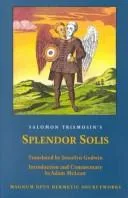
Splendor solis
 77
77

Splendor solis
The 1920 printed edition of Salomon Trismosin's 'Splendor Solis' presents a fascinating, if challenging, window into 16th-century alchemical thought. Its primary strength lies in the striking visual representations of the alchemical process, rendered with a vividness that transcends mere illustration to become an integral part of the teaching. The allegorical narrative, depicting stages from the initial dissolution to the final glorious 'sun-like' perfection, offers a compelling, if esoteric, model for transformation. However, the text itself can be exceedingly dense. The accompanying prose, while attempting to elucidate the imagery, often remains cryptic, requiring significant prior knowledge of alchemical symbolism and terminology. A notable passage detailing the 'marriage of the King and Queen' offers a potent metaphor for the union of opposites, a core Hermetic principle, but its interpretation is far from straightforward. For those willing to dedicate the effort, 'Splendor Solis' rewards with a unique perspective on the alchemical worldview; for the casual reader, it may prove an impenetrable artifact.
📝 Description
77
Salomon Trismosin's Splendor Solis, a 16th-century alchemical manuscript, details the Great Work through allegorical illustrations.
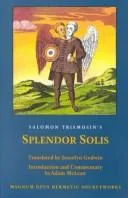
The Splendor Solis, attributed to Salomon Trismosin, is a 16th-century alchemical manuscript renowned for its vibrant allegorical illustrations and accompanying cryptic text. These visuals depict the stages of the alchemical Great Work, guiding the reader through a symbolic transformation. Though its first printed edition appeared in 1920, the original manuscript offers a deep engagement with alchemical philosophy and practice. Its dense symbolism and archaic language demand a serious reader. The work is valuable for those studying the visual language of alchemy and the philosophical underpinnings of early modern chemistry. It is not an introductory text but a comprehensive primary source for advanced study.
The manuscript likely dates to the mid-16th century, a time of significant alchemical activity across Europe. Figures like Paracelsus were active, blending chemical understanding with mystical thought. Alchemy during this era was more than proto-chemistry; it was a philosophical system aimed at both material and spiritual perfection. The allegorical style of Splendor Solis was common for esoteric works, designed to convey complex truths through veiled imagery. This approach protected knowledge from the uninitiated and potential persecution.
This manuscript belongs to the Hermetic tradition, which sought esoteric knowledge through allegory and symbolism. Alchemy, as practiced in the 16th century, was deeply intertwined with Hermeticism, viewing the transformation of metals as a parallel to spiritual purification. The Splendor Solis exemplifies this by using visual metaphors to represent complex alchemical processes and philosophical ideas. Its veiled language reflects a common practice in esoteric circles for safeguarding arcane wisdom.
💡 Why Read This Book?
• Gain insight into the visual language of 16th-century alchemy, understanding how illustrations like those depicting the 'seven stages' served as primary teaching tools for the Great Work. • Explore the concept of the *prima materia* and its transformation through the symbolic union of the 'King and Queen,' a central theme that offers a unique perspective on material and spiritual change. • Appreciate the historical development of chemical and mystical ideas by examining a text from the era of Paracelsus, understanding how alchemy functioned as both a proto-science and a spiritual discipline.
⭐ Reader Reviews
Honest opinions from readers who have explored this book.
❓ Frequently Asked Questions
What is the 'Splendor Solis' and who was Salomon Trismosin?
Splendor Solis, meaning 'The Sun's Splendor,' is a 16th-century alchemical manuscript. While attributed to Salomon Trismosin, the author's identity is largely unknown, making the work itself the primary focus of study rather than its creator.
When was the 'Splendor Solis' first published?
Although the manuscript is from the 16th century, the first widely available printed edition of Splendor Solis was published in 1920, making its detailed imagery accessible to a modern audience.
What are the main alchemical concepts explored in Splendor Solis?
The work details the Great Work, or Magnum Opus, including concepts such as the prima materia, the philosopher's stone, and the transformation through symbolic representations of the sun and the union of opposites.
Is Splendor Solis difficult to understand?
Yes, the text is known for its dense, symbolic language and allegorical illustrations, requiring a dedicated reader familiar with alchemical traditions and terminology for full comprehension.
What makes the illustrations in Splendor Solis significant?
The manuscript is celebrated for its series of vivid, allegorical illuminations that visually represent the stages of alchemical transformation, serving as a key component of its teaching method.
Where can I find the 'Splendor Solis' if I can't purchase it?
As a historical manuscript with a 1920 publication, Splendor Solis is often available in libraries specializing in occultism or historical texts. Some editions may also be in the public domain online.
🔮 Key Themes & Symbolism
The Main work Visualized
Splendor Solis presents the Great Work, the alchemical process of transformation, through a sequence of intricate and symbolic illuminations. These images are not mere decorations but are central to understanding the stages of the alchemical quest, from the initial chaotic state of the prima materia to the final perfection symbolized by the sun. The manuscript's visual narrative provides a unique pedagogical tool, allowing practitioners and scholars to follow the alchemical journey through allegorical representations of chemical and spiritual processes.
Symbolism of the Sun and Light
The title itself, 'The Sun's Splendor,' highlights the paramount importance of solar symbolism within the work. The sun represents the ultimate goal of alchemy – perfection, incorruptibility, and enlightenment. It embodies the purified essence, the 'philosophical gold,' achieved at the end of the Great Work. This solar imagery pervades the manuscript, connecting the alchemical pursuit to cosmic principles of light, heat, and divine order, suggesting that the transformation sought is a reflection of celestial processes.
The Union of Opposites
A fundamental Hermetic principle, the union of opposites, is critically explored in Splendor Solis. The manuscript often depicts symbolic marriages, such as that between the King (representing the masculine, sulfurous principle) and the Queen (representing the feminine, mercurial principle). This union is essential for initiating and completing the alchemical transformation, signifying the reconciliation of contraries necessary for achieving the philosopher's stone and the realization of wholeness.
Prima Materia and Transformation
At the heart of the alchemical process detailed in Splendor Solis lies the concept of the prima materia – the chaotic, undifferentiated substance from which all things arise. The manuscript illustrates the arduous journey of working with this primal substance, breaking it down and reconstituting it through various stages. This reflects a core tenet of alchemy: that within the base and common lies the potential for the most extraordinary transformation, a principle applicable to both material substances and the human soul.
💬 Memorable Quotes
Direct passages from the work, attributed to the author.
“The sun, which is the symbol of the highest perfection, is the final goal.”
— This statement underscores the central role of solar imagery in alchemical philosophy. It signifies that the alchemist's ultimate aim is not merely material wealth but a state of incorruptibility, spiritual enlightenment, and divine union, mirroring the sun's eternal and radiant nature.
“The prima materia holds the potential for all forms.”
— This interpretation highlights the alchemical belief in the primordial substance as the source of all existence. It suggests that within the seemingly chaotic or base initial matter lies the latent possibility for every manifestation and the ultimate perfected form.
“Observe the seven stages, each a step towards the Sun's splendor.”
— This refers to the structured progression within the alchemical Great Work, as visually represented in the manuscript. Each of the seven stages symbolizes a distinct phase of transformation, moving the practitioner closer to the ultimate goal of perfection and illumination.
💡 Key Ideas
Editorial paraphrase of the work's core concepts — not direct quotes.
From the union of the King and Queen, the Stone is born.
This paraphrased concept refers to the alchemical marriage, the symbolic integration of opposing forces (often symbolized as masculine/feminine, sulfur/mercury). This union is depicted as the critical juncture where the transformative agent, the philosopher's stone, begins to manifest.
Through dissolution and coagulation, the work progresses.
This paraphrased concept points to two fundamental operations in alchemy. Dissolution breaks down substances, while coagulation reforms them in a more perfected state. This cyclical process is essential for refining the prima materia and achieving the desired alchemical outcome.
🌙 Esoteric Significance
Tradition
Splendor Solis is firmly rooted in the Western Hermetic tradition, drawing heavily on the principles of alchemy as a path to spiritual and material perfection. It aligns with the Hermetic axiom 'As Above, So Below,' viewing the alchemical laboratory as a microcosm reflecting cosmic processes. While distinct in its visual emphasis, it shares common ground with Kabbalistic concepts of emanation and transformation and Neoplatonic ideas of ascent towards the divine.
Symbolism
The manuscript is replete with potent symbols. The Sun, as its title suggests, represents ultimate perfection, incorruptibility, and the divine spark. The recurring motif of the 'marriage' between a King and Queen symbolizes the essential union of opposites—such as Sulfur and Mercury, or masculine and feminine principles—necessary for the Great Work. Furthermore, the series of allegorical figures often depict stages of transformation, from the raven's head (nigredo, decomposition) to the pelican (coagulation and nurturing of the new form).
Modern Relevance
Contemporary practitioners of Hermeticism and Western Esotericism continue to draw inspiration from Splendor Solis. Its detailed visual lexicon informs modern alchemical studies and contemplative practices. Thinkers in comparative religion and the history of science utilize it to understand the complex interplay between early modern chemistry, philosophy, and mysticism. The work's emphasis on symbolic transformation also finds echoes in modern depth psychology and Jungian studies of archetypes and individuation.
👥 Who Should Read This Book
• Students of Western Esotericism seeking to understand the visual language and allegorical depth of historical alchemy. • Historians of science and medicine interested in the transition from alchemy to early modern chemistry and the philosophical underpinnings of these pursuits. • Contemplative practitioners and artists looking for rich symbolic material to explore themes of transformation, union of opposites, and spiritual perfection.
📜 Historical Context
The original Splendor Solis manuscript emerged around the mid-16th century, a period brimming with alchemical exploration and theoretical development across Europe. This era saw figures like Paracelsus (1493-1541) challenging traditional Galenic medicine with his iatrochemical theories, though often couched in mystical language. Alchemy was a complex discipline, simultaneously pursuing material transmutation and spiritual purification, often existing in tension with emerging empirical science. While not directly censored, alchemical texts of this nature were frequently circulated in manuscript form, their esoteric content intended for a select few. The work’s allegorical style was common, a way to encode profound knowledge. Its first printed edition in 1920, by Julius Elias, brought this rich visual tradition to a wider, modern audience, allowing for comparative study with other alchemical texts of the period.
📔 Journal Prompts
The visual allegory of the 'King and Queen's marriage: what internal contraries does this represent in your own life?
Reflect on the symbolic journey depicted across the seven stages; how does this arc mirror personal growth or challenge?
Consider the 'prima materia' as a starting point: what undifferentiated potential exists within your current circumstances?
The sun's splendor as the ultimate goal: what does 'perfection' or 'enlightenment' signify beyond material achievement?
Analyze the manuscript's fusion of visual art and philosophical text; how does this dual presentation enhance the alchemical message?
🗂️ Glossary
Main work
Latin for 'Great Work,' referring to the entire alchemical process of transforming base metals into gold, or, more esoterically, the spiritual purification and perfection of the alchemist.
Prima Materia
The 'first matter' or primordial substance from which all things are believed to originate. It is often depicted as chaotic, undifferentiated, and containing the potential for all forms.
Philosopher's Stone
The legendary alchemical substance capable of transmuting base metals into gold and, in some traditions, granting immortality or eternal youth. It is the product of the Main work.
Nigredo
The first stage of the alchemical process, often symbolized by blackness, decay, and dissolution. It represents the breaking down of the prima materia into its fundamental components.
Albedo
The second stage, or 'whitening,' following the nigredo. It signifies purification and the washing away of impurities, leading to a state of clarity.
Citrinitas
The 'yellowing' stage, sometimes considered transitional between albedo and rubedo. It symbolizes the dawning of the solar aspect and the approach of perfection.
Rubedo
The final stage, or 'reddening,' culminating in the creation of the philosopher's stone. It represents perfection, completion, and the union of opposites, often symbolized by the sun or a red lion.
🔮 Readers Also Liked
Browse all →








More by Salomon Trismosin
All books →

More Free Alchemy & Hermeticism Books
View all →