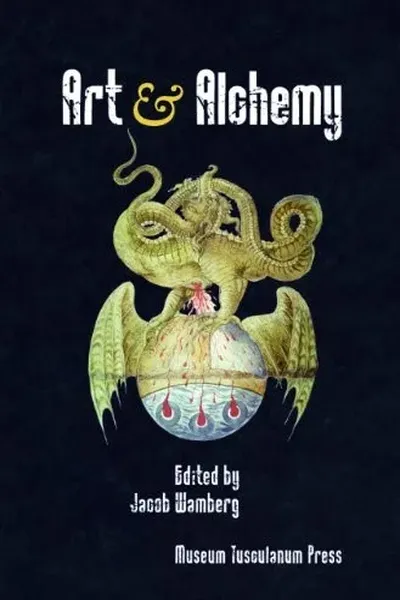
Hieroglyphic Monad
 76
76

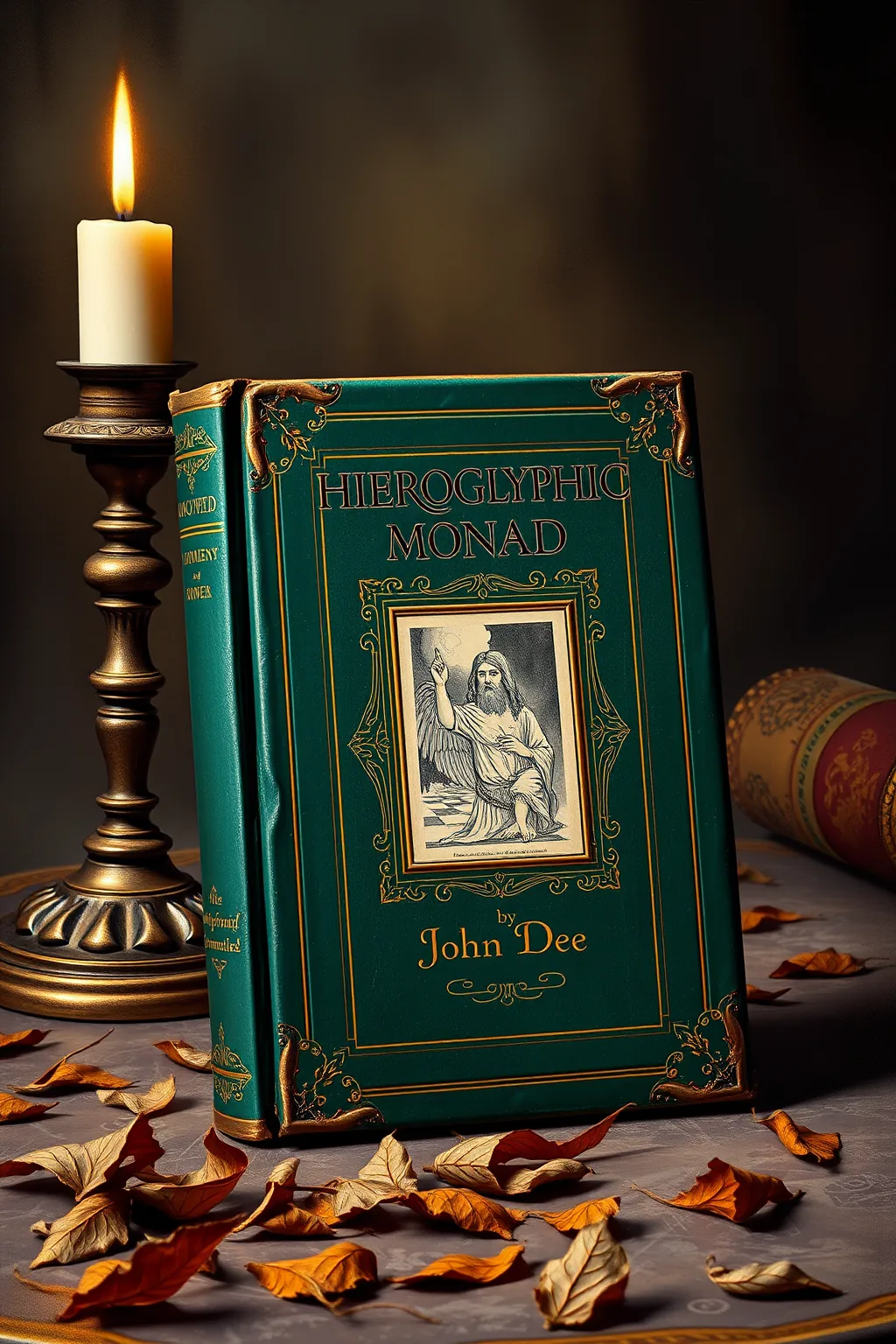
Hieroglyphic Monad
John Dee's *Hieroglyphic Monad* offers a dense, yet rewarding, exploration of cosmic unity through its intricate symbolic language. The strength lies in its sheer originality; Dee constructs a visual and conceptual lexicon that feels both ancient and uniquely his own, particularly in the way he links geometric forms to alchemical and divine principles. A limitation for the modern reader is the sheer opacity of its allegorical structure. Without extensive prior knowledge or scholarly guidance, passages like the detailed breakdown of the Monad's components can feel labyrinthine. The early sections, which lay out the foundational symbols, are particularly demanding. Dee's ambition to create a universal symbolic grammar is palpable, but the execution requires significant intellectual investment. The work is a formidable, if challenging, testament to Renaissance occult philosophy.
📝 Description
76
John Dee published his *Hieroglyphic Monad* in 1564, a unique work of occult philosophy.
John Dee's *Hieroglyphic Monad*, first published in 1564, is a philosophical treatise that uses a symbolic system to explore universal principles. It is not a simple guide but a complex text meant for deep thought and spiritual understanding. Dee created a visual and conceptual language to show a unified cosmic order, drawing from alchemy, Kabbalah, and Hermeticism. The book is aimed at students of esoteric philosophy, especially those interested in the Renaissance intellectual world and the development of Western magical ideas. Readers should be patient and prepared to work with symbolic logic rather than straightforward narrative.
The work emerged during a time of significant intellectual activity in Europe. Dee, who was an advisor to Queen Elizabeth I, was deeply involved with the revival of Neoplatonism and interest in Hermetic texts. He engaged with the symbolic systems of thinkers like Ramon Llull and the alchemical traditions of his era. Dee sought to combine these different philosophical streams into a cohesive magical and cosmological view. His approach moved away from purely academic methods, favoring experiential understanding through symbols.
Published in 1564, *Hieroglyphic Monad* is a product of the Renaissance's renewed interest in ancient mystical traditions. John Dee, a scholar and advisor, synthesized elements from Hermeticism, Kabbalah, and alchemy into a unique cosmological framework. His work reflects the period's intellectual climate, which saw the recovery and study of texts like the *Corpus Hermeticum* and a fascination with symbolic languages, such as those employed by Ramon Llull. Dee's approach emphasized experiential interpretation through a carefully constructed visual system, distinguishing it from more conventional scholarly pursuits of the time.
💡 Why Read This Book?
• Gain direct access to a unique symbolic system developed by John Dee in 1564, offering a perspective on cosmic unity distinct from later Hermetic traditions. • Understand the foundational role of the 'Monad' concept in Renaissance occult thought, a symbol Dee uses to illustrate universal principles and divine order. • Explore the intricate relationship between geometry, alchemy, and Kabbalah as synthesized by Dee, providing concrete examples of how these disciplines were integrated in the 16th century.
⭐ Reader Reviews
Honest opinions from readers who have explored this book.
❓ Frequently Asked Questions
When was John Dee's Hieroglyphic Monad first published?
The *Hieroglyphic Monad* by John Dee was first published in 1564. This date places it firmly within the intellectual and spiritual currents of the Renaissance.
What is the central symbol discussed in Dee's Hieroglyphic Monad?
The central symbol is the 'Monad', which Dee presents as a representation of divine unity, the primordial source of all existence, and a key to understanding the universe's underlying order.
What esoteric traditions influenced John Dee's Hieroglyphic Monad?
Dee's work draws heavily from Hermeticism, Kabbalah, and alchemy. He sought to synthesize these traditions into a unified symbolic language for understanding cosmic principles.
Is the Hieroglyphic Monad an easy book to read?
No, the *Hieroglyphic Monad* is known for its dense allegorical language and intricate symbolism, requiring significant study and contemplation from the reader.
Who was John Dee in the 16th century?
John Dee was a prominent English mathematician, astronomer, astrologer, occultist, and advisor to Queen Elizabeth I, renowned for his vast knowledge and engagement with esoteric studies.
What is the purpose of the 24 figures in the Hieroglyphic Monad?
The 24 figures in the *Hieroglyphic Monad* serve as a progressive, allegorical demonstration of universal principles, creation, and the interconnectedness of all things as understood through Dee's symbolic system.
🔮 Key Themes & Symbolism
The Primacy of the Monad
The text is built around the concept of the Monad, which Dee posits as the singular, divine origin point of all reality. This symbol, often represented as a circle or a point, serves as the foundation for his entire symbolic system. Dee systematically deconstructs and reconstructs the Monad through a series of figures, illustrating how this unity unfolds into the multiplicity of the cosmos. The exploration examines the divine geometry and the ineffable unity that underpins existence, a core tenet in Neoplatonic and Hermetic thought that Dee aimed to elucidate through a unique visual language developed in 1564.
Universal Symbolic Language
Dee's ambition in the *Hieroglyphic Monad* was to uncover or create a universal language of nature, one that could transcend human tongues and directly communicate cosmic truths. He believed that by understanding the inherent symbolism within geometry, alchemical processes, and celestial movements, one could access a deeper understanding of God's creation. The book presents his meticulously crafted hieroglyphs as keys to this language, intended to unlock spiritual and philosophical insights for the diligent student.
Alchemical and Kabbalistic Synthesis
The work represents a significant attempt to synthesize diverse esoteric traditions. Dee integrates alchemical principles, such as transformation and the prima materia, with Kabbalistic concepts of divine emanation and Hebrew letters. The structure of the 24 figures often mirrors stages of alchemical work or Kabbalistic pathways, illustrating how Dee saw these seemingly disparate systems as interconnected facets of a single, underlying reality. This fusion was characteristic of Renaissance occultism, seeking a unified worldview.
Divine Order and Creation
Central to the *Hieroglyphic Monad* is the idea of an inherent divine order governing the universe. Dee uses his symbolic system to map out the process of creation, from the initial unity of the Monad to the complex structures of the manifest world. The book is a philosophical treatise on cosmology, emphasizing that all things are interconnected and derive from a single, intelligent source. This perspective reflects the strong theological underpinnings of Dee's esoteric philosophy, viewing the study of nature as a path to understanding the divine.
💬 Memorable Quotes
Direct passages from the work, attributed to the author.
“The Monad is the origin of all numbers and figures.”
— This statement captures Dee's core thesis: that a singular, unified principle is the root of all mathematical and symbolic representation, forming the basis of his complex cosmological system.
“The figures progressively reveal the order of creation.”
— This highlights the pedagogical structure of Dee's work, where each of the 24 figures builds upon the previous one to illustrate the unfolding of the universe from its divine origin.
“Through this science, the secrets of nature are unveiled.”
— This reflects Dee's belief in the power of his symbolic system, the *Hieroglyphic Monad*, as a method for gaining direct knowledge and understanding of the hidden workings of the cosmos.
💡 Key Ideas
Editorial paraphrase of the work's core concepts — not direct quotes.
All things are one, and one is all.
This paraphrase captures the essence of Dee's monistic philosophy presented in the *Hieroglyphic Monad*, emphasizing the interconnectedness of all phenomena and their derivation from a singular divine source.
Unity is the key to understanding multiplicity.
This paraphrase emphasizes the central theme of unity as the primary lens through which Dee believed the apparent diversity of the world could be comprehended and reconciled.
🌙 Esoteric Significance
Tradition
The *Hieroglyphic Monad* is a core part of Renaissance Hermeticism, deeply rooted in Neoplatonic philosophy and Kabbalistic principles. Dee sought to create a unifying system that bridged the perceived gap between the material and spiritual worlds, drawing inspiration from ancient Hermetic wisdom while innovating with his unique symbolic language. It represents a departure from purely theoretical Kabbalah, emphasizing visual and symbolic representation as a means to apprehend divine order, a hallmark of Dee's broader magical philosophy.
Symbolism
The central symbol is the 'Monad,' representing divine unity, the primordial point from which all creation emanates. Dee employs a series of 24 progressive figures, often incorporating alchemical symbols (like the mercury and sulfur conjunction) and geometric forms (circles, triangles, squares). These figures systematically illustrate concepts such as the conjunction of opposites, the descent of spirit into matter, and the alchemical Great Work, all unified under the overarching principle of divine oneness.
Modern Relevance
Contemporary practitioners of Western esotericism, particularly those involved in Hermetic orders and ceremonial magic, continue to study the *Hieroglyphic Monad*. Its symbolic language offers a unique framework for understanding universal principles and the nature of reality. Thinkers and artists exploring symbolic systems, sacred geometry, and the intersection of science and spirituality find Dee's work a valuable historical and conceptual resource, influencing modern interpretations of alchemical symbolism and cosmological diagrams.
👥 Who Should Read This Book
• Students of Renaissance esotericism seeking primary source material on figures like John Dee and the intellectual currents of the 16th century. • Practitioners of Hermeticism, Kabbalah, and alchemy interested in understanding the historical development and symbolic language of these traditions. • Scholars of comparative religion and philosophy who are analyzing the synthesis of diverse mystical traditions in early modern Europe.
📜 Historical Context
Published in 1564, John Dee's *Hieroglyphic Monad* emerged during a central period in Renaissance Europe. This era saw a resurgence of interest in Hermetic texts, Neoplatonism, and Kabbalah, challenging the dominance of Aristotelian scholasticism. Dee, a prominent figure advising Queen Elizabeth I, sought to synthesize these diverse streams into a coherent philosophical and magical system. His work engaged with the symbolic logic found in Ramon Llull's combinatorial arts and the visual allegories of alchemy, aiming to establish a universal language of nature. Unlike purely theoretical philosophers, Dee emphasized the practical application of these symbols for spiritual and intellectual illumination. The reception of the *Monad* was primarily within esoteric circles, solidifying Dee's reputation as a leading occult philosopher of his time, though its complex symbolism ensured it remained a text for dedicated study rather than widespread popular consumption.
📔 Journal Prompts
The Monad's representation of unity and its unfolding into multiplicity.
How Dee's symbolic figures illustrate alchemical transformation.
The concept of a universal symbolic language in the 16th century.
Connecting the geometric elements in the *Hieroglyphic Monad* to cosmic order.
The synthesis of Kabbalistic and Hermetic ideas in Dee's work.
🗂️ Glossary
Monad
In Dee's system, the primordial, singular divine principle representing ultimate unity, from which all existence and multiplicity originate. It is the foundational concept of the *Hieroglyphic Monad*.
Hieroglyphic Figures
A series of 24 distinct symbolic diagrams presented by Dee in the book, each designed to progressively illustrate aspects of creation, divine order, and esoteric principles.
Prima Materia
A fundamental concept in alchemy, referring to the primordial, undifferentiated substance from which all matter is believed to be formed. Dee integrates this concept into his symbolic exploration.
Conjunction
In alchemy, the union of opposing principles (often symbolized as masculine and feminine, or sulfur and mercury). Dee uses this concept to represent the reconciliation of duality and the path to unity.
Hermeticism
A philosophical and religious tradition based on writings attributed to Hermes Trismegistus. It emphasizes divine knowledge, cosmic unity, and the interconnectedness of the macrocosm and microcosm.
Kabbalah
A system of Jewish mysticism that explores the nature of God and the creation of the universe through symbolic interpretation, often involving divine names and emanations (Sephirot).
Sacred Geometry
The study of geometric shapes and proportions believed to have divine or symbolic significance, often seen as reflecting the underlying order of the universe. Dee's work is rich in this.
🔮 Readers Also Liked
Browse all →








More by John Dee
All books →



More Free Alchemy & Hermeticism Books
View all →