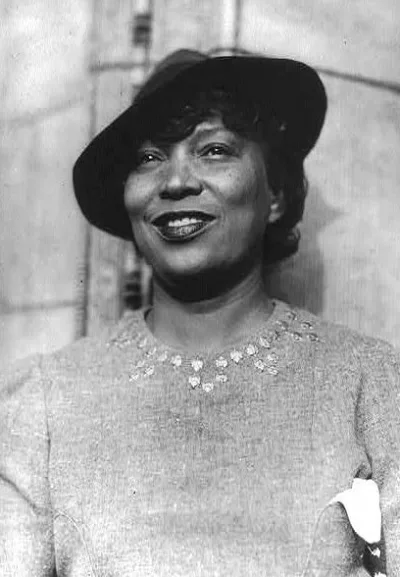
Zora Neale Hurston was a writer, anthropologist, and folklorist known for her depictions of Black life and studies of Hoodoo and Vodou.
Zora Neale Hurston was a prominent American writer, anthropologist, and folklorist whose work explored the African-American experience, particularly in the early 20th-century South. Born in Alabama and raised in Eatonville, Florida, she later pursued academic studies at Howard University and Barnard College, where she engaged with influential anthropologists like Franz Boas. Hurston's research and writings delved into African-American folklore, Hoodoo, and Caribbean Vodou, often highlighting the cultural identity and resilience of Black communities. Despite her significant contributions and the popularity of works like "Their Eyes Were Watching God," her literary output was largely overlooked for decades after her death, with renewed interest surfacing in the 1970s. Her legacy is built on foundational work in ethnography, literature, and Africana Studies, exploring spiritual and cultural practices often marginalized in academic discourse.
Anthropological Research and Esoteric Studies
Hurston's academic career included significant anthropological and ethnographic research, particularly focusing on African-American and Caribbean folklore. Her interest extended to spiritual practices such as Hoodoo and Vodou, which she documented in works like "Tell My Horse." These studies were conducted at a time when formal ethnographic boundaries were less defined, especially concerning the respectful examination of communities of color. Her approach, influenced by figures like Franz Boas, emphasized cultural relativism and laid groundwork for the field of ethnography. Hurston's investigations into these traditions provided valuable insights into the cultural and spiritual lives of the communities she studied, often long before such subjects were widely accepted in mainstream academia.
Literary Contributions and Harlem Renaissance
A central figure of the Harlem Renaissance, Hurston contributed numerous short stories, plays, and essays that captured the nuances of the African-American experience and racial divisions. Her satires, drawn from Black life, appeared in significant anthologies of the era. She also produced foundational literary works on African-American folklore, including "Mules and Men." Her most celebrated novel, "Their Eyes Were Watching God," published in 1937, explored themes of Black womanhood and identity. Despite the literary merit and cultural significance of her writings, much of her work experienced a period of relative obscurity, only gaining wider recognition posthumously through the efforts of scholars and writers like Alice Walker.
Posthumous Recognition and Rediscovered Works
Fifteen years after Zora Neale Hurston's passing, her literary contributions were re-evaluated, leading to a resurgence of interest in her oeuvre. This revival was significantly propelled by Alice Walker's influential article in "Ms." magazine. In the years that followed, previously unpublished manuscripts and research were brought to light. Collections of folktales gathered in the 1920s, such as "Every Tongue Got to Confess," and her non-fiction account of the last survivors of the illegal slave trade, "Barracoon: The Story of the Last 'Black Cargo,'" were published posthumously, further solidifying her enduring impact on American literature and cultural studies.
Key Ideas
- Depiction of African-American life and culture with authenticity and respect.
- Exploration of folklore, Hoodoo, and Vodou as integral aspects of community identity.
- Emphasis on the resilience and agency of Black individuals, particularly women.
- Pioneering ethnographic methods in the study of marginalized communities.
- The significance of Eatonville, Florida, as a symbol of Black self-determination.
Books by
3 free public domain books · Read online or download