Zachary A. Matus
The Shakespeare authorship question proposes someone other than William Shakespeare wrote the plays, citing a lack of evidence and perceived incongruity with his background.
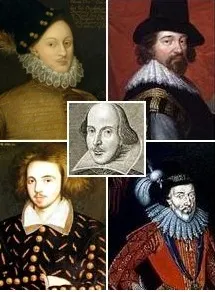
The Shakespeare authorship question centers on the argument that the works attributed to William Shakespeare of Stratford-upon-Avon were actually written by another individual. Proponents, known as anti-Stratfordians, suggest Shakespeare served as a public front for a hidden author or authors, often citing reasons related to social standing, security, or gender. While this idea has gained some public traction, the vast majority of literary scholars and historians dismiss it as a fringe theory.
The controversy emerged in the mid-19th century, fueled by Shakespeare's immense posthumous reputation contrasted with his seemingly humble origins and limited documented life. Critics point to the perceived lack of formal education, aristocratic familiarity, and personal documentation (like letters or manuscripts) as evidence against the Stratford man. They highlight the sophisticated knowledge of court life, law, foreign lands, and diverse social strata within the works as incongruous with his documented background. In contrast, mainstream scholarship relies on contemporary documents, testimony from peers, and stylistic analysis to support Shakespeare's authorship, arguing that the evidence aligns with that used for other authors of the era and that gaps in records are common for the period.
The Case Against Shakespeare
Arguments against William Shakespeare's authorship often focus on perceived gaps in his personal history and education. Anti-Stratfordians interpret the limited biographical details available—such as baptismal records, marriage certificates, and property transactions—as insufficient to account for the profound literary achievements attributed to him. The absence of personal letters, manuscripts, or documented schooling is frequently cited. Furthermore, the signatures attributed to Shakespeare are sometimes characterized as rudimentary, leading to suggestions of illiteracy or limited literacy, which seems at odds with the complex vocabulary and sophisticated themes found in the plays and poems. The background of his parents, including their use of marks instead of signatures, is also presented as evidence of an uneducated upbringing.
Incongruities and Alternative Explanations
A central tenet of the anti-Stratfordian argument is the perceived incompatibility between Shakespeare's documented life and the breadth of knowledge displayed in the works. This includes familiarity with aristocratic pursuits like falconry and tennis, intricate knowledge of law and court politics, and detailed geographical references. Proponents of alternative authorship theories suggest that the author must have been an educated court insider. They often propose that a conspiracy existed to conceal the true author's identity, explaining the lack of direct evidence for their preferred candidate and the seeming abundance of evidence for the Stratford man. This perceived disparity fuels the search for a more plausible author among figures with aristocratic backgrounds or extensive education.
Evidence and Methodology
The debate hinges significantly on what constitutes acceptable evidence for authorship attribution. Anti-Stratfordians tend to rely on a 'rhetoric of accumulation,' piecing together circumstantial evidence such as biographical parallels between characters and the candidate, literary allusions, and alleged cryptographic codes. Conversely, mainstream scholars and literary historians prioritize direct documentary evidence, including contemporary title pages, official records like the Stationers' Register, and testimony from fellow writers and actors. Stylometric analysis, a modern approach comparing linguistic patterns, also supports the conventional attribution. Scholars maintain that the documentary evidence supporting Shakespeare's authorship is consistent with the methodology used for crediting other writers of the period.
Books by Zachary A. Matus
0 free public domain books · Read online or download