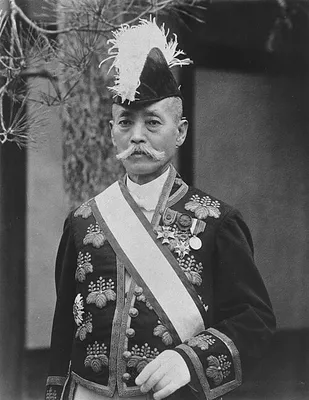
Yei Theodora Ozaki
Yukio Ozaki was a pioneering Japanese politician known as the "father of the Japanese Constitution" and a champion of democratic ideals.
Yukio Ozaki, born in 1858, was a prominent Japanese politician who served in the House of Representatives for over six decades, from 1890 to 1953. Revered as the "God of constitutional politics" and the "father of the Japanese Constitution," Ozaki was a staunch advocate for liberal politics and democratic principles throughout his long career. He held cabinet positions, including Minister of Education and Minister of Justice, and was instrumental in establishing universal male suffrage in 1925. Throughout his life, Ozaki opposed militarism and was imprisoned for his views during both World Wars. After World War II, he remained active in anti-war and pro-democratic movements until his death in 1954. He also served as the second elected Mayor of Tokyo, overseeing significant infrastructure improvements and contributing to the gifting of cherry blossom trees to Washington, D.C., a gesture that continues to be celebrated annually.
Ozaki's personal life intertwined with his public service. He married Yei Theodora Ozaki, a folklorist and author, later in life. His daughter, Yukika Sohma, became a notable translator and continued her father's legacy in humanitarian work. Ozaki's political philosophy emphasized constitutionalism and democratic governance, often putting him at odds with conservative and militaristic factions. His dedication to these ideals earned him widespread recognition and numerous honors, solidifying his legacy as a key figure in Japan's modern political history.
Political Career and Constitutionalism
Yukio Ozaki's political journey spanned an extraordinary 63 years in the Japanese Diet, beginning in 1890. He was a consistent voice for liberal politics and is widely recognized as the "father of the Japanese Constitution" and the "God of constitutional politics." His commitment to democratic ideals was evident throughout his service, even when it led to significant personal and professional challenges. Ozaki held influential cabinet roles, such as Minister of Education and Minister of Justice. His advocacy for republicanism as Minister of Education led to his resignation, highlighting his willingness to stand by his convictions. He was a strong proponent of universal suffrage, playing a key role in the establishment of universal male suffrage in 1925 and later advocating for women's voting rights in the 1930s.
Opposition to Militarism and Advocacy for Peace
A defining aspect of Yukio Ozaki's political stance was his firm opposition to militarism, particularly as Japan's military influence grew in the 1930s. His outspoken views often placed him in conflict with authorities, leading to periods of confinement during both World Wars. Despite facing imprisonment and expressing unpopular opinions, Ozaki remained committed to his principles. He actively participated in anti-war movements and embraced World Federalist and pro-democratic activities following World War II, continuing his advocacy for peace and democracy until his passing. His dedication to these causes underscored his belief in peaceful resolution and international cooperation.
Mayor of Tokyo and International Relations
As the second elected Mayor of Tokyo, Yukio Ozaki undertook the demanding task of improving the city's infrastructure, focusing on essential services like water supply, sewage systems, and public transportation. Beyond domestic improvements, Ozaki played a significant role in fostering international goodwill. In 1910, he accompanied Prince Iyesato Tokugawa on a delegation to Washington, D.C., which was instrumental in the Japanese gifting of cherry blossom trees to the United States. His persistence in promoting this project during his mayoral tenure led to the iconic cherry blossoms that now adorn Washington, D.C., and are the genesis of the annual National Cherry Blossom Festival.
Key Ideas
- Constitutionalism
- Liberal politics
- Democratic governance
- Universal suffrage
- Anti-militarism
- Peace advocacy
Books by Yei Theodora Ozaki
2 free public domain books · Read online or download