Ki-dong Yi
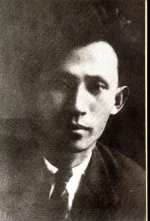
Yi Sang was a Korean writer and architect under Japanese rule, known for experimental literary works and complex symbolism.
Kim Haegyŏng, better known by his pen name Yi Sang (1910–1937), was a Korean writer and poet active during the Japanese colonial period. Despite lacking formal training in Korean literature, he majored in architecture, a discipline that influenced his experimental writing style. After contracting tuberculosis, he left his government position and opened a cafe, engaging with literary circles like the Guinhoe.
Yi Sang's literary output, primarily in the 1930s, is characterized by its avant-garde nature, incorporating scientific terms, wordplay, and visual elements. His work often explored complex themes and structures, leading to both admiration and criticism, with some of his poems, like 'Crow's Eye View,' being considered unconventional by contemporaries. He is recognized as a significant and innovative figure in modern Korean literature.
Early Life and Education
Born Kim Haegyŏng in Seoul in 1910, Yi Sang came from a family whose fortunes declined during the Japanese occupation. He was raised by his uncle and received his education at various schools, including Sinmyeong, Donggwang, and Posung High School. Initially interested in art, he pursued architecture at Gyeongseong Industrial High School at his uncle's insistence, graduating at the top of his class. It was during this period that he began using the art name Yi Sang, possibly inspired by a gift from his friend Koo Bon-Woong. After graduating, he entered public service in the Government-General of Korea, working in architecture and building maintenance. He also joined the Joseon Architecture Society and won awards in design contests.
Literary Career and Style
Yi Sang's literary career flourished in the 1930s, producing both Japanese and Korean works. His writing is noted for its experimental nature, incorporating scientific terminology, intricate wordplay, and visual elements. Works like 'Crow's Eye View' and 'The Wings' exemplify this style. 'Crow's Eye View' was particularly controversial, with some contemporaries deeming it incomprehensible or the "sleep talk of a lunatic." His poetry and prose often featured complex structures and linguistic experimentation, making him a revolutionary figure in modern Korean literature. He was part of the Guinhoe literary group, which aimed to pursue pure literature.
Later Life and Legacy
In 1933, Yi Sang's health deteriorated due to tuberculosis, leading him to resign from his government post and open a cafe named Jebi. This period involved continued literary exchanges and eventual financial struggles that forced him to close the cafe. He experienced periods of poverty and illness, set against the backdrop of a slum. Despite these hardships, he continued to write, editing the Guinhoe's magazine and publishing cycles of poems. He died in Japan in April 1937 at the age of 26. Yi Sang is remembered as a pivotal and innovative voice in Korean literature, pushing the boundaries of form and expression.
Key Ideas
- Experimental literary techniques
- Use of scientific symbols and terms
- Complex structural and linguistic experimentation
- Wordplay through homonyms
- Integration of visual elements in writing
- Exploration of themes related to modernity and identity under colonial rule