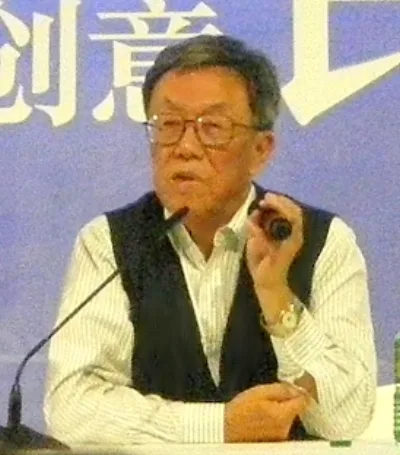
Wang Meng is a Chinese writer and former Minister of Culture, known for his early novella critiquing bureaucracy and his extensive literary output.
Born in Beijing in 1934, Wang Meng became involved with the Chinese Communist Party during his youth. He has authored over 60 books since 1955, encompassing novels, short stories, poetry, prose, and critical essays. His 1956 novella, "The Young Newcomer in the Organizational Department," sparked significant debate by addressing the failings of dogmatic bureaucrats and the dissatisfaction of workers, while also touching on themes of romance. The work was supported by Mao Zedong as consistent with the Hundred Flowers Movement, though it also faced criticism for perceived bourgeois elements. Wang himself faced scrutiny during the Anti-Rightist Campaign, was labeled a rightist in 1958, and sent for rural reform, but this designation was removed in 1961. He later taught at a university before moving to Xinjiang to work as a writer until after the Cultural Revolution. Following his full political rehabilitation, Wang returned to Beijing and continued to publish prolifically, establishing himself as an original writer and committed socialist. He served as China's Minister of Culture from 1986 to 1989 and has been recognized with awards, including the Mao Dun Literature Prize in 2015.
Early Literary Career and Controversy
Wang Meng's literary journey began with significant impact in 1956 with his novella "The Young Newcomer in the Organizational Department." This work explored the behavior of rigid bureaucrats and highlighted worker discontent, featuring a young cadre who challenges the status quo. The novella generated considerable discussion, with some critics deeming it too focused on personal heroism and romantic musings, while others, including Mao Zedong, saw it as aligned with the spirit of the Hundred Flowers Movement. Wang himself later criticized editors for their commercial attitudes. This period also saw Wang's involvement in the Anti-Rightist Campaign, leading to his designation as a rightist and subsequent reassignment for reform in the countryside. Despite this setback, his label was rescinded in 1961, allowing him to resume publishing.
Life in Xinjiang and Post-Cultural Revolution
In 1963, Wang Meng relocated to Xinjiang, drawn by the prospect of working as a professional writer in the region. He lived and worked there until the conclusion of the Cultural Revolution. Upon returning to Beijing, his political standing was fully restored. This period marked a prolific phase in his career, during which he published extensively and solidified his reputation as a distinctive writer who remained dedicated to socialist ideals and Party membership. His experiences and observations during his time in Xinjiang likely influenced his later works.
Government Service and Later Recognition
Wang Meng transitioned into public service, holding the position of China's Minister of Culture from July 1986 to September 1989. His contributions to literature and culture continued beyond his ministerial role. In 1999, he participated as a referee in an online literature contest, contributing to the nascent growth of internet literature in China. Further recognition came in 2015 when he received Honorary Fellowships and the prestigious Mao Dun Literature Prize for his work "The Scenery Around Here."
Books by
4 free public domain books · Read online or download