www.DiscoverSikhism.com
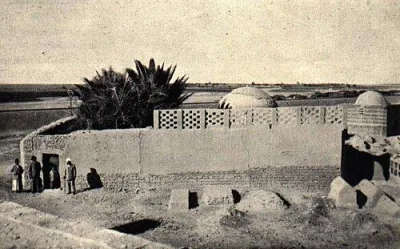
A Sikh shrine in Baghdad, honoring Guru Nanak, was rediscovered by soldiers and existed until its destruction in 2003.
The Baba Nanak Shrine in Baghdad, Iraq, was a significant site for Sikhs, commemorating the visit of Guru Nanak, the founder of Sikhism, in the early 16th century. Tradition holds that Guru Nanak, referred to locally as Nanak Peer, arrived after visiting Mecca and Medina. Initially denied entry into the city, he spent a night in a nearby cemetery, where the shrine was later built by locals in his memory. The shrine gained prominence when Sikh soldiers rediscovered it during World War I and later rebuilt it during World War II. It remained in fair condition until 2003.
The site was historically important for its spiritual connections. Guru Nanak is said to have engaged in profound discussions with local religious figures, including Pir Dastgir and Pir Bahlol, who became his disciples. This led to a local following remembering him as Baba Nanak. While contact with Sikhs in Punjab was limited until the rediscovery, efforts were made in the late 20th century to develop it into a major gurdwara. However, the shrine was eventually destroyed, with only remnants visible by 2018.
Guru Nanak's Sojourn and Spiritual Exchange
Guru Nanak, the founder of Sikhism, is believed to have visited Baghdad around 1511 AD, following his pilgrimages to Mecca and Medina. Upon his arrival, he was initially prevented from entering the city and spent the night in the adjacent cemetery. It was in this area that locals, deeply moved by his presence, constructed a shrine in his honor, referring to him as Nanak Peer. The shrine's significance grew as Guru Nanak reportedly engaged in deep spiritual and philosophical dialogues with prominent religious leaders of the time, such as Pir Dastgir and Pir Bahlol. These encounters were so impactful that both figures became followers of Guru Nanak, forming a local community that revered him as Baba Nanak.
Rediscovery and Reconstruction Efforts
The existence of the Baba Nanak Shrine remained largely unknown to the wider Sikh community in Punjab until the First World War, when Sikh soldiers stumbled upon it. Following this rediscovery, the shrine underwent repairs and reconstruction during World War II, again facilitated by Sikh soldiers. The site was maintained in a reasonably good state until 2003. In 1982, Major General Harkirat Singh visited Baghdad with the aim of fostering local support for transforming the shrine into a significant gurdwara. Although he passed away in 1983, his efforts laid the groundwork for subsequent development plans.
Historical Artifacts and Modern Challenges
Historically, the shrine housed significant relics, including an old stone tablet inscribed with Arabic text. These artifacts were present until the Iraq War in 2003, after which they were looted. Doubts have been raised by some modern scholars regarding the authenticity of Guru Nanak's visit, particularly concerning an inscription on a plaque that appears to have been altered. Despite these challenges and the shrine's eventual destruction, the Iraqi government expressed interest in rebuilding it in 2007. By 2018, the site was largely demolished, with only fragments of an outer wall and a single Mehrab remaining, though a protective gate was later installed.
Key Ideas
- The spiritual significance of Guru Nanak's travels and teachings beyond his immediate region.
- The role of faith communities in preserving and rebuilding sacred sites.
- The historical debate surrounding the authenticity of certain religious sites and artifacts.
Books by www.DiscoverSikhism.com
0 free public domain books · Read online or download