William Scott Shelley
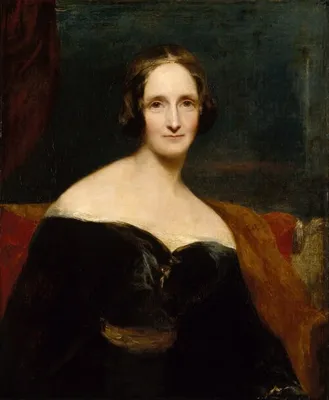
Mary Shelley, author of Frankenstein, was a product of radical intellectual parents and a life marked by personal tragedy and philosophical engagement.
Mary Wollstonecraft Shelley (1797-1851) was an English novelist, best known for her Gothic novel *Frankenstein; or, The Modern Prometheus*, considered an early science fiction work. She was the daughter of prominent philosophers William Godwin and Mary Wollstonecraft, the latter of whom died shortly after Mary's birth. Raised by her father, she received an extensive informal education and was exposed to his anarchist political theories and the intellectual circle that frequented his home. Her life was profoundly shaped by her romantic relationship with the married poet Percy Bysshe Shelley, with whom she eloped. Their early years together were fraught with ostracism, financial hardship, and the loss of children. She also edited and promoted her husband's literary works. Shelley's own literary output included historical novels, an apocalyptic novel, and travel writings, with recent scholarship highlighting her persistent radical political views and her arguments for cooperation and sympathy as a means to reform society, challenging the prevailing Romantic and Enlightenment philosophies.
Intellectual Heritage and Early Life
Born Mary Wollstonecraft Godwin in 1797, Mary Shelley was the daughter of renowned philosophers Mary Wollstonecraft and William Godwin. Her mother, a pioneering feminist, died just days after Mary's birth, leaving her to be raised by her father. Godwin, a significant figure in radical political thought, provided Mary with a rich, albeit informal, education. She had access to his extensive library and met many intellectuals who visited their home. Despite limited formal schooling, she was tutored extensively and encouraged to engage with her father's philosophical ideas. Her early life was also marked by a difficult relationship with her stepmother, Mary Jane Clairmont, whom her father married in 1801. The family publishing business, M. J. Godwin, faced financial difficulties, contributing to her father's persistent debt.
Relationship with Percy Bysshe Shelley and Literary Beginnings
In 1814, Mary Godwin began a passionate romance with the married poet Percy Bysshe Shelley, a follower of her father's radical political theories. They eloped to France with Mary's stepsister, Claire Clairmont, embarking on a journey through Europe. This period, along with subsequent years, was marked by significant personal hardship, including social ostracism, constant debt, and the tragic deaths of their infant children. They married in late 1816. It was during a summer spent with Lord Byron and John William Polidori near Geneva in 1816 that Shelley conceived the idea for her most famous work, *Frankenstein*. The couple later moved to Italy, where they experienced further losses before the birth of their only surviving child, Percy Florence Shelley.
Later Life, Career, and Philosophical Stance
Following the drowning of her husband Percy Bysshe Shelley in 1822, Mary Shelley returned to England. She dedicated herself to raising her son and pursuing her career as a professional author. Her later literary works include the novels *Valperga*, *Perkin Warbeck*, *The Last Man*, *Lodore*, and *Falkner*, as well as travel writings and biographical articles. For much of her life, she was primarily recognized for her role in publishing her husband's works and for *Frankenstein*. However, contemporary scholarship increasingly recognizes the depth of her literary output and her enduring political radicalism. Her writings often explored themes of cooperation and sympathy, particularly within the family unit, presenting these as crucial for societal reform, a perspective that stood in contrast to the individualistic ethos of Romanticism and the Enlightenment theories of her father.
Key Ideas
- Cooperation and sympathy, especially as practiced by women in the family, are pathways to reforming civil society.
- Critique of individualistic Romantic ethos and Enlightenment political theories through emphasis on collective action and empathy.
Notable Quotes
“It was acting in a novel, being an incarnate romance”
“my true compositions, the airy flights of my imagination, were born and fostered”
“singularly bold, somewhat imperious, and active of mind. Her desire of knowledge is great, and her perseverance in everything she undertakes almost invincible.”
“I am anxious that she should be brought up ... like a philosopher, even like a cynic.”
“ardent passion”
Books by William Scott Shelley
2 free public domain books · Read online or download