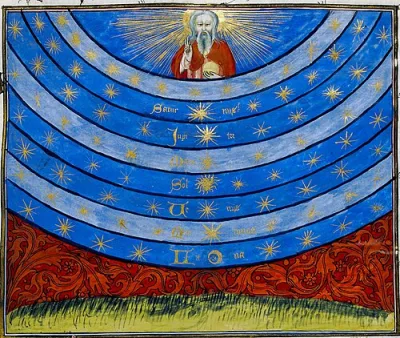
William Buhlman is an author known for his work on astral projection and out-of-body experiences.
William Buhlman is recognized for his writings on the astral plane, a concept explored across various philosophical and religious traditions. This plane is often described as a realm of existence beyond the physical, inhabited by spiritual beings and accessible through altered states of consciousness. Different traditions conceptualize the astral plane in diverse ways, some seeing it as a transitional space for souls after death, while others view it as the totality of spirit existence.
Buhlman's work aligns with esoteric traditions that detail methods for conscious exploration of this plane, such as astral projection. These teachings often emphasize spiritual development, involving mastery over the physical body and the cultivation of the intellect and spiritual mind. The concept of the astral plane has a long history, with roots in ancient Greek philosophy and later interpretations within Hermeticism, Gnosticism, and Islamic and Jewish mysticism, influencing thinkers and artists throughout the centuries.
The Astral Plane in Esoteric Thought
The astral plane, also referred to as the astral realm or world, is a concept found in numerous esoteric, philosophical, and religious systems. It is generally understood as a non-physical dimension of existence. In many traditions, it is considered the domain of angels, spirits, and other immaterial entities. The astral plane is often described as the world of celestial spheres, through which the soul travels in its astral body after death and before birth. Its understanding was significantly popularized by Theosophy and neo-Rosicrucianism in the late 19th and early 20th centuries. Some perspectives view the astral plane not merely as a transitionary area but as the ultimate destination for consciousness after earthly demise, where non-physical lives are lived out. Adherents believe all consciousness resides within this plane. While some equate it with concepts like heaven or union with God, others differentiate it.
Historical and Philosophical Roots
The notion of an astral realm has ancient origins. Early Greek philosophers like Plato and Aristotle posited a fifth, ethereal element (quintessence) composing the stars, distinct from earthly elements. This concept extended to the human psyche, suggesting it was made of similar material, thus explaining celestial influence on human affairs. This 'astral mysticism' was prevalent in mystery schools and Gnostic sects of the Roman Empire. Later, Islamic scholars integrated these ideas with Quranic references, and through translations into Latin, these expositions profoundly impacted European medieval alchemy and astrology. Dante's "Paradiso" depicted a journey through astral spheres. During the Renaissance, philosophers, alchemists, and Rosicrucians continued to explore the nature of the astral world, situated between the earthly and divine realms, though its place in mainstream science diminished with astronomical discoveries.
Conscious Exploration and Development
Esoteric teachings propose that the astral plane can be consciously accessed through practices such as astral projection, meditation, lucid dreaming, and hypnosis. Individuals trained in utilizing the 'astral vehicle' can consciously separate their consciousness from their physical body. Development in this area often involves stages, starting with mastery of the physical body and its energetic counterpart, followed by refining the 'instinctive mind' (passions, desires, lusts), and then sharpening the intellect. The final stage involves awakening the 'spiritual mind'. Later Theosophical authors refined the concept, placing the astral plane as finer than the etheric but denser than the mental plane, often associating the 'astral body' with emotions and desires. Some traditions, like those of Max Heindel, describe the astral realm as the 'desire world,' inhabited by the dead and archangels, where thoughts manifest visibly.
Key Ideas
- The astral plane is a non-physical realm of existence.
- Consciousness can travel to the astral plane via astral projection.
- Spiritual development involves mastery of the physical, instinctive, intellectual, and spiritual minds.
Books by
3 free public domain books · Read online or download