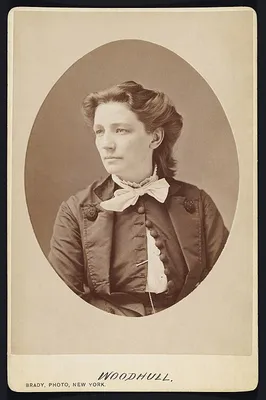
Victoria C. Woodhull
Victoria Woodhull was a pioneering women's rights activist, the first woman to run for U.S. president, and a proponent of 'free love'.
Victoria Woodhull was a prominent American figure known for her leadership in the women's suffrage movement and her groundbreaking presidential candidacy in 1872. She advocated for significant social reforms, including women's rights and labor reforms, and famously championed the concept of "free love," which she defined as the liberty to marry, divorce, and bear children without societal or governmental constraints. Woodhull experienced remarkable financial success, first as a magnetic healer and later, with her sister Tennessee Claflin, as a co-owner of a Wall Street brokerage firm and a newspaper, Woodhull & Claflin's Weekly.
Her early life was marked by hardship and a limited formal education, but she displayed intelligence from a young age. Woodhull's personal life included two marriages, the first to an alcoholic doctor and the second to Colonel James Blood. Her advocacy for free love, which included public criticism of prominent figures for adultery, led to her arrest on obscenity charges shortly before the 1872 election. Later in life, Woodhull shifted her views, embracing Christianity, denouncing promiscuity, and idealizing traditional values, though some historians question the veracity of her later claims about her earlier writings.
Early Life and Beliefs
Born in Ohio in 1838, Victoria Claflin Woodhull's early life was shaped by a family involved in spiritualism and unconventional practices. Her father was described as a con man and salesman, while her mother followed the burgeoning spiritualist movement. Woodhull herself believed in spiritualism, seeing it as a path to a better existence and claiming guidance from spiritual entities. Her formal education was limited, but she was recognized for her intelligence. The family faced hardship, including an incident where her father allegedly burned down their gristmill. Woodhull's early experiences, including a difficult first marriage and her husband's infidelity, are believed to have influenced her later advocacy for women's autonomy in relationships.
Advocacy for Free Love and Social Reform
Victoria Woodhull was a fervent advocate for "free love," a philosophy she articulated as the right for individuals, particularly women, to marry, divorce, and bear children free from societal restrictions and governmental interference. She believed this freedom was essential for women's equality, asserting a woman's right to sexual self-determination. Woodhull publicly challenged societal hypocrisy, notably criticizing clergyman Henry Ward Beecher for adultery. This led to her arrest on obscenity charges for publishing details of the affair, which occurred shortly before her presidential election campaign. Her newspaper, Woodhull & Claflin's Weekly, was a platform for her radical views and reformist ideas.
Political Candidacy and Financial Acumen
Woodhull achieved a significant milestone by becoming the first woman to run for President of the United States in 1872 under the Equal Rights Party. Her platform supported women's suffrage and equal rights. Despite historical debate about the validity of her candidacy due to constitutional age requirements, her campaign undeniably inspired other women. Beyond politics, Woodhull demonstrated considerable business acumen. She and her sister Tennessee Claflin amassed fortunes through various ventures, including magnetic healing, operating a successful Wall Street brokerage firm as the first women to do so, and publishing their influential newspaper.
Later Life and Shifting Views
In 1875, Woodhull underwent a notable shift in her public stance. She began to embrace Christianity and altered her political positions. She used her periodical to expose Spiritualist frauds, alienating many of her former supporters. Woodhull publicly renounced her earlier "free love" advocacy, instead promoting ideals of purity, motherhood, and marriage. She also asserted that some of her earlier writings had been published without her consent, a claim that has been met with skepticism by some historians. This later period marked a departure from her earlier radicalism towards a more traditional outlook.
Key Ideas
- Free Love: The belief in the freedom to marry, divorce, and bear children without social restriction or government interference.
- Women's Suffrage: Active support for women's right to vote and achieve equal rights.
Notable Quotes
“They cannot roll back the rising tide of reform. The world moves.”
“Yes, I am a Free Lover. I have an inalienable, constitutional and natural right to love whom I may, to love as long or as short a period as I can; to change that love every day if I please, and with that right neither you nor any law you can frame have any right to interfere.”
“To woman, by nature, belongs the right of sexual determination. When the instinct is aroused in her, then and then only should commerce follow. When woman rises from sexual slavery to sexual freedom, into the ownership and control of her sexual organs, and man is obliged to respect this freedom, then will this instinct become pure and holy; then will woman be raised from the iniquity and morbidness in which she now wallows for existence, and the intensity and glory of her creative functions be increased a hundred-fold ... .”
Books by Victoria C. Woodhull
0 free public domain books · Read online or download