Ursula Markham
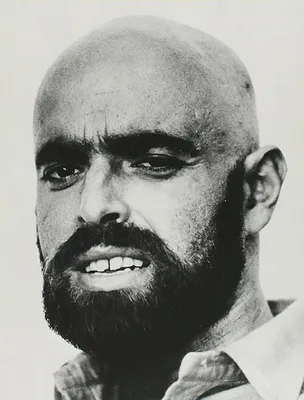
Shel Silverstein was a versatile American artist known for children's books, cartoons, and songwriting, with themes often touching on unconventional perspectives.
Shel Silverstein, born in Chicago in 1930, was a multifaceted American artist whose career spanned writing, cartooning, songwriting, and music. After a brief college education and service in the U.S. Army, Silverstein began his rise to prominence in the 1950s, with his illustrations appearing in publications like Playboy. He also penned adult-oriented works, such as "Uncle Shelby's ABZ Book."
He gained significant acclaim as a children's author with beloved books like "The Giving Tree," "Where the Sidewalk Ends," and "A Light in the Attic," which have been translated into numerous languages and sold millions of copies worldwide. As a songwriter, Silverstein penned hits for various artists, including Johnny Cash's "A Boy Named Sue," and received multiple awards and nominations for his musical contributions. He passed away in 1999 at the age of 68.
Artistic Beginnings and Evolution
Shel Silverstein's artistic journey began in childhood, tracing the work of Al Capp. He developed a distinct style early on, influenced by his own observations rather than contemporary artists. After attending Roosevelt University and the Chicago Academy of Fine Arts, he served in the U.S. Army, where his cartoons were published in Pacific Stars and Stripes. His first book, "Take Ten," compiled his military cartoons. Upon returning to Chicago, he contributed illustrations to magazines like Look and Sports Illustrated before becoming a prominent cartoonist for Playboy in 1957. His work for Playboy, often presented in a sketchbook format with typed captions, documented his travels and experiences in diverse settings, from naturist communities to international locales.
Literary and Musical Contributions
Silverstein's literary output extended beyond cartoons to include influential children's books such as "The Giving Tree," "Where the Sidewalk Ends," and "A Light in the Attic." These works achieved widespread international success, translated into over 47 languages. His adult-oriented book, "Uncle Shelby's ABZ Book," explored satirical themes. Musically, Silverstein was a prolific songwriter, penning hits for artists like Johnny Cash ("A Boy Named Sue"), Loretta Lynn, and Dr. Hook & the Medicine Show. His songs often featured unconventional narratives and humor, with "The Unicorn" and "25 Minutes to Go" being notable examples. He also composed original music for films and released his own albums, demonstrating a broad range of musical talent.
Thematic Explorations and Legacy
Silverstein's work, particularly his cartoons, often invited deep analysis, though he sometimes expressed surprise at the interpretations. His famous "Now here's my plan..." cartoon, depicting two chained prisoners, was seen by some as pessimistic, while Silverstein viewed it as a representation of hope even in dire circumstances. His children's books, while seemingly simple, often contain underlying philosophical messages about generosity, imagination, and the passage of time. The dedication of "A Light in the Attic" to his daughter, who died at age 11, adds a poignant personal layer to his creative legacy. He passed away in 1999, leaving behind a substantial body of work that continues to resonate with audiences of all ages.
Key Ideas
- Hope in hopeless situations
- The development of a unique artistic style independent of influences
- Satirical commentary on adult themes
- Philosophical undertones in children's literature
Notable Quotes
“When I was a kid—12 to 14, I'd much rather have been a good baseball player or a hit with the girls, but I couldn't play ball. I couldn't dance. Luckily, the girls didn't want me. Not much I could do about that. So I started to draw and to write.”
“A lot of people said it was a very pessimistic cartoon, which I don't think it is at all. There's a lot of hope even in a hopeless situation. They analyze it and question it. I did this cartoon because I had an idea about a funny situation about two guys.”
Books by Ursula Markham
2 free public domain books · Read online or download