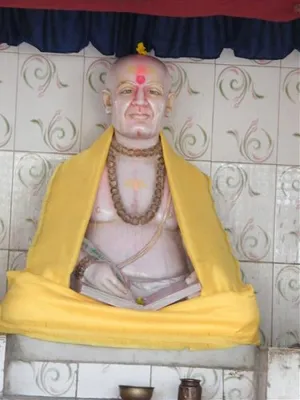
Udayanācārya.
Udayanācārya was a pivotal 10th-11th century Indian logician who synthesized Nyaya and Vaisheshika schools and argued for God's existence through reason.
Udayanācārya, also known as Udayana, was a prominent Indian philosopher and logician active around the late 10th to early 11th centuries CE. He is a central figure in the Nyaya school, renowned for his efforts to logically demonstrate the existence of God and counter the arguments of Buddhist philosophers and materialists. Udayana's work was instrumental in merging the logical frameworks of the Nyaya and Vaisheshika traditions, laying the groundwork for the later Navya-Nyaya ("New Nyaya") school. He is credited with a significant role in the development of Indian logic and epistemology, with many of his writings preserved due to their perceived importance.
Philosophical Synthesis and Logical Discipline
Udayana's philosophical contributions lie in his synthesis of the Nyaya and Vaisheshika schools. He integrated the Vaisheshika's ontological categories, such as substance, quality, action, generality, particularity, inherence, and non-existence, with the Nyaya's theory of knowledge (pramanas), which includes perception, inference, comparison, and testimony. A key aspect of his approach was the emphasis on precise definitions (Lakshana) to ensure clarity and logical consistency in philosophical discourse. Udayana distinguished philosophy as a discipline grounded in logical reasoning and epistemology, setting it apart from traditions that intertwined metaphysical exploration with spiritual aims like liberation.
Arguments for the Existence of God
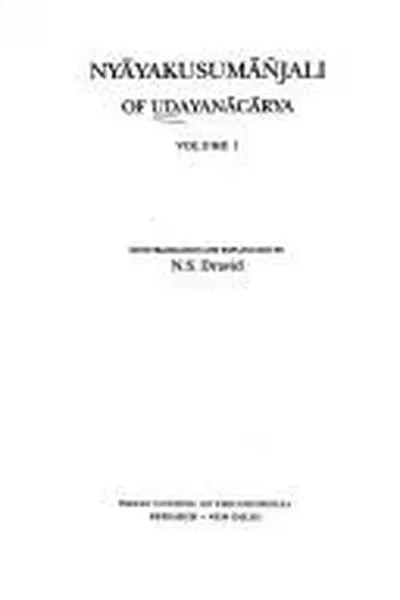
In his work "Nyāyakusumañjali," Udayana presented nine distinct arguments to rationally prove the existence of a creator God. These arguments, based on principles of causality, the necessity of an intelligent agent for atomic combination, the world's sustenance and destruction, the origin of language and meaning, the authority of scriptures, the divine origin of moral laws, the nature of numerical concepts, and the guidance of unseen forces, sought to establish a theological framework through logical deduction. This effort was a direct response to philosophical challenges posed by Buddhist logicians and Indian materialists who questioned such concepts.
Legacy and Influence
Considered the most important philosopher of the Nyaya tradition, Udayana held a position of great authority. He is recognized as a master of the older Nyaya and a precursor to the Navya-Nyaya school, with figures like Gaṇgeśa Upādhyāya referencing him with great respect. Scholars from the 12th century onward viewed him as the foremost exponent of Nyaya-Vaisheshika doctrines and a significant target for opposing philosophical viewpoints. His reputation as a profound logician is attested by epithets describing him as having reached the 'other shore of the ocean of logic'.
Key Ideas
- Synthesis of Nyaya and Vaisheshika philosophical schools
- Rational demonstration of God's existence through logic
- Emphasis on precise definitions (Lakshana) for philosophical clarity
- Philosophy as a logical and epistemological discipline
Books by Udayanācārya.
2 free public domain books · Read online or download