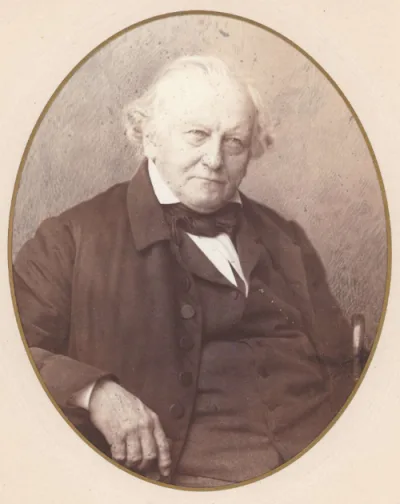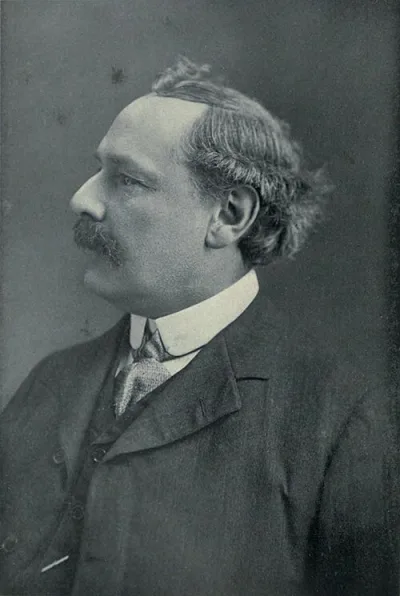
Arthur Edward Waite was a prolific British writer and mystic, known for his extensive scholarship on Western esotericism and the Rider-Waite Tarot.
Arthur Edward Waite, born in 1857 in New York but raised in England, was a significant figure in British occultism and Western esotericism. He dedicated his life to scholarly study and writing on mystical traditions, becoming a prolific author and translator. His work focused on subjects like the occult, magic, Kabbalism, alchemy, and the Holy Grail. Waite was also deeply involved in various esoteric organizations, including the Hermetic Order of the Golden Dawn, the Societas Rosicruciana in Anglia, and Freemasonry, where he pursued higher degrees and sought to understand the 'Secret Tradition'.
Waite's most enduring legacy is arguably the Rider-Waite Tarot deck, co-created with Pamela Colman Smith and first published in 1909. This deck revolutionized tarot by illustrating all 78 cards, a departure from the norm at the time, and its companion book, 'The Pictorial Key to the Tarot,' provided guidance for its use. Beyond tarot, Waite's scholarly efforts were aimed at a systematic study of occult history, viewing it as a spiritual tradition. He translated numerous esoteric texts and authored many original works, some of which continue to be reprinted. He passed away in 1942, leaving behind a substantial body of work that continues to be studied by those interested in the esoteric and mystical.
Early Life and Esoteric Awakening
Born in Brooklyn, New York, in 1857, Arthur Edward Waite was raised in England after his mother returned there following his father's death at sea. Educated privately and briefly at St. Charles' College, Waite's spiritual path took a significant turn when his mother converted to Catholicism. The death of his sister in 1874 drew him towards psychical research. By the age of 21, he was a regular visitor to the British Museum Library, delving into various esoteric subjects. A pivotal moment in his intellectual development occurred in 1881 when he encountered the writings of Éliphas Lévi, which profoundly influenced his subsequent studies and writings on magic and mysticism.
Involvement in Esoteric Orders
Waite was a prominent member of several influential esoteric societies. He joined the Hermetic Order of the Golden Dawn in 1891, progressing through its ranks and later founding his own order, the Independent and Rectified Order R. R. et A. C., in 1903, which disbanded in 1914. He was also a Freemason, joining the Societas Rosicruciana in Anglia (SRIA) in 1902. Waite pursued higher degrees within Freemasonry, particularly interested in the Rectified Scottish Rite, which he believed held keys to the 'Secret Tradition.' His involvement in these organizations provided a framework for his mystical studies and contributed to his understanding of occult traditions.
Literary Contributions and Scholarship
Arthur Edward Waite was a prolific writer whose works spanned divination, ceremonial magic, Kabbalism, alchemy, and the history of Western occultism. He was recognized for attempting a systematic study of occult history as a spiritual tradition. While his lack of formal academic training sometimes showed, his writings were influential within esoteric circles. He also translated and reissued significant mystical works, including those of Éliphas Lévi. Several of his books, such as 'The Book of Ceremonial Magic' and 'The Holy Kabbalah,' have seen reprints, indicating their continued relevance. He also penned allegorical novels and edited an anthology of fairy folklore poetry.
The Rider-Waite Tarot
Waite is perhaps most widely recognized for his collaboration on the Rider-Waite Tarot deck, published in 1909 with illustrations by Pamela Colman Smith. This deck was groundbreaking because it depicted imagery on all 78 cards, including the numbered suit cards, a significant departure from previous decks where typically only the Major Arcana were illustrated. Waite authored the accompanying text, 'The Key to the Tarot,' later expanded as 'The Pictorial Key to the Tarot,' which served as a guide to the deck's symbolism and use. The Rider-Waite Tarot has had a profound and lasting impact on the practice of tarot reading worldwide.
Key Ideas
- Systematic study of Western occultism as a spiritual tradition
- The 'Secret Tradition' within Freemasonry and other mystical systems
- Symbolism and interpretation of Tarot cards
Books by
2 free public domain books · Read online or download