Timothy Roderick
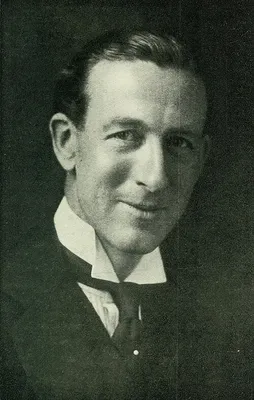
Sir George Roderick Jones was a British journalist and manager who led Reuters through significant growth and wartime challenges.
Sir George Roderick Jones (1877–1962) was a prominent British journalist and news agency executive, primarily associated with Reuters for his entire career. Born in Cheshire, he moved to South Africa in his youth, where he began his journalism career with the Pretoria Press and later served as a Reuters correspondent. His interview with Leander Starr Jameson after the Jameson Raid gained international attention. Jones rose through the ranks, becoming general manager for British South Africa in 1905.
During World War I, following personal tragedy and financial instability at Reuters, Jones was appointed general manager in London in 1915. In 1916, he and the company chairman acquired the company, with financial assistance from Sir Starr Jameson. Under Jones's leadership, Reuters adopted a patriotic stance during the war, leading to accusations of him heading British government propaganda. He was knighted in 1918 for his journalistic contributions. He oversaw Reuters's pioneering use of radio for news dissemination in 1923 and retired as chairman and general manager in 1941, by which time the company's ownership had been transferred to its subscribing newspapers. Jones published his autobiography, 'A Life in Reuters,' in 1951.
Early Career and South African Experience
Born in Dukinfield, Cheshire, George Roderick Jones's early life was marked by his father's profession as a hat salesman. His journey into journalism began when he accepted an invitation to join an aunt in Pretoria, then part of the South African Republic, in 1894. Within a year, he secured a position as a sub-editor for the Pretoria Press. By 1895, he was assisting the Reuters correspondent in the region. A significant event in his early career was his 1896 interview with Leander Starr Jameson in the wake of the Jameson Raid, an interview that achieved international circulation. His competence led to his appointment as general manager of Reuters's operations in British South Africa in 1905.
Leadership at Reuters and Wartime Role
Jones's career at Reuters took a pivotal turn during World War I. In October 1915, he was appointed general manager in London amidst company financial difficulties and the recent death of his predecessor. In 1916, he, along with the company chairman Mark Napier, purchased the company, with financial backing from Sir Starr Jameson. Throughout the remainder of the war, Reuters maintained a strongly patriotic editorial line, a stance so pronounced that Jones faced accusations of acting as the British government's chief propagandist. His significant contributions to journalism were recognized with a knighthood in the 1918 New Year Honours. He also presided over Reuters becoming the first news agency to utilize radio for transmitting news to its subscribers in 1923.
Later Career and Legacy
Jones continued to lead Reuters, holding both the positions of general manager and chairman before retiring in 1941. Upon his retirement, the company underwent a restructuring that transferred its ownership to the newspapers that subscribed to its services. He documented his extensive career in his 1951 autobiography, 'A Life in Reuters.' His death occurred in London in 1962. An obituary in The Times highlighted his status as one of the most influential figures in the global news industry. He was survived by his daughter, Laurian, Comtesse d’Harcourt.
Books by Timothy Roderick
2 free public domain books · Read online or download