Thomas Hoover
The Hoover Institution, a Stanford-affiliated think tank, archives historical materials and conducts policy research.
The Hoover Institution, originally established as a library by Herbert Hoover in 1919 to house World War I archives, has evolved into a prominent public policy think tank. While officially part of Stanford University, it operates independently and is widely recognized for its promotion of free enterprise, limited government, and personal liberty. Its mission, as stated by its founder, includes demonstrating the perceived harms of Marxist ideologies and safeguarding the "American way of life."
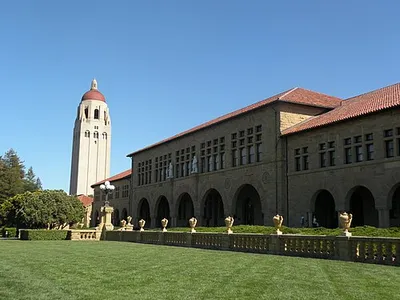
The institution's extensive collection, initially focused on World War I and later expanded to include materials from World War II and other global conflicts, is housed in the Hoover Tower. Over time, it transformed into a research center, attracting notable scholars and fellows, many of whom have held significant positions in government, particularly within Republican administrations. The Hoover Institution publishes its research through the Hoover Institution Press and has been recognized globally for its influence.
Founding and Archival Mission
Herbert Hoover, a Stanford alumnus, initiated the collection in 1919 with a substantial donation to gather primary materials related to World War I. This project, known as the Hoover War Collection, was initially supported by private donations and grew to include a wide array of rare and unpublished documents, such as files from the Okhrana and government papers from the war. Hoover's personal research into historical famines and the loss of fugitive literature during the French Revolution informed his conviction about the importance of preserving such contemporary records. The collection was renamed the Hoover War Library in 1922 and eventually became the Hoover Institution Library and Archives, aiming to preserve historical records and inform peace efforts.
Transition to a Research Institution
By the late 1920s, the Hoover War Library's extensive holdings necessitated a dedicated facility, leading to the construction of the Hoover Tower, completed in 1941. In the mid-20th century, a significant fundraising campaign in 1956 marked a pivotal transition, transforming the organization into a research institution alongside its archival functions. In 1957, it was renamed the Hoover Institution on War, Revolution and Peace. Officially established as an independent entity within Stanford University in 1959, the institution saw substantial growth in its budget, acquisitions, and research projects under directors like W. Glenn Campbell and later John Raisian, significantly expanding its Chinese and Russian collections.
Influence and Fellowship
The Hoover Institution has consistently provided scholars and fellows who have served in high-level government roles, particularly within Republican administrations, from Richard Nixon to Donald Trump. Its fellows have included prominent figures such as Nobel laureates Milton Friedman and Henry Kissinger, economist Thomas Sowell, and former Secretary of State Condoleezza Rice, who later became the institution's director in 2020. The institution organizes its fellows into research teams focusing on areas like Economic Policy, History, Education, and Law, and disseminates their work through the Hoover Institution Press. It has been recognized as one of the world's most influential think tanks.
Key Ideas
- Promoting personal and economic liberty, free enterprise, and limited government.
- Demonstrating the perceived evils of Marxist doctrines (Communism, Socialism, economic materialism, atheism) to protect the American way of life.
- Preserving historical records and archives related to war, revolution, and peace.
- Sustaining the safeguards of the American way of life through research and publication.
Notable Quotes
““The purpose of this Institution must be, by its research and publications, to demonstrate the evils of the doctrines of Karl Marx whether Communism, Socialism, economic materialism, or atheism—thus, to protect the American way of life from such ideologies...”
““The purpose of this Institution must be, by its research and publications, to demonstrate the evils of the doctrines of Karl Marx whether Communism, Socialism, economic materialism, or atheism—thus, to protect the American way of life from such ideologies...”
“I did a vast amount of reading, mostly on previous wars, revolutions, and peace-makings of Europe and especially the political and economic aftermaths. At one time I set up some research at London, Paris, and Berlin into previous famines in Europe to see if there had developed any ideas on handling relief and pestilence. ... I was shortly convinced that gigantic famine would follow the present war. The steady degeneration of agriculture was obvious. ... I read in one of Andrew D. White's writings that most of the fugitive literature of comment during the French Revolution was lost to history because no one set any value on it at the time, and that without such material it became very difficult or impossible to reconstruct the real scene. Therein lay the origins of the Library on War, Revolution and Peace at Stanford University.”
““to recall the voice of experience against the making of war, and by the study of these records and their publication, to recall man's endeavors to make and preserve peace, and to sustain for America the safeguards of the American way of life.””
Books by Thomas Hoover
3 free public domain books · Read online or download